
About this series: From commercial drone delivery, to autonomous planes, to battery-powered aircraft, ESA’s aviation experts delve into the policies, programs, and real-world challenges of these new aviation technologies which could soon transform our skies.
Advanced Air Mobility (AAM) is an exciting emerging aviation technology sector that uses highly automated systems to transport passengers and cargo—and it could revolutionize air transportation as we know it. But what is AAM exactly, and how does it relate to unmanned or uncrewed aircraft systems (UASs)? How will AAM aircraft operate across our airspace and for what uses? As a Principal Aviation Specialist, these are just some of the common questions I’ve been asked about this new technology. Read on to learn more about the unique categories of AAM aircraft and their expected role in the aviation transportation ecosystem.
What are AAM aircraft and what benefits do they offer?
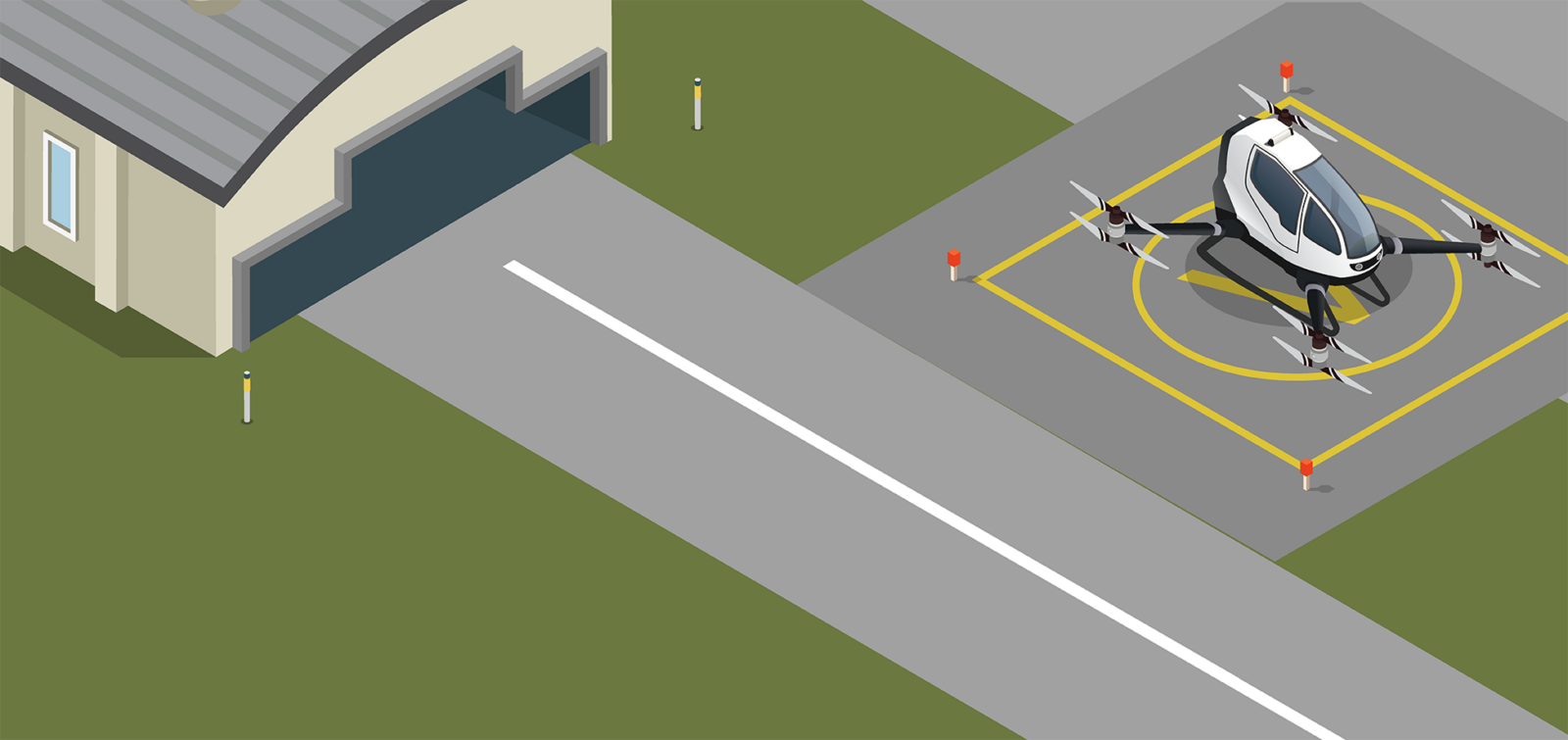
AAM aircraft are battery powered and leverage electric vertical takeoff and landing (eVTOL), short takeoff and landing (STOL), and conventional takeoff and landing (CTOL) capabilities. These aircraft operate to and from airports and off-airport vertical takeoff and landing pads, often referred to as vertiports. Because of their electric propulsion systems, AAM aircraft can provide many benefits over traditional aircraft, including reducing emissions, noise, and operating costs.
Some AAM aircraft are similar in many ways to helicopters, given their vertical takeoff and landing capabilities and ability to operate in congested urban areas. Initial AAM aircraft operations are expected to begin in 2027, and will be operated by onboard pilots leveraging simplified, automated flight control systems. However, as AAM technology becomes more prevalent, it is anticipated many AAM aircraft will be fully autonomous—that is, without pilots altogether.
This is where AAM aircraft fit into the broader group of technologies referred to as UAS, which represents the combination of pilotless aircraft and ground systems used to control the aircraft. UAS includes all drones, whether piloted remotely from the ground or operating in a fully autonomous fashion, and may include other aircraft that do not have a physical pilot onboard, such as the fully autonomous subset of AAM aircraft. Drones are often referred to as UASs but are actually a subset of UAS that are pilotless and have no crew or passengers onboard. For a deeper dive into drones and how they relate to AAM, refer to a previous article written by my colleague, Neal Wolfe.
What are the different types of AAM aircraft?
There are five primary types of AAM aircraft, many of which combine different elements of helicopters and traditional fixed-wing aircraft into their designs:
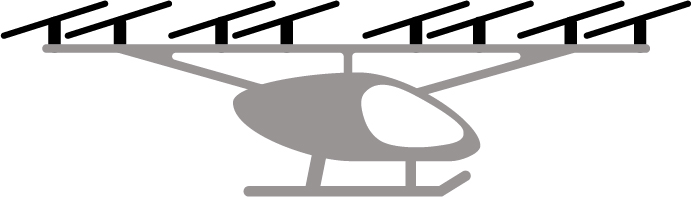
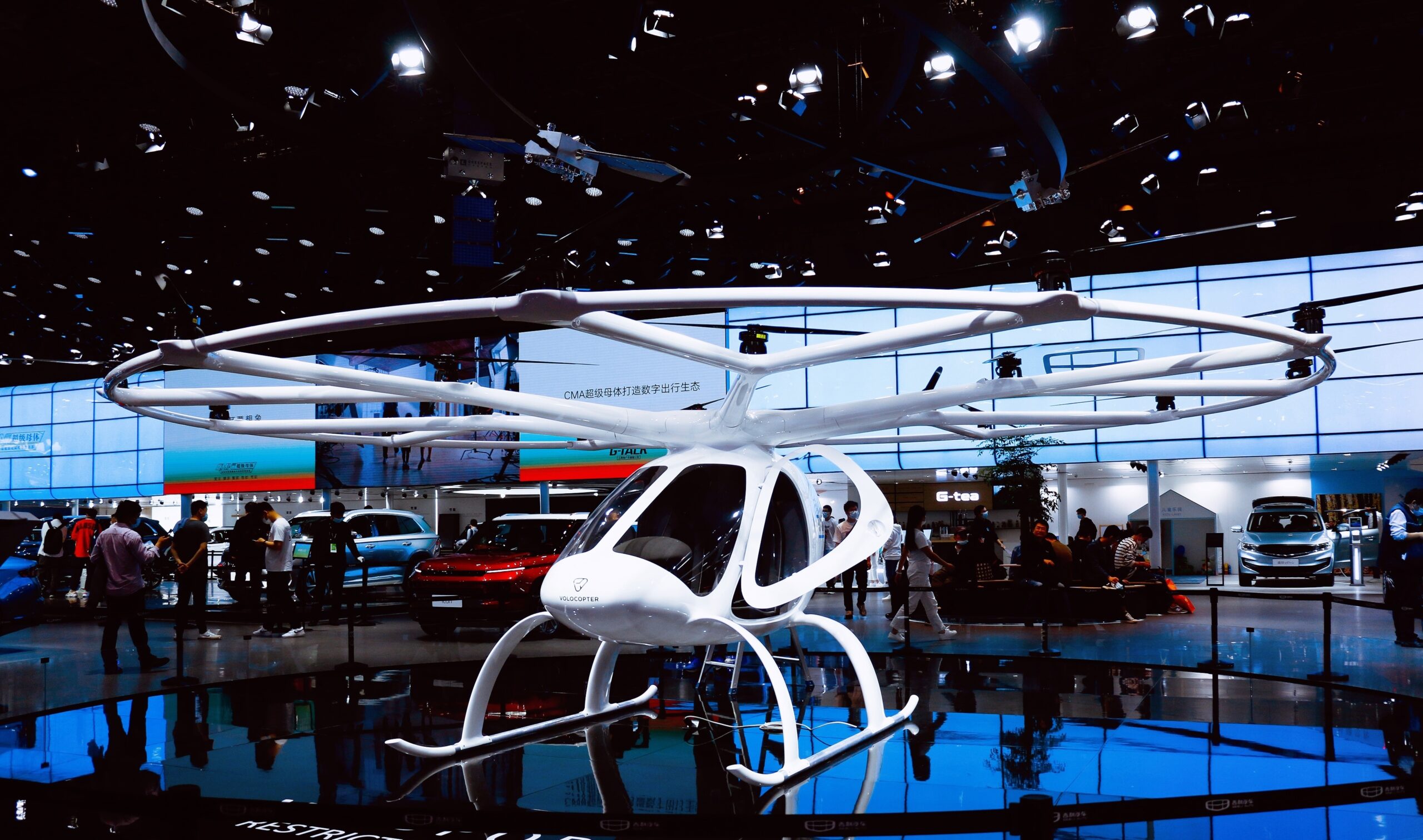
Multicopter – This refers to eVTOL aircraft that use arrays of multiple electric motors to generate lift and control the aircraft. Multicopters are similar to helicopters in that they do not use wings to generate lift. Unlike helicopters, multicopters use multiple smaller rotors to generate lift instead of a single large rotor.
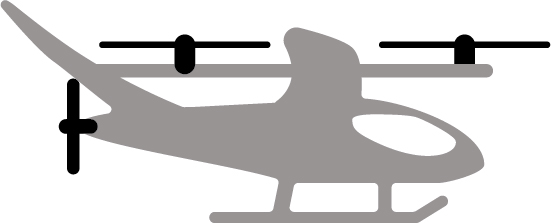
Lift + Cruise – This refers to STOL or eVTOL aircraft that use a combination of traditional airfoils, horizontally mounted fixed rotors or propellors, and vertically oriented fixed rotors to generate lift and control the aircraft. Lift + cruise AAM aircraft use the vertically oriented rotors to take off or land vertically or use the rotors to shorten the takeoff run and produce lift. The horizontal fixed rotors or propellers are used to provide forward propulsion and generate lift from the traditional airfoils. Once the vehicle reaches sufficient forward speed to generate lift from traditional airfoils, the fixed vertical rotors are turned off.
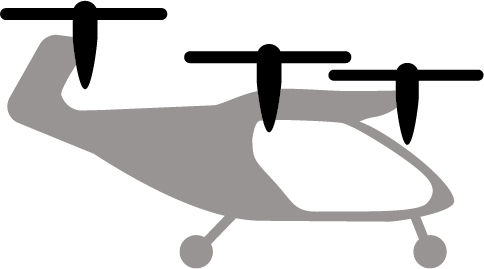
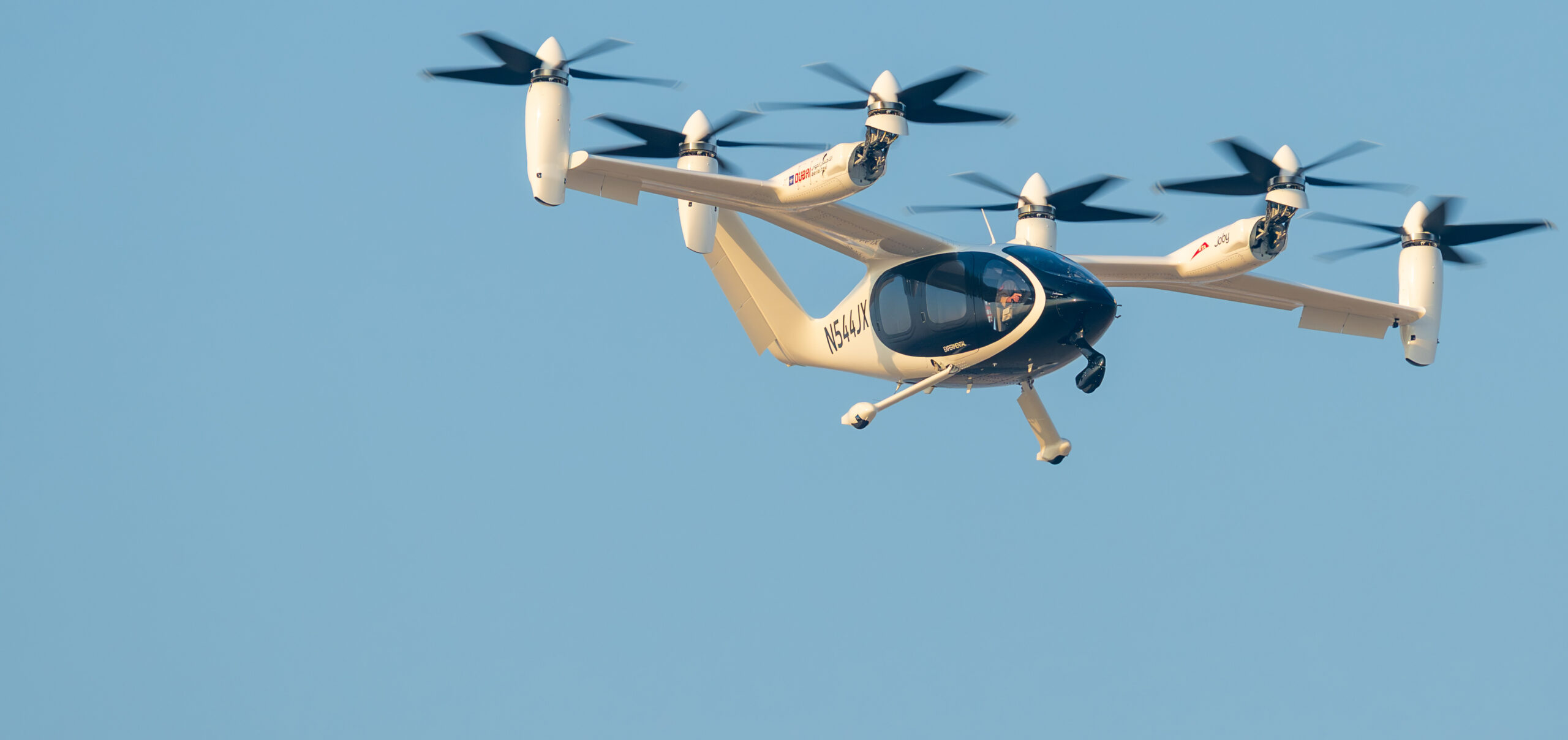
Vectored Thrust or Tiltrotor – This refers to eVTOL aircraft that use a combination of traditional airfoils and rotors that can be tilted to generate lift and control the aircraft. Tiltrotor AAM aircraft use rotors in a vertical position to take off and land the aircraft vertically before the rotors transition to a horizontal axis to provide forward thrust. Some of these types of AAM aircraft may also tilt the entire airfoil along with the rotors instead of tilting the rotors independent of the airfoil.
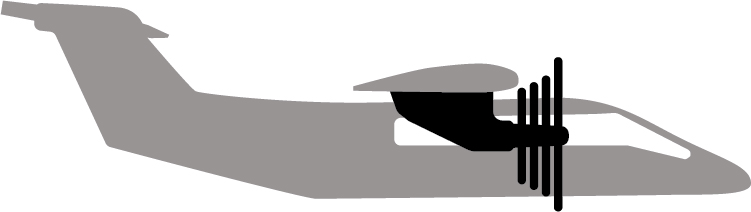
Augmented Lift – This refers to STOL aircraft that use airfoils with large flaps and/or other lift-enhancing devices and multiple horizontally mounted motors to generate large amounts of lift at low airspeeds to facilitate takeoff and landing in very short distances. Once airborne, the lift-enhancing devices are gradually stowed to reduce drag as increased forward motion with a clean airfoil is sufficient to generate lift. Alternatively, during approach, the lift-enhancing devices are gradually deployed to increase lift and drag, allowing for extremely short landing distances.
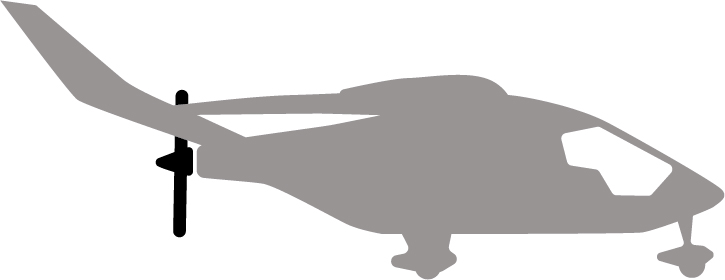
Conventional – This refers to aircraft that use airfoils to generate lift consistent with traditional fixed-wing aircraft. However, other than using an electric propulsion system in place of a combustion-based system, there are few differences between this type of AAM aircraft and conventional fixed-wing aircraft.
How will AAM be used in aviation transportation?
Urban Air Mobility (UAM)
One of the most prevalent planned use cases for AAM aircraft is as on-demand air taxis that will transport passengers on short trips to and from locations, primarily within cities, referred to as Urban Air Mobility (UAM). Similar to ridesharing platforms for cars, it is envisioned UAM will leverage the eVTOL capabilities of AAM to seamlessly transport up to five passengers within congested urban and suburban areas on short point-to-point flights of less than 100 miles. These flights will avoid road traffic congestion, reduce commute times, provide last-mile service to tie into other transportation infrastructure, and reduce environmental impacts. It is anticipated that UAM will represent a significant portion of the overall market for AAM, with some estimates predicting that the global UAM market could reach as much as $12.6 billion by 2030.1
1 https://finance.yahoo.com/news/urban-air-mobility-strategic-business-092700539.html
Regional Air Mobility (RAM)
Another use case for AAM is to conduct short- to medium-range flights to connect suburbs, villages, towns, and rural areas to city centers within a region—referred to as Regional Air Mobility (RAM). As it is envisioned, RAM would use larger AAM aircraft to transport up to 50 passengers or cargo between cities and towns over distances between 100 and 500 miles within a region. However, in the nearer term, it is anticipated that smaller AAM aircraft with increased range capabilities would serve these passengers. RAM would leverage existing airport infrastructure to connect communities and take advantage of smaller airports that are underutilized compared to larger passenger traffic facilities. RAM will include AAM aircraft with eVTOL capabilities operating from vertiports, but will also include larger aircraft that will leverage STOL or CTOL capabilities to operate from existing airport infrastructure.
Cargo
AAM aircraft will be used to transport packages between communities, both in an urban and regional context. These aircraft will leverage their eVTOL, STOL, or CTOL capabilities to operate from existing airports or new vertiport infrastructure.
Public Services
AAM aircraft would replace and supplement existing fixed-wing and helicopter operations to conduct medical, law enforcement, search and rescue, firefighting, and other public service missions.
Private and Military
Similar to public service use cases, AAM aircraft would replace or supplement existing private and military helicopter and fixed-wing operations to reduce emissions, noise, and operating costs.
What are the challenges in planning for and integrating AAM?
AAM’s unique combination of helicopter and fixed-wing technologies, electric propulsion systems, frequent use of multiple engines, and automated flight systems create very specific requirements for these types of aircraft.
AAM aircraft certification and operations are governed by the regulations outlined in the Federal Aviation Agency’s (FAA’s) 2024 Final Rule for Integration of Powered-Lift, which amended Title 14 of the Code of Federal Regulations.1
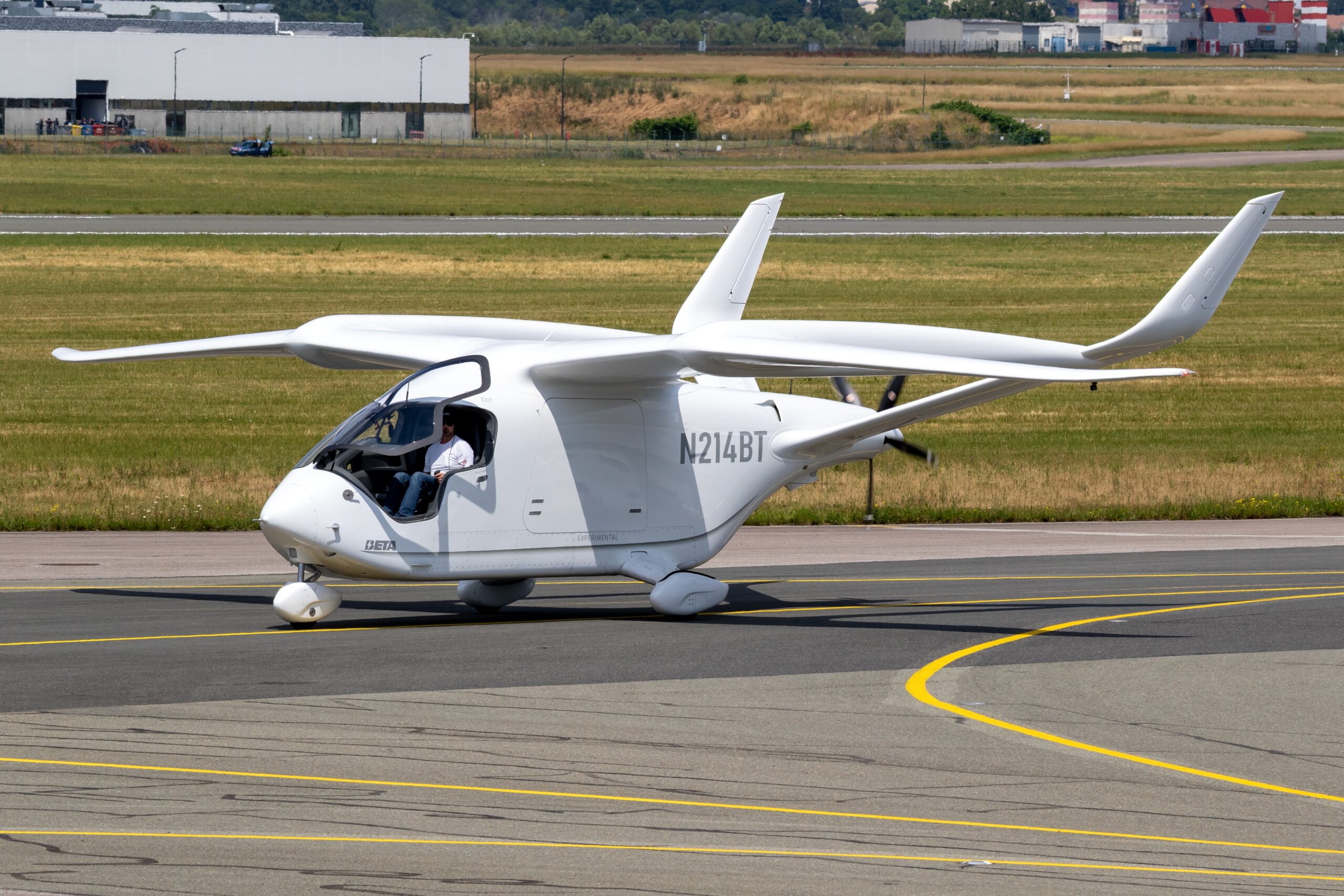
Beta Technologies’ Alia CX300 electric aircraft was demonstrated at the Paris Air Show in 2025.
In my next article, I’ll explain the challenges in planning for AAM, what planning efforts are underway, and what resources are available to integrate AAM aircraft into the aviation transportation system.
ESA’s team of aviation experts is here to assist in tackling the challenges of planning for AAM.
ESA offers comprehensive aviation planning and environmental services to support government officials, airports, and communities as they make challenging decisions regarding how to integrate AAM and other emerging aviation technologies into local and regional transportation ecosystems. For additional background on AAM and how we can help tackle the challenges of planning for AAM, please reach out to Adam Scholten, Douglas DiCarlo, Neal Wolfe, or Mike Arnold and be sure to stay tuned for future articles from ESA on other exciting emerging aviation technologies.
1 Title 14, Parts 1, 11, 43, 60, 61, 91, 97, 111, 135, 136, 141, and 142 of the Code of Federal Regulations. The FAA also added a new Part 194 to establish and clarify the standards for the certification of AAM pilots and aircraft, operating rules applicable to AAM aircraft, and other amendments necessary to integrate AAM into the National Airspace System.
Author

Principal Aviation Specialist
Date
January 6, 2026