
In Brief:
Advanced Air Mobility (AAM) is advancing in the United States as the Federal Aviation Administration (FAA) supports Electric Vehicle Takeoff and Landing (eVOTL) demonstration flights, aircraft certification, and integration into the National Airspace System (NAS). Recent developments include demonstration flights to help guide future FAA policies and regulations, certification testing, and new federal planning resources. The FAA’s recently released AAM Primer and Draft Advisory Circular for Vertical Flight Aircraft Infrastructure Design provide important considerations for airports, agencies, and communities preparing for future AAM operations.
Advanced Air Mobility (AAM) technology continues to develop rapidly as efforts to integrate it into the National Airspace System (NAS) advance. This Fall, numerous AAM demonstration flights have taken place throughout the country as part of the Federal Aviation Administration (FAA)’s Electric Vertical Takeoff and Landing (eVTOL) and AAM Integration Pilot Program (eIPP). AAM manufacturers are making tremendous progress toward obtaining FAA airworthiness certifications for their aircraft. The FAA also developed a primer to help communities understand the integration of AAM into the NAS, and released a draft of updated guidance to assist in planning vertiport infrastructure to support AAM operations. Read on to learn more about these exiting new developments, new planning resources, and AAM’s emerging role in the aviation transportation ecosystem.
Recent AAM Demonstrations and Certification Progress
Electric Vertical Takeoff and Landing (eVOTL) and AAM Integration Pilot Program (eIPP)
On September 16, 2025, the U.S. Department of Transportation (DOT), through the FAA, announced the eIPP with the goal of accelerating the deployment of AAM aircraft operations in the United States. The eIPP requested proposals from state, local, tribal, and territorial governments, in partnership with private-sector organizations with AAM experience, to assist the FAA develop regulatory frameworks and safety standards to support AAM operations.
In March 2026, the FAA selected eight partners to participate in the eIPP: Florida Department of Transportation (FDOT), Utah Department of Transportation (UDOT), Texas Department of Transportation (TxDOT), Port Authority of New York and New Jersey (PANYNJ), City of Albuquerque, Pennslyvania Department of Transportation (PennDOT), North Carolina Department of Transportation (NCDOT), Louisiana Department of Transportation (LaDOTD).
Following these selections, there has been a flurry of activity from eIPP partners throughout the country, including multiple demonstration flights. These flights provide the FAA with data to inform future AAM policies and safety standards while demonstrating the feasibility of integrating AAM operations into the NAS.
Spring 2026
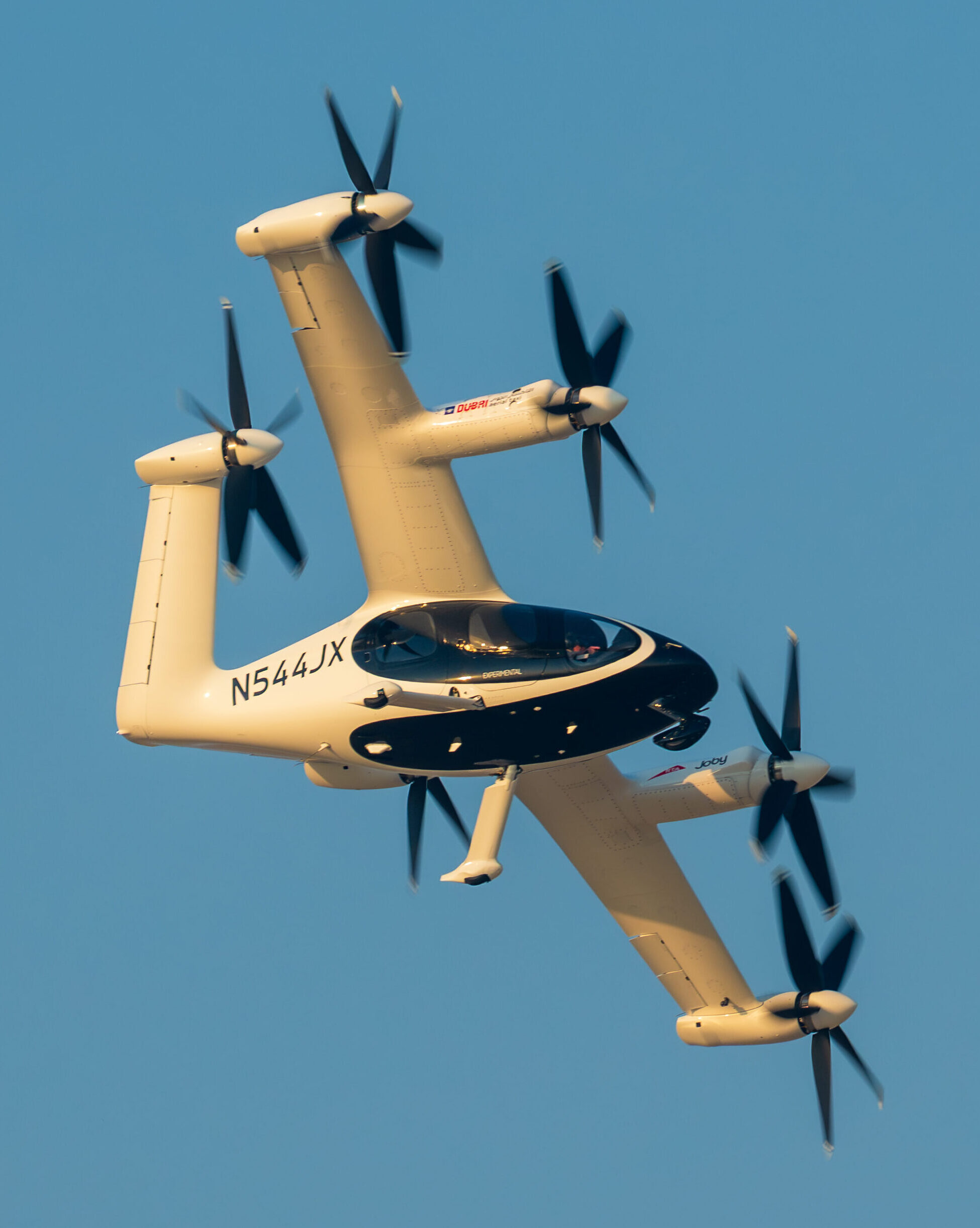
- Joby Aviation, in partnership with the PANYNJ, completed New York City’s first-ever point-to-point eVTOL air taxi demonstration flights with its S4 aircraft, through FAA-controlled airspace between John F. Kennedy International Airport and the Downtown Skyport, West 30th Street, and East 34th Street Heliports.
Summer 2026
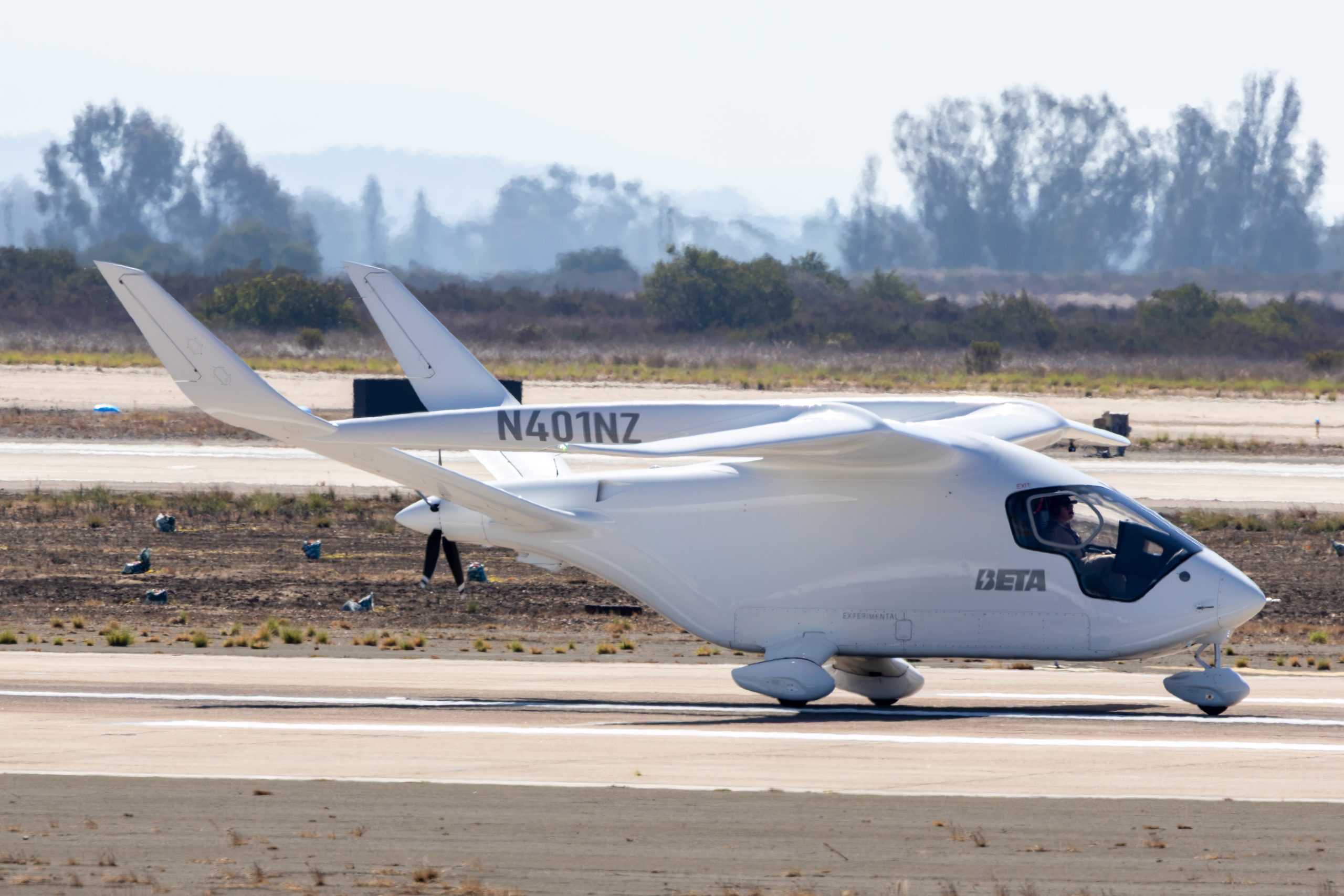
- BETA Technologies and United Therapeutics, in partnership with PennDOT, conducted a series of flights using BETA’s ALIA electric aircraft to test organ medical transport capabilities on a multi-airport route from Virginia to Maryland.
- Ampaire, in partnership with UDOT, completed a hybrid-electric demonstration flight between Salt Lake City International Airport and Cedar City Regional Airport to evaluate the potential for commercial cargo operations.
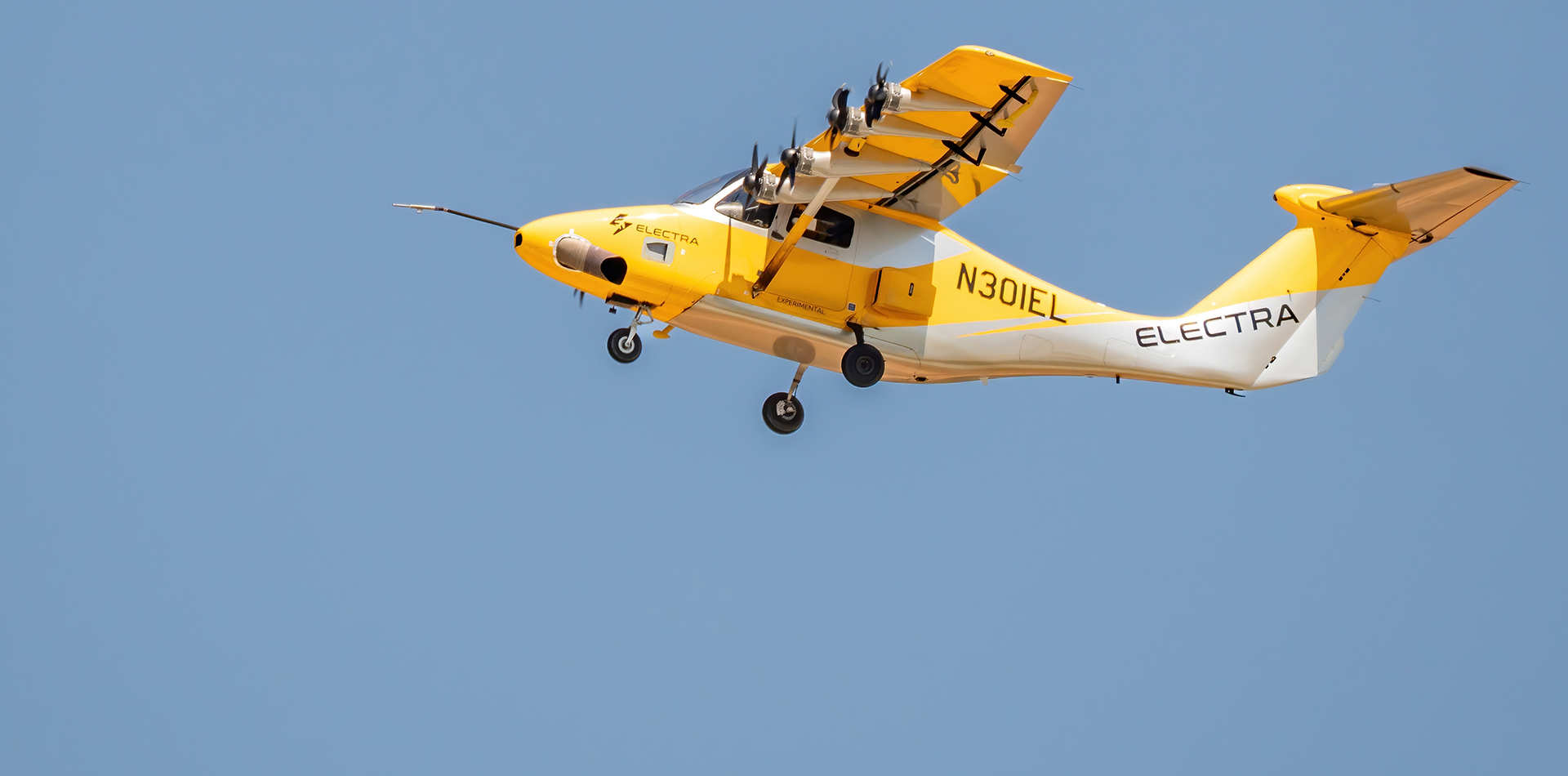
- Electra Aviation, in partnership with PennDOT and the New Jersey Department of Transportation, completed hybrid-electric short takeoff and landing (STOL) demonstration flights with its EL2 aircraft on routes connecting small airports to a major commercial hub including Washington Manassas Airport, Millville Executive Airport, Atlantic City Bader Field, Northeast Philadelphia Airport, and Philadelphia International Airport.
- Elroy Air, in partnership with LaDOTD, conducted the program’s first uncrewed, remotely piloted autonomous flight at Houma-Terrebonne Airport. Elroy’s Chaparral aircraft, a heavy-cargo drone, completed a week-long demonstration transporting various payloads including tools, medical supplies, food, and water.
Fall 2026
- BETA Technologies and Joby Aviation, in partnership with TxDOT, launched Project Nexus and conducted demonstration flights between Perot Field Fort Worth Alliance Airport and Dallas Fort Worth International Airport.
- BETA Technologies and Joby Aviation, in partnership with NCDOT, tested regional flight and medical transport capabilities between small airports and a major hub, including flights between Dare County Regional Airport, Raleigh-Durham International Airport, Raleigh Executive Jetport, and the Pitt-Greenville Airport.
- Reliable Robotics, in partnership with the City of Albuquerque Aviation Department, conducted demonstration flights at Albuquerque International Sunport to test cargo deliveries using Reliable’s remotely piloted Cessna 208B Caravan airplane.
- Electra Aviation, in partnership with the PANYNJ, demonstrated the short takeoff and landing capabilities of its EL2 aircraft at the Downtown Skyport in Lower Manhattan.
- BETA Technologies, Joby Aviation, and Electra Aviation, in partnership with FDOT, completed multiple flights throughout Florida, including at Orlando International Airport, Albert Whitted Airport, St. Pete–Clearwater Airport, Tampa International Airport, and the Kennedy Space Center.
Looking ahead, additional demonstration flights are planned with eIPP partners for the remainder of 2026 into 2027 that will continue to provide additional data to inform future policies and evaluate the feasibility of integrating AAM operations into the NAS.
FAA Aircraft Certification
Alongside the eIPP demonstration flights, AAM manufacturers continue to make progress toward FAA aircraft certification. Various AAM manufacturers, including Joby Aviation, BETA Technologies, Eve Air Mobility, Archer Aviation, Vertical Aerospace, Electra Aviation, and Wisk Aero are at various stages of the FAA certification process. Recently, the FAA issued a first-of-its-kind Special Airworthiness Market Survey Certificate to BETA Technologies to conduct flight operations with its ALIA eVTOL aircraft. Joby Aviation also completed construction of its first FAA-conforming S4 aircraft and has been conducting Type Inspection Authorization flight tests.
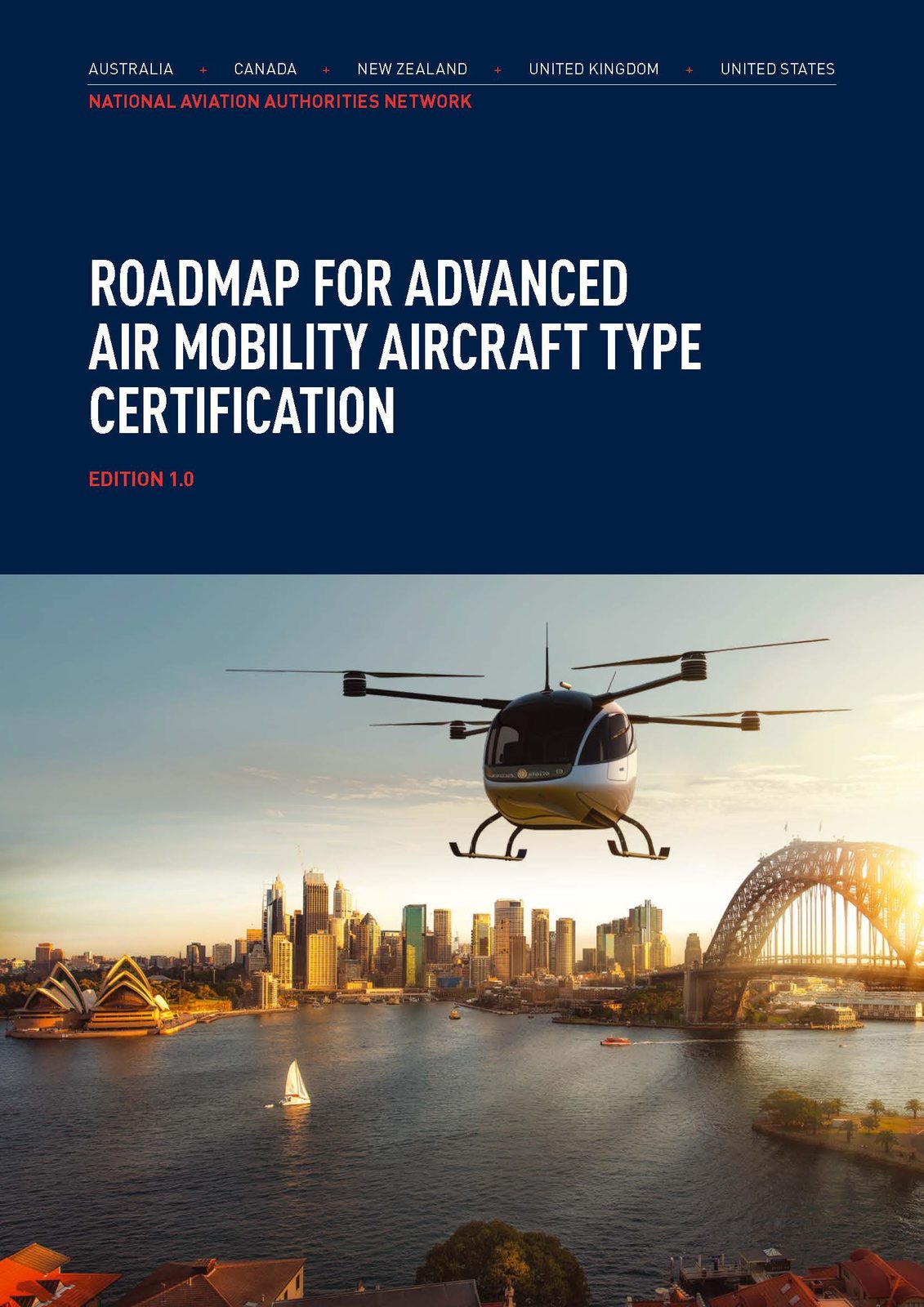
To help streamline the certification process, in April 2026, the FAA, in coordination with the international National Aviation Authorities Network (NAA Network), committed to the NAA Network Roadmap for AAM Type Certification. The roadmap outlines a clear path toward aligning aircraft type certification standards, harmonizing airworthiness requirements, and improving information sharing among participating aviation authorities. These include the UK Civil Aviation Authority, Transport Canada, the Civil Aviation Authority of New Zealand, and the Civil Aviation Safety Authority of Australia. The goal is to facilitate the recognition of AAM aircraft certifications across participating countries.
In February 2026, members of Congress also introduced the Aviation Innovation and Global Competitiveness Act (Senate Bill S. 3885 and House Bill H.R. 7553), which, if enacted, would direct the FAA to establish requirements intended to improve the transparency, consistency, and predictability of the type certification process, including timelines for certain certification activities.
New AAM Planning Resources
FAA AAM Primer
On October 16, 2026, the FAA published an AAM Primer that serves as a one-stop resource for communities seeking information about AAM and its integration into the NAS. The primer includes information on the potential public benefits of AAM; the roles and responsibilities of community stakeholders, operators, and the FAA; AAM safety considerations; and how the FAA is addressing noise and annoyance from AAM operations. The primer also provides links to supporting AAM FAQs and planning documents and is integrated with the FAA’s Community Engagement Chatbot.
FAA Draft Advisory Circular 150/5390-4, Vertical Flight Aircraft Infrastructure Design
On October 22, 2026, the FAA’s Office of Airports released Draft Advisory Circular (AC) 150/5390-4, Vertical Flight Aircraft Infrastructure Design. The draft AC consolidates heliport and vertiport guidance for AAM into one performance-based document that addresses the planning, design, and construction of facilities for helicopters and powered-lift aircraft. Once finalized, the AC will replace AC 150/5390-2D, Heliport Design, and Engineering Brief 105A, Vertiport Design.
The draft AC distinguishes among standards, recommended practices, design considerations and requirements, helping readers differentiate between regulatory obligations and discretionary recommendations. It also eliminates the Transport Heliport category while retaining specialized guidance for hospital heliports and AAM vertiports.
The draft AC has multiple technical updates, including revised landing-area dimensions based on aircraft landing-scatter research, rotor-diameter-based touchdown and liftoff (TLOF) area sizing, and provisions addressing aircraft performance, environmental conditions, and updated load-bearing requirements for AAM infrastructure.
One notable change is a new maximum approach-surface slope of 15:1 for AAM aircraft compared to the traditional 8:1 approach slope for helicopters. This change could affect the siting of future vertiports and the feasibility of adapting existing heliports for AAM operations.
Additional technical guidance in the draft AC addresses separation distances between on-airport helipads and runways, including considerations related to wake turbulence; the use of marked aiming points as an alternative to dedicated on-airport helipads under specified conditions; and a new Downwash and Outwash Caution Area (DCA) intended to protect people and property in areas where air movement may reach or exceed 34.5 miles per hour.
The FAA is accepting public comments on the draft AC from industry stakeholders through January 11, 2027.
How ESA Can Support AAM Planning
ESA has extensive experience helping states and airports plan for AAM infrastructure development and its integration into communities. Our team supported FDOT in preparing for AAM in Florida and also provided planning and environmental support to the Greater Orlando Aviation Authority in establishing Vertipad Atlantis—the nation’s first dedicated eVTOL landing pad at a commercial airport—at Orlando International Airport. ESA has also been extensively involved in evaluating environmental impacts of other emerging aviation technologies and has been at the forefront of environmental reviews for drone package delivery operations across the United States.
ESA provides comprehensive aviation planning and environmental services to support government agencies, airports, and communities navigating the opportunities and challenges of AAM. To learn more about AAM and how ESA can support your planning needs, contact Adam Scholten, Douglas DiCarlo, Neal Wolfe, or Mike Arnold. Stay tuned for future ESA articles covering developments in AAM and other emerging aviation technologies.