
| Key Takeaways: • A recent study using data from communities located near three major U.S. airports that experienced recent changes in aviation noise exposure found that a 1 decibel increase in aircraft noise reduces home values by 0.6 to 1 percent. • Study results indicate that residents place greater value on long-term reductions in aircraft noise exposure—rather than sporadic occurrences of loud aircraft noise—which the Federal Aviation Administration (FAA) and related agencies should consider when forming noise policy. • The study substantiates a long-standing body of research measuring changes in home values relative to modern-day changes in noise exposure. |
Exposure to high levels of aircraft noise has long been perceived to reduce home values, especially among residents of communities located near airports. However, past studies looking into the relationships between aviation noise and home values revealed that the relationships are complex and have had somewhat confounding results, with some studies showing small or moderate reductions in home values while others reported slight increases in home values.
In this article, I dive into the findings from a recent working paper authored by the Massachusetts Institute of Technology (MIT) that investigates how changes in noise exposure around three large U.S. airports affect changes in the values of real estate transactions, and what the results mean for airports and surrounding communities.
Study Methodology
In the National Bureau of Economic Research (NBER) working paper titled, “Planes Overhead: How Airplane Noise Impacts Home Values,”1 MIT analyzed changes in residential real estate transaction values from homes surrounding three large U.S. airports, spanning from 2011 to 2016. These years were selected for study as they were representative of periods before and after recent changes in noise exposure that were common at many large U.S. airports associated with two scenarios:
- Changes in flight paths due to the implementation of performance-based navigation (PBN) by the FAA
- Runway reconfigurations, including the construction of new runways and associated flight procedure changes
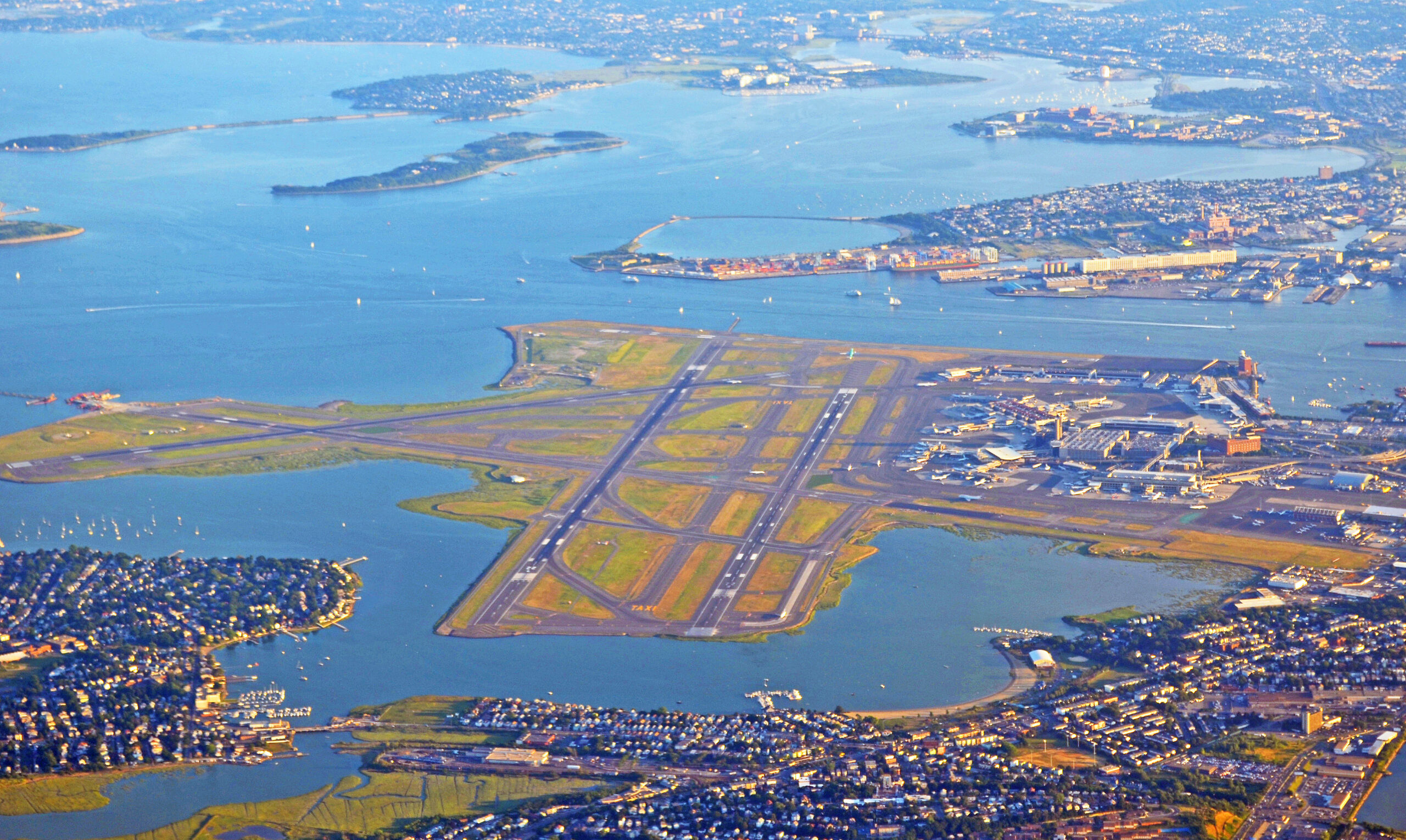
For the first scenario, MIT analyzed changes in noise exposure and real estate values for the Boston Logan International (BOS) and Seattle-Tacoma International (SEA) airports, both of which implemented PBN procedures during the study period. For the second scenario, the Chicago O’Hare International (ORD) airport was analyzed, as ORD experienced the commissioning and decommissioning of multiple runways, in addition to the implementation of PBN procedures, during the same study period.2
How noise exposure and home values were evaluated:
Noise Levels
To evaluate changes in noise that occurred between 2011 and 2016, noise exposure was calculated by leveraging flight track and operations data from the Airport Surface Detection Equipment — Model X (ASDE-X) for each airport and combined with aircraft noise data derived from the FAA’s Aviation Environmental Design Tool (AEDT) for the Day-Night Average Sound Level (DNL) noise metric—which is required by the FAA for the assessment of aircraft noise.
DNL is a single value that represents the logarithmically averaged aircraft sound level at a location over a 24-hour period, with a 10 decibel (dB) adjustment added to those noise events occurring from 10 p.m. to 7 a.m. In addition to the DNL metric, two additional noise metrics were calculated:
- The number of times a maximum sound level (Lmax) of 60 dB was exceeded on the day with the highest DNL
- The percentage of days where 60 dB Lmax was exceeded 40 or more times for each of the study years
For each airport and study year, noise exposure was calculated for a 20 by 20 nautical mile (nmi) area centered around each airport for each of the three metrics.
Real Estate Values
To calculate changes in real estate transaction values, the Zillow Transactions and Assessment Dataset (ZTRAX) dataset was used to determine home values for the periods of 2007–2011 and 2016–2020. These 5-year periods were chosen to increase the breadth of transactions included in the data and represented periods during which it was assumed aviation noise exposure did not substantially change around each of the three study airports. The dataset was then filtered to include only those home sales that met the following six criteria:
- Sold for above $50,000 but below $2 million to restrict for outliers
- Were single-family or multifamily homes
- Were not intra-family transactions or transactions with unfair market prices
- Did not sell multiple times within the same calendar year
- Had complete, correct geolocation data
- Were not outliers (such as having greater than 20,000 square feet)
For the homes that met the selection criteria, other demographics and amenity data were collected based on a combination of multiple sources from the US Census Bureau, ArcGIS Hub, and MyGeodata Cloud data sources to control for housing price differences that may be attributable to factors other than aircraft noise (such as distance to amenities, demographic differences, and seasonal pricing effects). Changes in home values were then calculated based on 2011 dollars for each home within the same 20 by 20 nmi study areas used to calculate noise exposure for each of the three study airports and assigned the nearest noise exposure value for each property location.
Key Study Findings
The study found many interesting relationships between changes in aircraft noise and changes in home prices. However, the following three findings should be of most interest to communities and airports:
- When controlling for home characteristics, neighborhood amenities, and seasonal effects, a 1 dB DNL increase of aircraft noise is associated with a 0.6 to 1 percent decrease in home sales prices3.
- The DNL metric was most effective in factoring changes in home prices, relative to the other two event-based metrics. The findings indicate that residents place greater value on long-term reductions in aircraft noise exposure overall—as reflected in the DNL averaging metric—rather than the reductions of intermittent loud aircraft noise occurrences.
- There is correlation between income and sensitivity to aircraft noise exposure, and the findings indicate that communities with higher income levels are more likely to afford and purchase homes with less noise exposure at higher home prices.
This study reinforces that increased exposure to aircraft noise is associated with reductions in property values, supports continued use of the DNL metric to assess impacts from aviation noise on communities, and substantiates the long-standing body of research quantifying price changes relative to modern-day changes in noise exposure around three large U.S. airports.
Informing Future Noise Policy
The study’s findings support the continued use of the DNL metric to assess impacts from aviation noise on communities as one of many important inputs that should be considered by the FAA as part of its ongoing Noise Policy Review (NPR). Airports and communities should encourage the FAA to take these findings into account as it evaluates whether to continue to use the DNL noise metric, consider use of supplemental noise metrics, and change noise significance thresholds. As part of the NPR, airports and communities should also strongly encourage that this research be reviewed by the Aircraft Noise Advisory Committee (ANAC)—which will ultimately advise the FAA on issues related to aircraft noise exposure. Lastly, the findings from this study underscore the importance of the FAA’s broad portfolio of research that is being used to inform the agencies’ decisions to address aviation noise and other aviation environmental impacts.
This study was funded by the FAA as part of its FAA Center of Excellence (ASCENT) under Project 72 and is one of many studies—to which the FAA is providing financial support—that are helping to inform environmental policymaking efforts and make air transportation quieter, cleaner, and more efficient. Airports and communities should continue to voice support for the FAA’s environmental research programs, especially among members of Congress, and ensure FAA budgets include sufficient funding to continue to be able to support this and other important environmental research.
ESA Understands the Research and Policy Implications
ESA has multiple staff that have worked extensively on FAA environmental policy, research, and rulemaking efforts. We offer comprehensive aviation planning and environmental services and are here to support airports and communities understand the FAA’s ever-evolving environmental policy and regulatory landscape. To learn more about how ESA can support your environmental and other aviation planning needs, please feel free to reach out to Adam Scholten, Ilon Logan, Amy Reed, Autumn Ward, or Mike Arnold, and be sure to stay tuned for future articles from ESA as FAA environmental policy, rulemaking, and research efforts continue to evolve.
1 Allroggen, F., R. J. Hansman, C. R. Knittel, J. Li, X. Wan, and J. Wang. (2025). “Planes Overhead: How Airplane Noise Impacts Home Values” (Working Paper No. 34431). National Bureau of Economic Research. https://doi.org/10.3386/w34431
2 All three airports were selected based on the availability of high-resolution datasets, which were used to calculate changes in noise exposure and corresponding home values. This data was sourced from the Airport Surface Detection Equipment, Model X (ASDE-X) for flight tracks, and Zillow Transactions and Assignment Dataset (ZTRAX) for real estate transactions.
3 The highest decrease in home prices was associated with changes in noise as a result of the implementation of PBN procedures at SEA, with a DNL 1 dB increase in noise being associated with a 0.97% decrease in home values, and lesser decreases of 0.61% for BOS associated with PBN implementation, and 0.60% for ORD associated with runway configuration and PBN-related changes.