
Spanning more than 705 miles, California’s State Water Project supplies water to nearly 27 million residents and agricultural users through an extensive network of reservoirs, pumping and power plants, canals, tunnels, and pipelines.
Unfortunately, there have been adverse effects on sensitive native fish populations over the decades throughout the State Water Project water system, particularly for listed species such as endangered Sacramento River winter-run Chinook salmon and threatened steelhead trout.
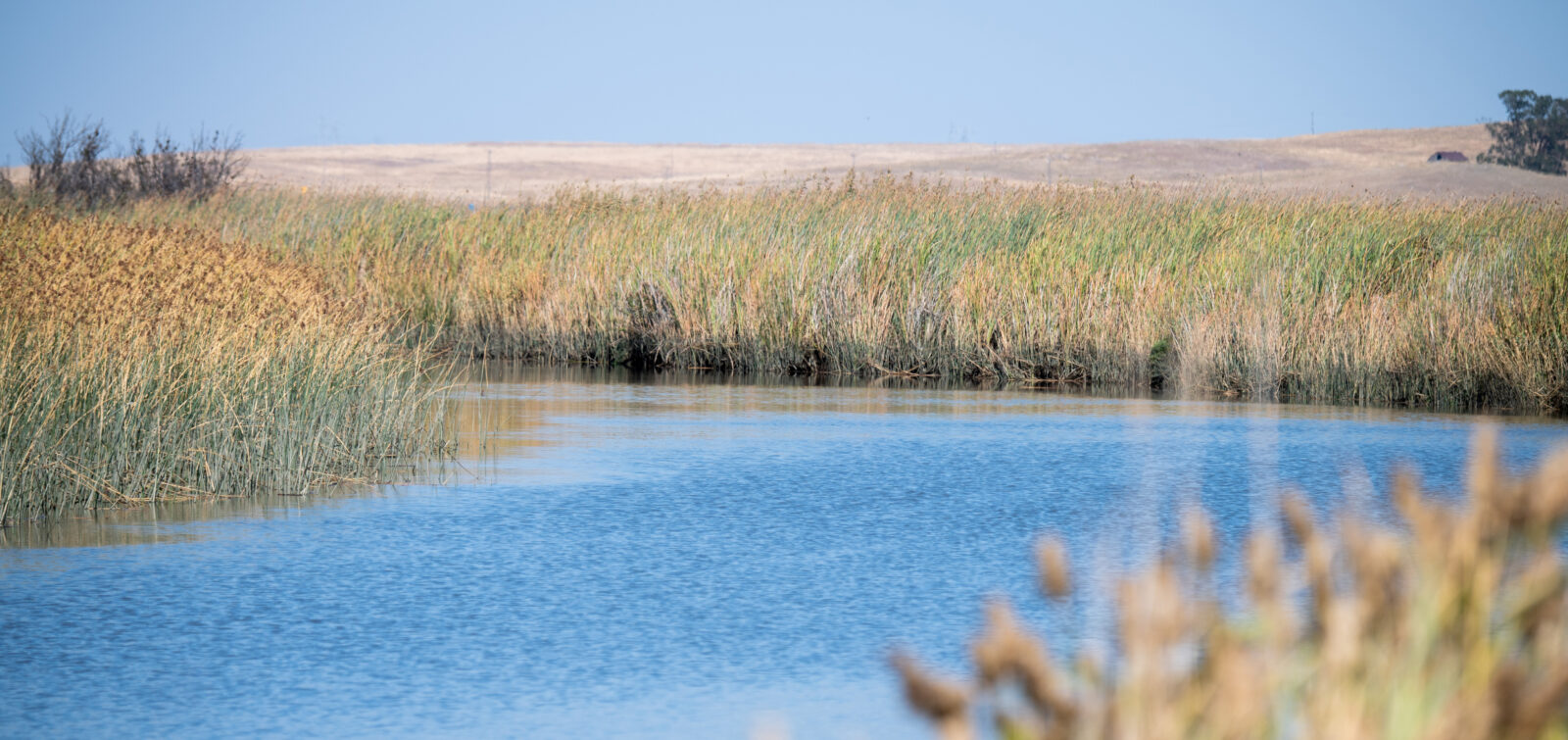
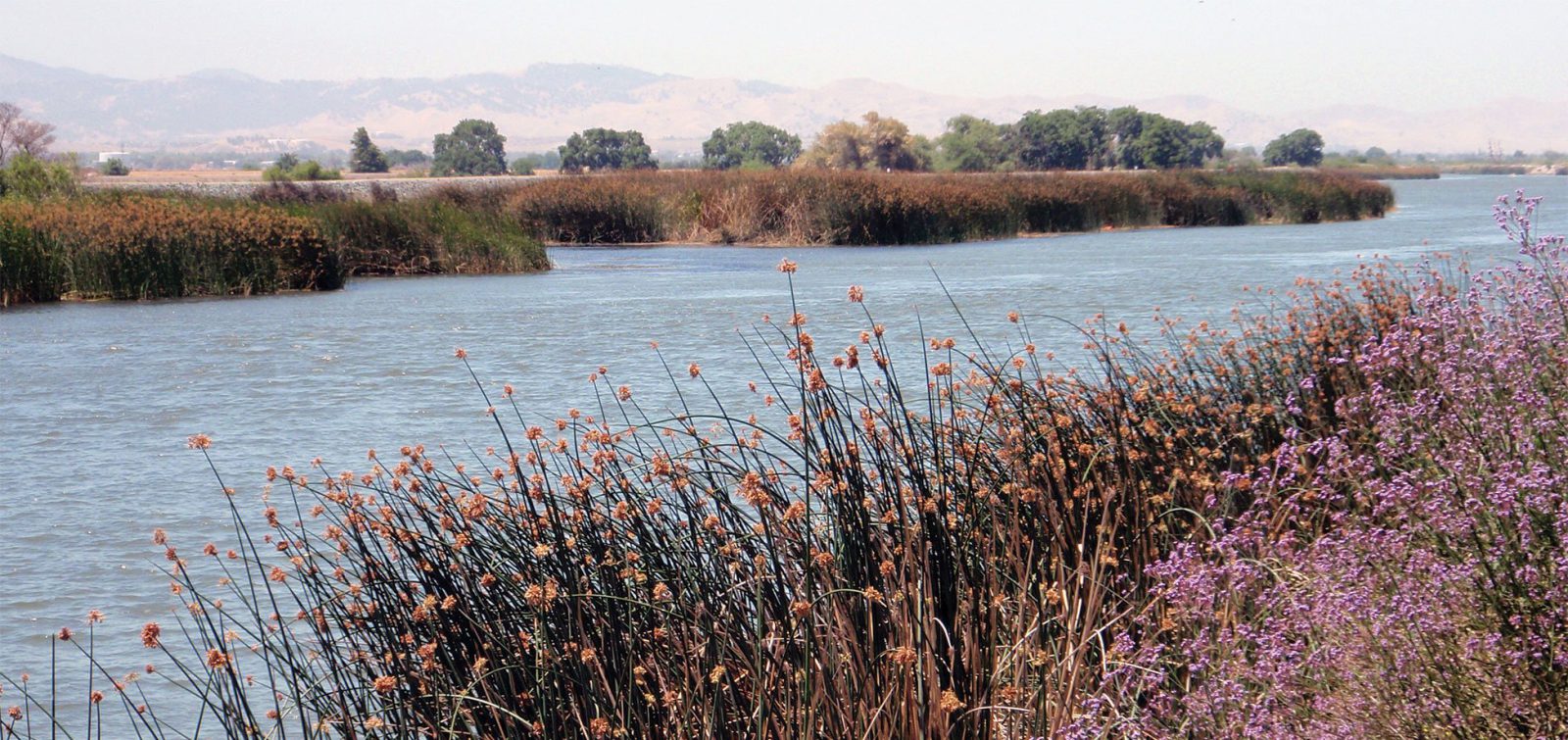
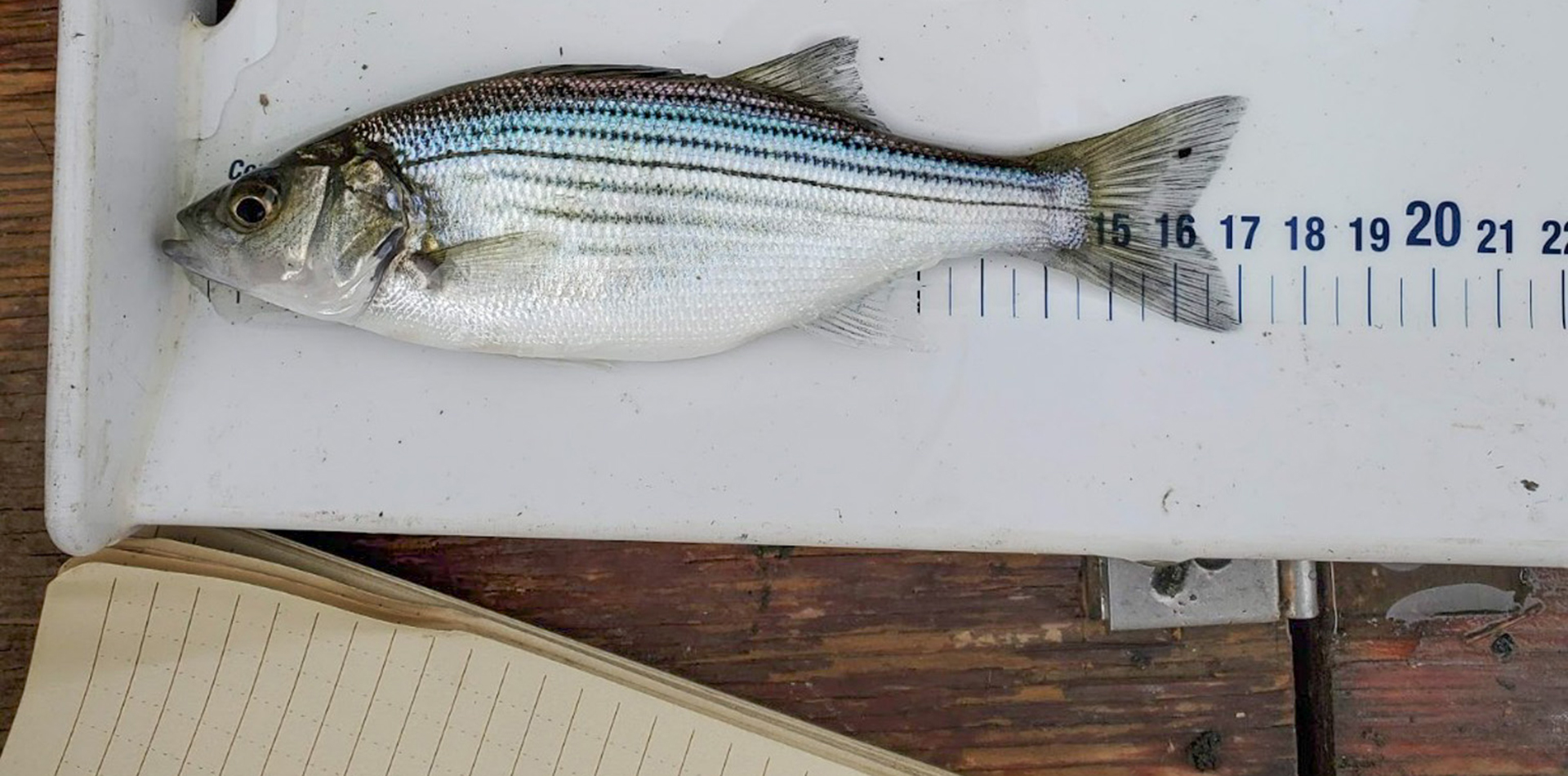
One area of particular concern is Clifton Court Forebay (CCF), a 6-square-mile reservoir at the southern end of the Sacramento–San Joaquin Delta (Delta). CCF and its basin serves as the starting point for the 400-mile California Aqueduct. Over the past 17 years, multiple studies have been conducted at the reservoir as the California Department of Water Resources (DWR) works to address declining salmonid populations. Migrating juvenile salmonids are especially vulnerable to predators such as striped bass, which were introduced into the Delta in the late 19th century.
For more than a decade, ESA and our partners at ICF have supported DWR in efforts to capture, track, and relocate predator species from CCF to support salmonid recovery. As part of the effort, a 5-year tracking study was developed to evaluate predatory fish movement within and around CCF. The research was recently published in Animal Biotelemetry and coauthored by ESA fisheries and aquatic scientists Taylor Spaulding and Paul Bergman, in collaboration with partners from ICF and DWR.
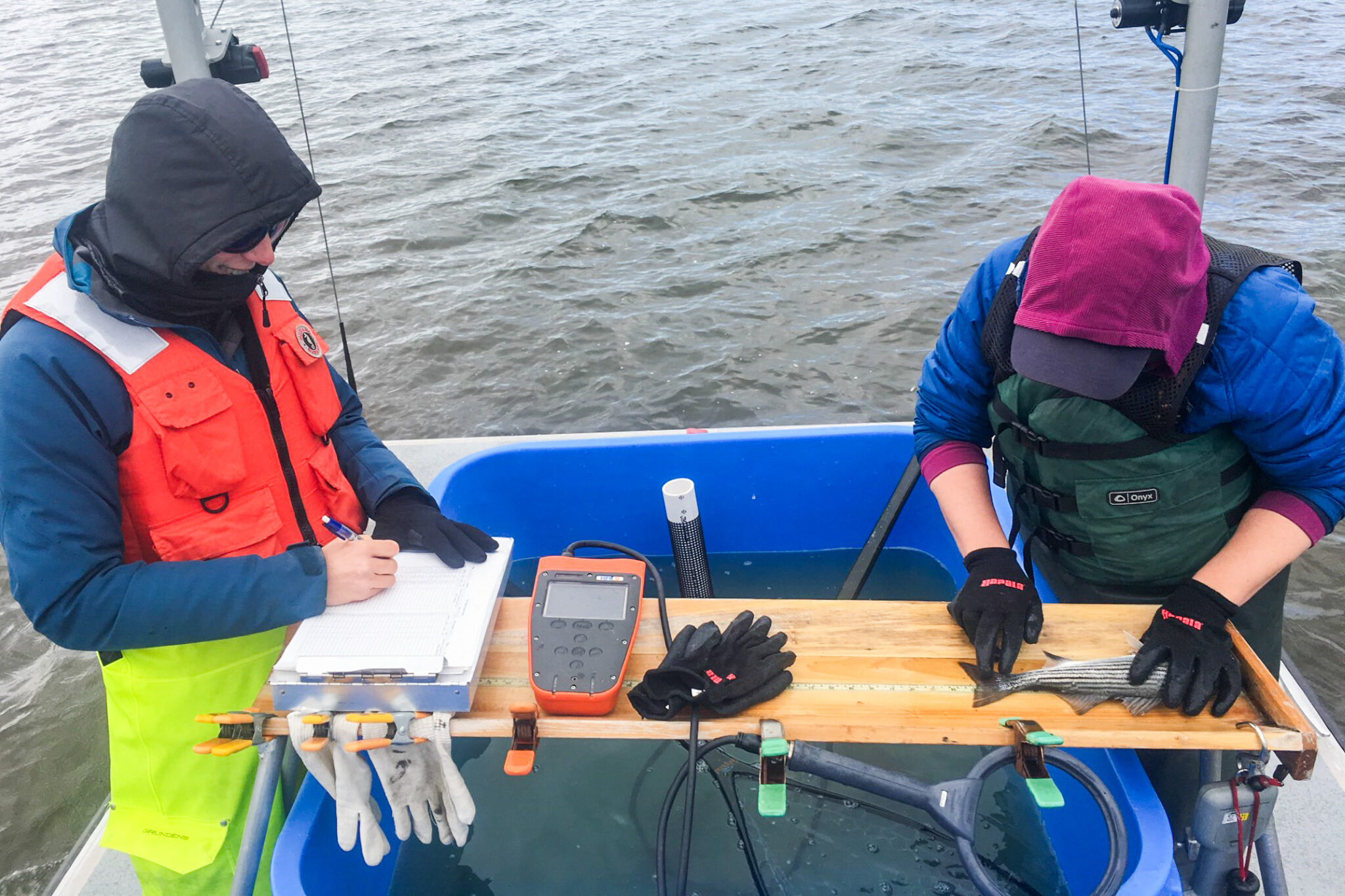
The work observed and monitored striped bass populations within and just outside CCF. The findings will ultimately help resource managers to better understand the environmental conditions that support striped bass presence and movement and inform predator removal efforts in the Delta.
“This was a great example of our team being able to flex its skills in not only implementing Special Studies but also working collaboratively with a team of scientists to publish this work and contribute to the long history of fisheries science in the California Delta,” says Bergman.
How the Study Was Conducted
The study focused primarily on tracking how striped bass move throughout CCF and surrounding channels. The research team also examined how their movement may be influenced by factors such as the time of year, hydrologic conditions, and operation of the facility’s intake gates (i.e., the primary point of entry and exit for striped bass).
The study was supported by a substantial, multi-year field effort supported by ESA’s fisheries team. Over the course of the study, researchers tagged nearly 600 striped bass and monitored their movement for over 5 years.
The team deployed a network of acoustic receivers, which recorded fish movement data within CCF, outside habitats, and at the intake gates. The team then conducted clustering analysis to classify the fish into five different groups based on their movement patterns.
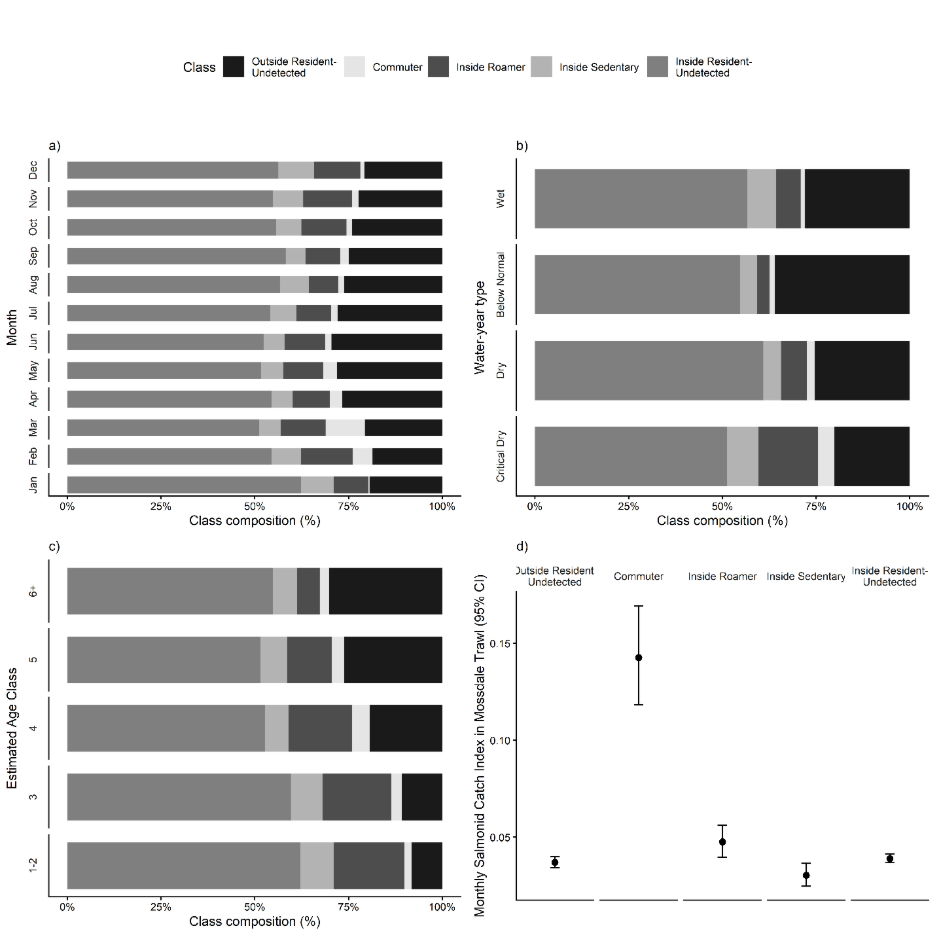
The research team found that there is high variability in how the fish move within and outside CCF, and their movement can be influenced by time of year, their age, and environmental conditions.
Informing Fisheries Management
These behavior records can ultimately provide a framework for resource managers to evaluate and refine predator removal methods.
“By understanding how different groups of striped bass move and use the Delta, we can be more strategic about where and when predator management actions may be most effective, and help reduce the impacts to threatened native species,” says Spaulding.
For more information about this research and its implications for fisheries management, access the open-access whitepaper at the link here, or contact Taylor Spaulding and Paul Bergman.
Above, USFWS photo of a Striped Bass, Morone saxatilis.