
| What You Should Know — USFWS has ended automatic “blanket” protections for newly listed threatened species. — Existing threatened species protections are not automatically changing, and Section 7 consultation and Section 10 permitting still apply where relevant. — Project teams will need to review each species-specific Section 4(d) rule on a case-by-case basis. — Tracking proposed Section 4(d) rules will become increasingly important during project planning. |
On July 21, 2026, the U.S. Fish and Wildlife Service (USFWS) published a final rule ending the future use of its “blanket” protections for species newly listed or reclassified as threatened under the federal Endangered Species Act (FESA). The rule took effect on August 20, 2026, and applies prospectively to species under USFWS jurisdiction. The National Marine Fisheries Service (NMFS) already uses species-specific protections for threatened species under NMFS jurisdiction and thus is not affected by this rule.
Previously, the blanket rule functioned as an automatic safety net. FESA Section 4(d) gives the Secretary of the Interior authority to issue regulations considered “necessary and advisable” for the conservation of threatened species and to extend certain prohibitions under FESA Section 9 to those species. Under that blanket rule, when USFWS listed a species as threatened, most of the federal prohibitions that apply to endangered wildlife generally applied automatically unless the agency adopted a different, species-specific rule. Now, under the final rule that USFWS just issued, that automatic starting point will no longer apply to newly listed threatened species (those listed after August 20, 2026).
USFWS will instead decide, species by species, which protections are “necessary and advisable” for conservation and establish those protections through a species-specific Section 4(d) rule.
Bottom line for project permitting: The rule does not automatically remove protections from currently listed threatened species or eliminate Section 7 consultation, Section 10 permitting, or state-law requirements. For future threatened species, however, project teams will need to read the listing decision and the accompanying Section 4(d) rule together to determine what conduct is prohibited, what exceptions apply, and whether incidental take authorization is needed. The Section 4(d) rule for each species affected by each project may become a central project-planning document.
From Proposed to Final Rule
USFWS proposed the change in November 2025 and finalized the central framework substantially as proposed. The final rule removes the blanket protection provisions for future listings and makes species-specific Section 4(d) rules the principal mechanism for protecting newly listed or reclassified threatened species. USFWS states that it intends to publish those rules at the same time as listing or reclassification decisions, although the final rule does not establish a fixed deadline requiring simultaneous publication.
Equally important is what the rule does not do. It does not amend the FESA statute, change the definition of a threatened species, automatically revise protections for species already listed as threatened, or eliminate the consultation and incidental take permitting frameworks in Sections 7 and 10. Existing blanket protections and existing species-specific rules remain in place. A summary of the changes following the iterations of the rule is provided in the table below.
| FESA Section 4(d) topic | Previous framework1 | November 2025 proposal | July 2026 final rule |
| Future threatened species | Most Section 9 prohibitions applied automatically through the blanket rule. | End automatic blanket protections for future listings. | Finalized. Protections will depend on each species-specific Section 4(d) rule. |
| Species-specific rules | Primarily tailored or created exceptions to the blanket protections. | Make tailored rules the primary source of prohibitions and exceptions. | Finalized substantially as proposed. |
| Timing | Blanket protections applied when the listing became effective. | State an intent to issue a tailored rule with the listing decision. | Intent retained; no fixed deadline requires simultaneous publication. |
| Existing species and permits | Governed by existing blanket or species-specific rules and authorizations. | No automatic retroactive change. | Existing protections and authorizations remain unless separately revised. |
| Agency scope | USFWS used blanket protections; NMFS used species-specific rules. | USFWS-only change. | USFWS framework finalized; NMFS remains unchanged. |
1 For more than 40 years, USFWS used the blanket Section 4(d) rule as the default for threatened species. It should be noted that in 2019, under the first Trump Administration, USFWS eliminated the blanket approach for species newly listed as threatened after September 26, 2019. In 2024 under the Biden Administration, USFWS reversed the 2019 change and reinstated the blanket-rule protections in place prior to 2019.
Five Questions Project Teams Should Ask
For newly listed or reclassified threatened species, project teams will need to ask: What activities does the species-specific Section 4(d) rule prohibit, what activities does it allow or exempt (also known as “exceptions”), and how do those requirements affect project design, construction, operations, maintenance, and permitting strategy?
That shift from the blanket protections does not mean that permitting will necessarily become easier. Some future Section 4(d) rules may apply protections similar to the former blanket framework, while others may tailor prohibitions or create exceptions for activities that USFWS determines are compatible with conservation. The practical effect will therefore be applied species by species and assessed considering the specifics of project activities.
1. Which species and projects will actually be affected by the new rule?
The final rule is prospective. It applies to species under USFWS jurisdiction that are newly listed as threatened, or reclassified from endangered to threatened, after August 20, 2026. It does not automatically remove blanket protections from species that are already listed as threatened, and existing species-specific Section 4(d) rules remain in effect unless USFWS separately revises them.
For current projects, the first step is therefore to confirm which regulatory framework applies to each species. A project involving an already-listed threatened species may see no immediate change. By contrast, a project that occurs within the known geographic range of, or a project that is known to be occupied by, a species being considered for a future threatened listing may need to track both the listing action and the accompanying Section 4(d) rule because the latter will define the federal prohibitions and exceptions that apply to project activities.
The rule applies only to species under USFWS jurisdiction. NOAA Fisheries already uses species-specific Section 4(d) rules for threatened species under its jurisdiction, so this final rule does not change that framework.
2. How will project teams know what activities are prohibited?
For future USFWS threatened species, the listing category alone will no longer answer that question. Project teams will need to review the species-specific Section 4(d) rule together with the listing decision. The rule may extend selected Section 9 prohibitions, identify prohibited forms of take, and establish exceptions or conditions for particular activities.
For example, a tailored rule could prohibit activities that kill or injure a threatened species while allowing specified habitat restoration, wildfire-risk reduction, agricultural practices, or routine infrastructure maintenance when defined conservation measures are followed. Exceptions could include conditions such as seasonal work windows, preconstruction surveys, monitoring, reporting, or implementation of specified avoidance measures.
This makes the details of the Section 4(d) rule a central project-planning document. Two threatened species occurring in the same project area could be subject to different prohibitions and exceptions, and the same activity could therefore have different federal compliance consequences depending on the species involved.
3. How could species-specific Section 4(d) rules change project design or mitigation?
Species-specific rules may create opportunities to incorporate compliance into project design earlier. If an exception is conditioned on particular construction methods, timing restrictions, monitoring, or conservation practices, a project team may be able to design the project or its operations to satisfy those conditions rather than pursue separate incidental take authorization for that activity.
For example, a utility-scale solar project overlapping the range of a newly listed threatened species might encounter a Section 4(d) rule that prohibits certain activities during the breeding season but excepts specified vegetation-management or habitat-restoration work. The project team could evaluate construction sequencing, access routes, vegetation management, and long-term operations against those conditions during design rather than assuming a uniform set of take prohibitions applies.
Mitigation may likewise become more species- and activity-specific. A tailored rule may focus compliance on the stressors USFWS identifies as contributing to the species’ threatened status and may authorize activities considered inconsequential to conservation. However, Section 4(d) exceptions do not displace mitigation or conservation requirements imposed through Section 7 consultation, a habitat conservation plan, state endangered-species laws, or other federal and state permitting programs.
4. How could the new framework affect the permitting pathway for a project?
For projects with a federal permit, funding, approval, or other federal nexus, Section 7 consultation requirements remain in place. Project teams will need to consider both the applicable species-specific Section 4(d) rule and the separate Section 7 consultation requirements.
For projects without a federal nexus, the Section 4(d) rule may be especially important in determining whether a proposed activity is prohibited under federal law. If anticipated activity results in take under the Section 4(d) rule and no exception applies, the project may need to avoid or modify the activity or seek an incidental take authorization and habitat conservation plan under Section 10. If the proposed activity is not prohibited or qualifies for an exception, Section 10 authorization may not be necessary for that activity.
5. What should project teams monitor when a new threatened species is proposed for listing?
Under the new framework, monitoring the listing proposal alone will not be enough. USFWS states that it intends to issue species-specific Section 4(d) rules concurrently with listing or reclassification decisions, but the final regulation does not require simultaneous publication of the listing decision and the Section 4(d) rule. Project teams with long planning horizons should therefore track both actions closely.
Once published, the proposed species-specific Section 4(d) rule also creates an important opportunity for project proponents, agencies, landowners, Tribes, and other interested parties to provide information during the public comment period. That information can help USFWS understand how proposed prohibitions or exceptions would operate in practice and may inform how the agency structures the final Section 4(d) rule. Where a proposed Section 4(d) rule could affect an active or planned project, commenters may provide information including how particular construction, maintenance, land-management, or conservation activities operate in practice; the conservation measures already incorporated into those activities; and whether proposed prohibitions or exceptions would create unintended permitting or operational consequences. This record may support modifications to the final rule, including appropriately tailored exceptions or conditions for activities that can be conducted in a manner consistent with the conservation of the species.
For projects in areas where USFWS is considering a species for listing, early scenario planning may be particularly useful. Teams can evaluate how project design and permitting would change under different potential prohibitions or exceptions, rather than waiting until the final listing and Section 4(d) rule are published.
Key Takeaway
The most important consequence of the final rule is not that threatened species will necessarily receive fewer protections. It is that future protections will be less uniform. For each newly listed or reclassified USFWS threatened species, the species-specific Section 4(d) rule will become a central source for determining what activities are prohibited, what exceptions are available, and how those requirements interact with project design and other FESA permitting pathways.
For project proponents, this increases the value of early biological due diligence and regulatory tracking. A threatened-species listing will remain important, but the accompanying Section 4(d) rule may be just as consequential for determining whether and how a project can proceed.
Our Advice to Clients
As USFWS implements the new framework one species at a time, project teams should:
- Monitor proposed listings, reclassifications, and proposed Section 4(d) rules together, leveraging available tools like ESA’s Protected Species Updates.
- Identify which threatened species on or near a project are governed by existing blanket protections versus species-specific rules.
- Evaluate construction, operations, maintenance, and conservation activities against the exact prohibitions, exceptions, and conditions in the applicable Section 4(d) rule.
- Participate early during public comment periods when a proposed Section 4(d) rule could affect an active or planned project, particularly where project-specific information could help USFWS understand how proposed provisions would operate in practice.
- Continue evaluating Section 7, Section 10, state endangered-species laws, and other environmental requirements separately rather than treating a Section 4(d) exception as a substitute for those authorities.
- Preserve flexibility in project schedules and mitigation strategies where listing or Section 4(d) rulemaking is still pending.
Looking Ahead
The practical significance of this final rule will become clearer as USFWS develops species-specific Section 4(d) rules for future threatened listings and reclassifications. Those individual rules will determine whether the new framework produces meaningful permitting flexibility, maintains protections similar to the former blanket approach, or creates additional variability that project teams must manage.
The rule also sits within a broader set of changes to FESA implementation, including the recently finalized rescission of the regulatory definition of “harm” and the new USFWS critical habitat exclusion framework, along with other proposed rulemakings affecting listing and Section 7 consultation. Project proponents should evaluate these changes together because their combined effect may shape project permitting differently than any single rule viewed in isolation.
We are here to help. ESA will continue monitoring implementation of the final rule and future species-specific Section 4(d) rules and advising clients on project-specific permitting strategies as the regulatory landscape evolves. If you have questions about how these changes may affect your projects, please contact Barbra Calantas, Biological Resources and Land Management Practice Leader.
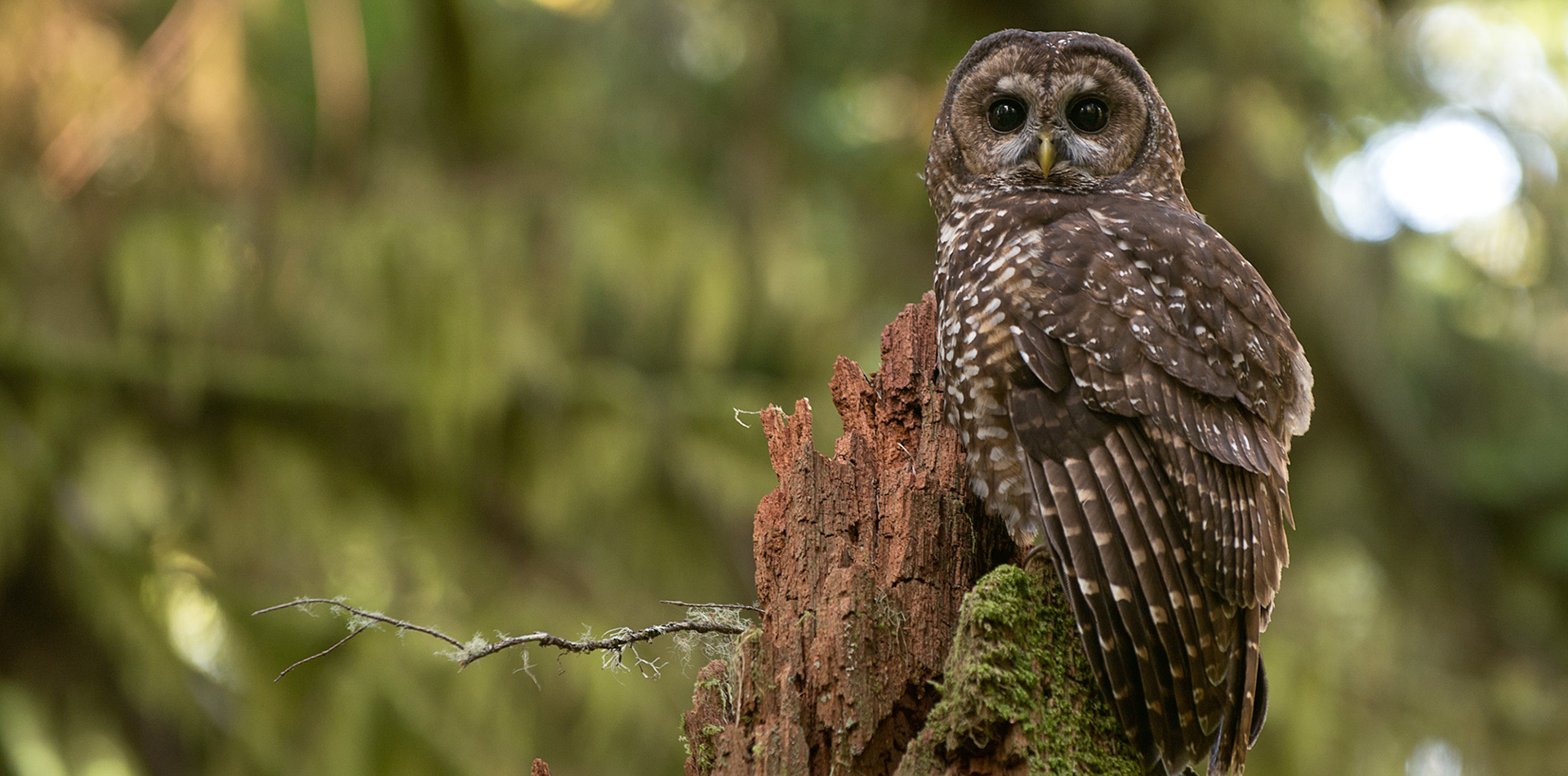
Top image: The California Spotted Owl, (Strix occidentalis occidentalis) is a species being proposed by the USFWS to list as threatened for populations in the Sierra Nevada mountain range and the Sierra Nevada foothills. Photo credit: Alan Dyck.
Author

Biological Resources and Land Management Practice Leader
Date
August 27, 2026