
ESA’s approach to restoring and revitalizing the Napa River began with devising highly functional and complex restoration nodes for the severely incised and degraded river.
Historically, the Napa River was a dynamic network of multithreaded channels within a broad alluvial valley. A vast array of native plants and animals, including salmon and beavers, once thrived in the valley’s riparian and wetland habitats.
Over the past two centuries, land use changes have altered the watershed and severely degraded habitat conditions. Land cultivation and development required a network of berms and ditches to channelize and drain the valley. Such land uses also increased impervious surfaces. The combination of channelization and impervious surfaces drastically increased the amount of runoff to the Napa River during storm events, causing an imbalance in stream flow and sediment supply. This imbalance led to a process known as incision, where excess stream flow erodes the river’s bed and banks to deeper, wider dimensions. As incision ensued, the river became disconnected from its natural floodplain, which further confined flows and exacerbated erosion.
Through this cycle of erosion and disconnection, the Napa River experienced deep (up to 30 feet), systematic incision. Such extreme incision was detrimental to the miles of critical aquatic and riparian habitat that supports sensitive species such as Chinook salmon and steelhead trout. Erosion stripped the streambed of gravel (down to bedrock tuff in many areas) that forms the river’s complex riffle and pool habitat and is used by the species for spawning and rearing. Eroding banks also took out stretches of native trees that shaded the river, and added tons of fine sediment to the streambed that plugged up what little coarse spawning gravel remained.
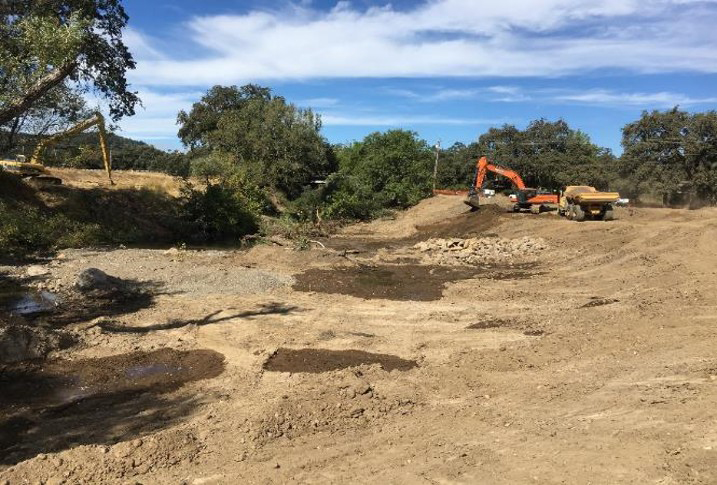
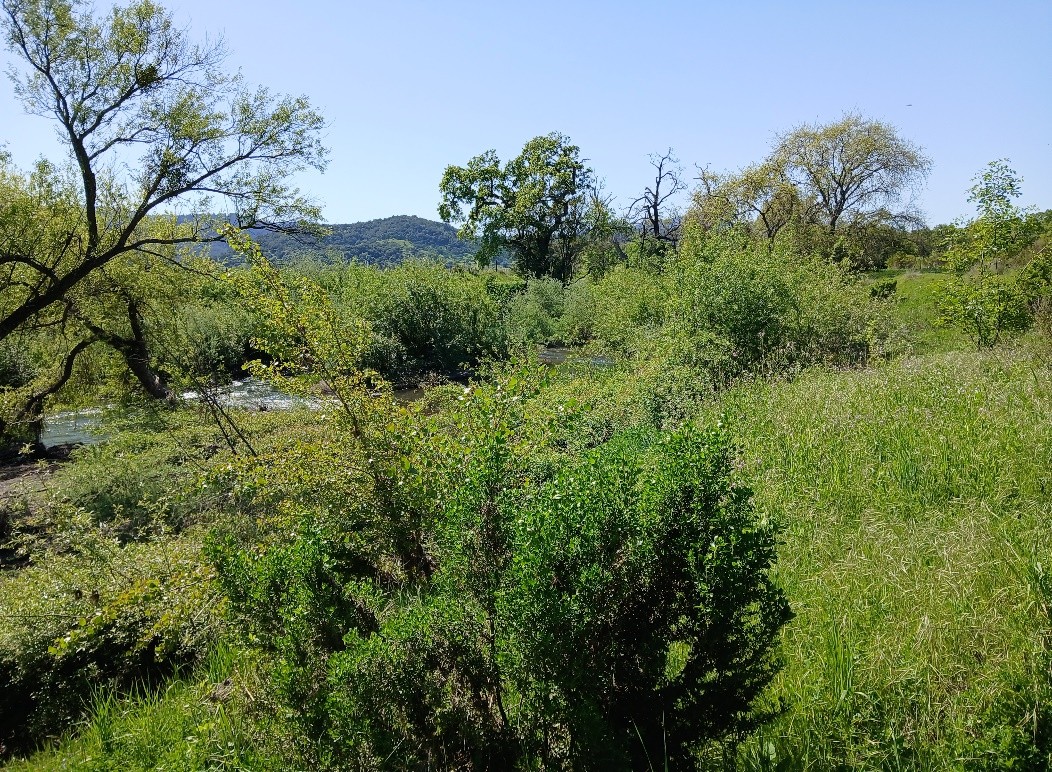
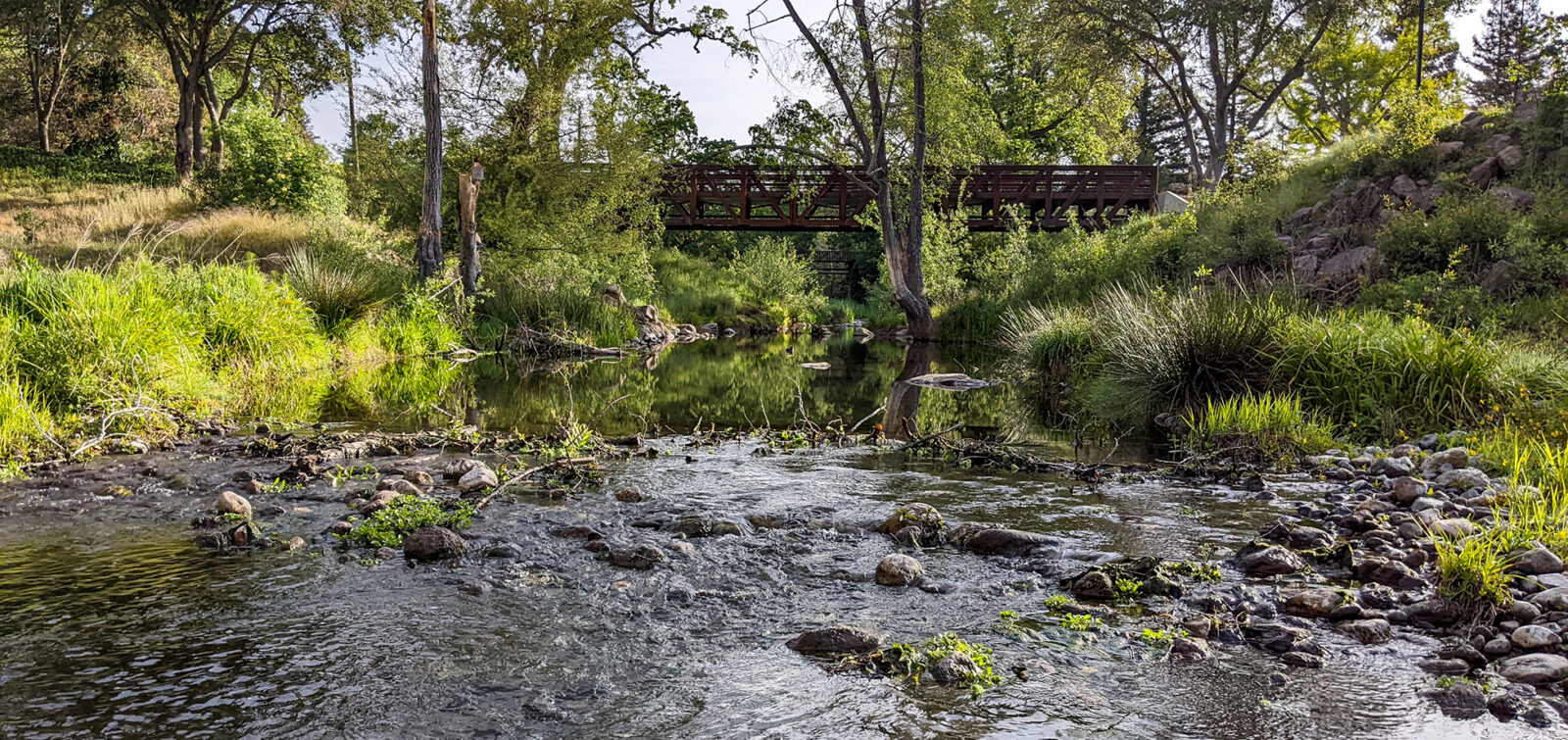
Above: Site 13 of the Napa River Oakville to Oak Knoll Restoration Project during construction in 2017, versus nine years later looking at the same location. Photo credit: Napa County and Napa RCD.
At the close of the 20th century, landowners living and cultivating along Napa River were feeling the effects of the ongoing incision and experiencing significant land loss. An organized group of landowners, the Rutherford Dust Society, working with the Napa County Resource Conservation District (Napa RCD) and Napa County Flood Control and Water Conservation District (Napa County), enlisted the help of ESA river restoration experts Andrew Collison and Jorgen Blomberg to develop a plan to address the problem.
The initial conceptual plan for restoring the Napa River was completed by ESA in 2003. The plan included a design approach targeting strategically selected locations along 5 miles of the Napa River near Rutherford to restore river function and enhance habitat. It was clear that to restore the river, land would need to be relinquished from the surrounding landowners. The design identified strategic locations where donated land could be concentrated toward creating broad “restoration nodes”—or intervention areas—that would return the complexity and functionality of the historic Napa Valley.
The ESA team, led by Andy and Jorgen, began designing restoration nodes for Napa County’s 5-mile Rutherford project in 2009. The designs consisted of grading widened corridors with low floodplain benches and gently sloped banks, to restore resilient physical processes and habitat within large affected areas. Grading was aimed at reconnecting floodplain habitat and establishing healthy ecosystem processes to reduce bank erosion, improve sediment dynamics, and re-establish riparian vegetation. The design also involved large wood debris and boulder clusters installation, gravel augmentation, biotechnical bank stabilization, and native plant revegetation to improve rearing, spawning, and refuge habitat conditions for salmon and steelhead.
Construction for the first sites designed by ESA began in 2010 and concluded in 2014, with ESA developing construction documents and overseeing five of the Rutherford project’s extensive construction phases. Later, with ESA’s support, Napa County extended their restoration efforts for another 9 miles of the Napa River as part of Oak Knoll to Oakville (OVOK) project. This project was constructed between 2015 and 2021 as part of another five phases.
Over the course of the projects, the team learned many new insights that they carried forward into each subsequent construction phase. For example, ESA found that the wider the channel corridor and the lower the floodplain bench, the more effective the restoration node was at unlocking processes that naturally create complex and diverse habitat. During large storm events, the river’s wider and lower areas were found to be greatly effective in depositing large amounts of coarse sediment along the channel bed—confirming there was a significant amount of sediment within the system. This created new riffles, pools, gravel bars, and bifurcated channels, and transplanted riparian seeds, helping to jump-start native plant recovery. By re-establishing these important processes for depositing sediment, the river’s features were enhanced, helping to create more natural habitat diversity and complexity.
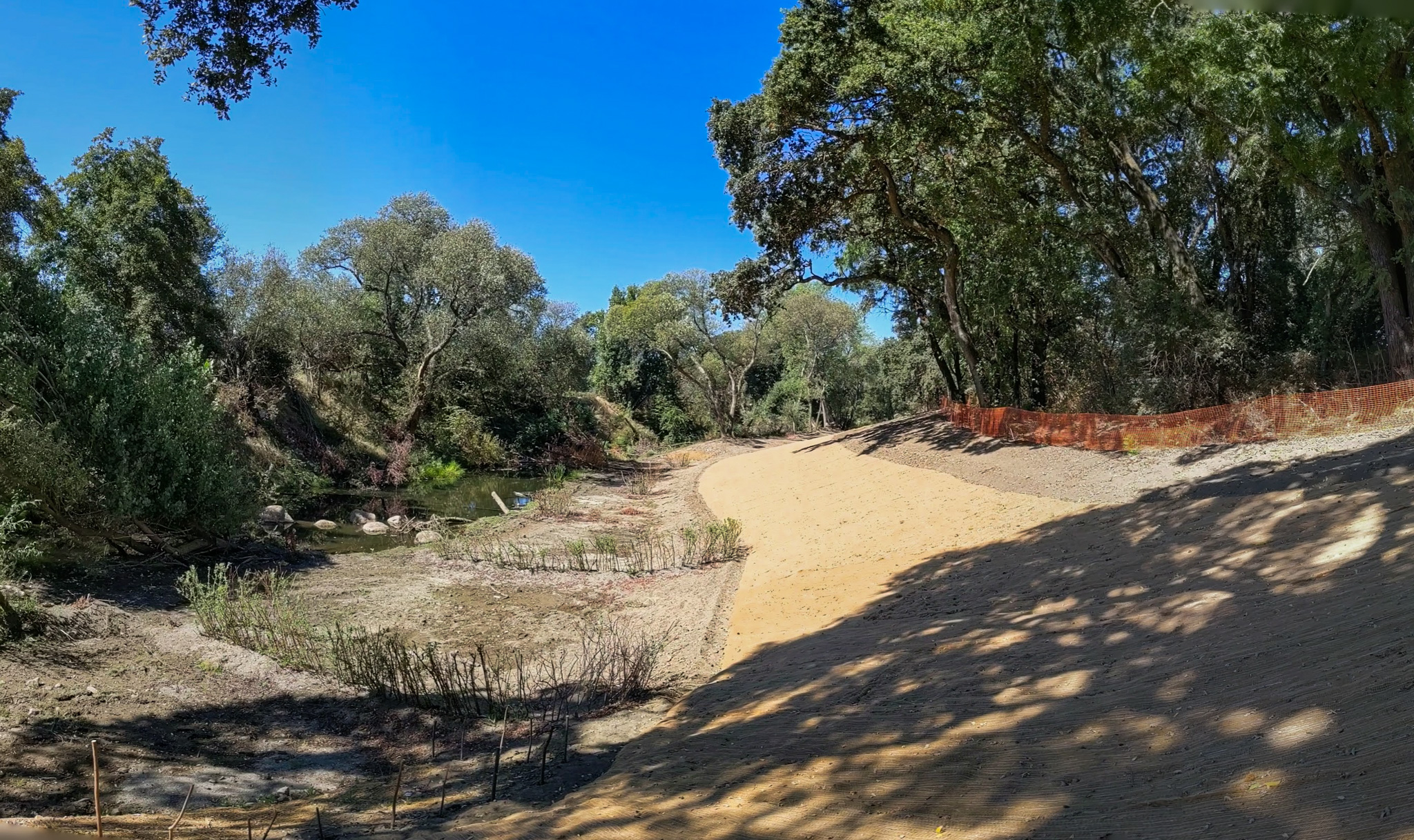
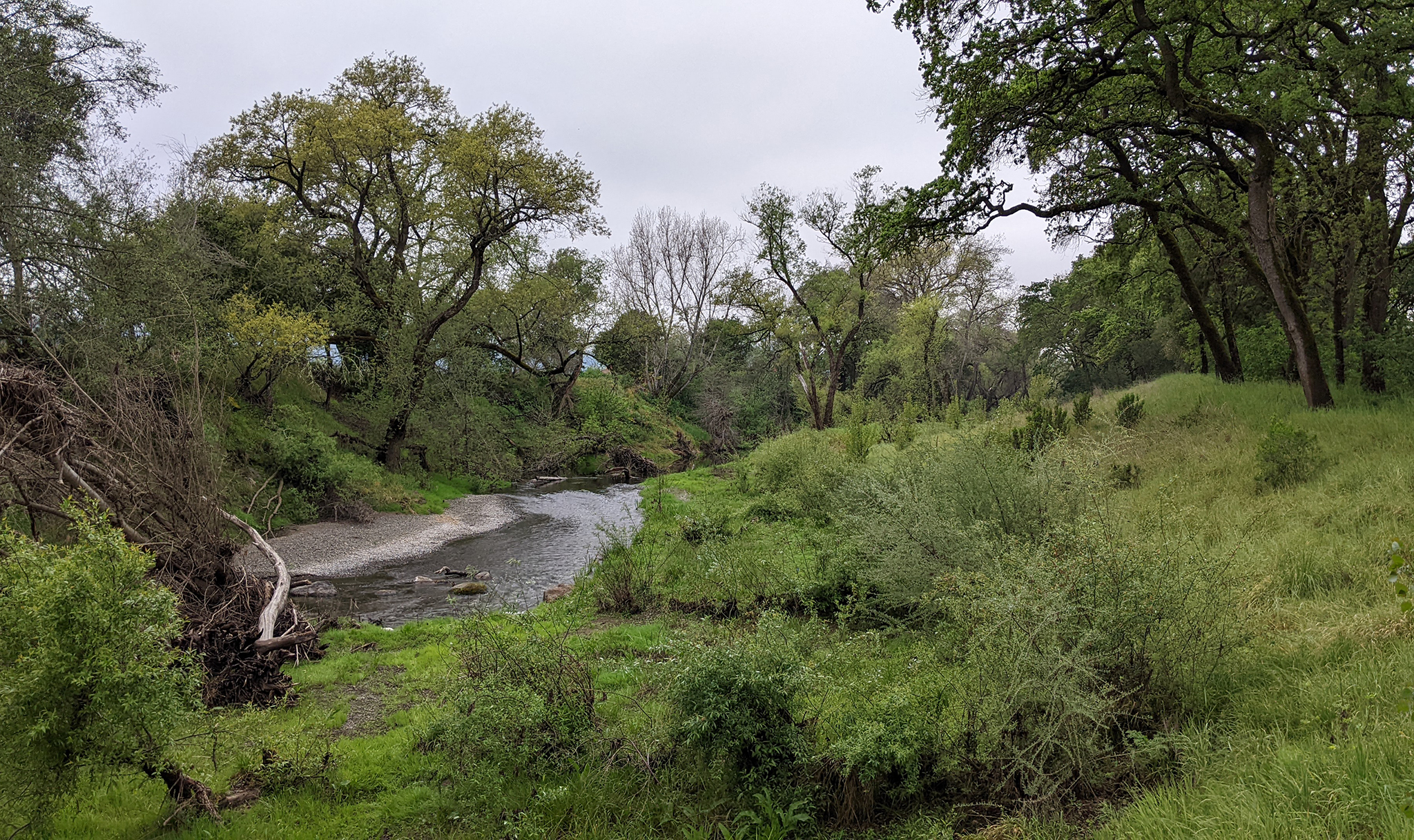
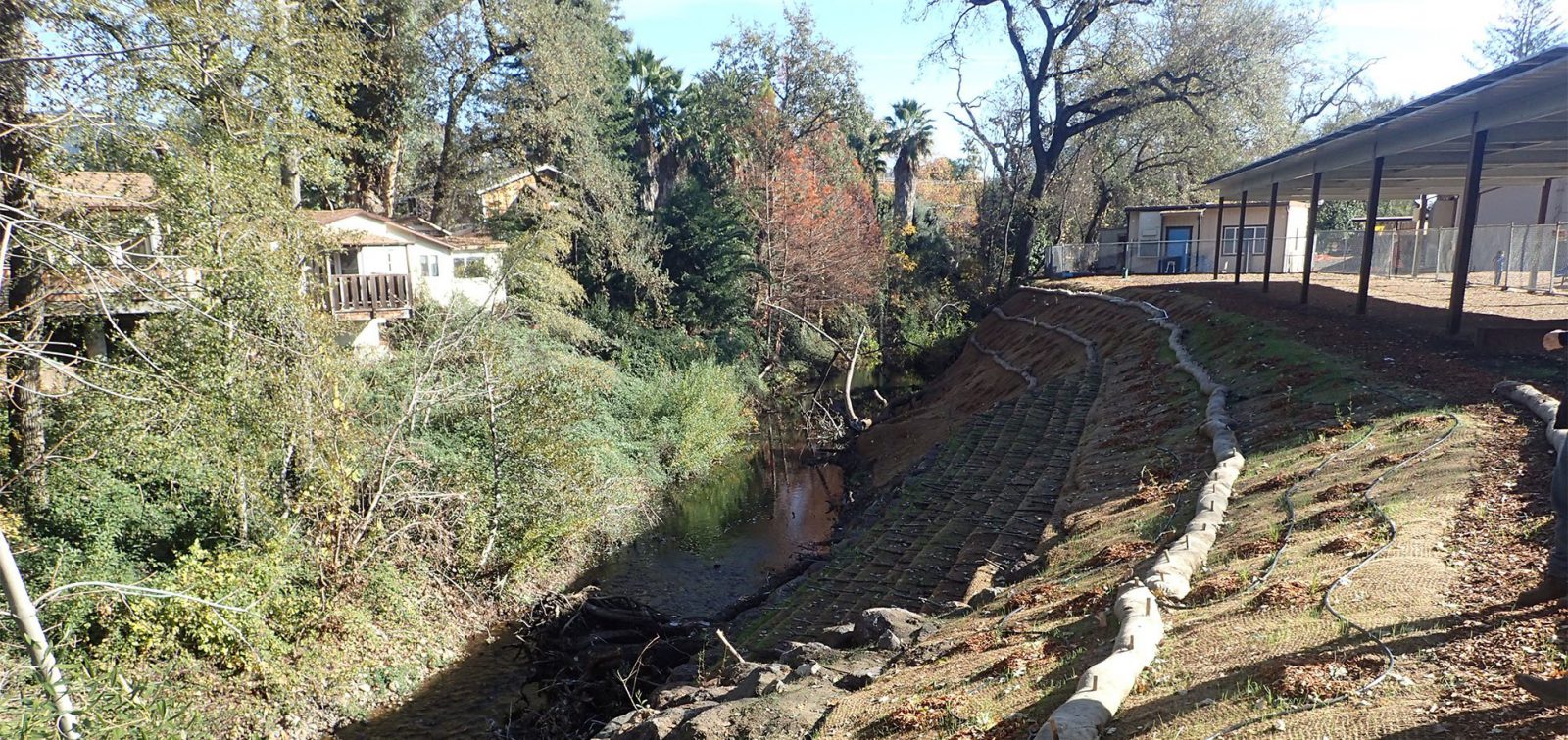
Above, looking upstream at Site 20 of the Napa River Oakville to Oak Knoll Restoration Project from the same location during construction (2019) versus just three years later. Photos by Jason White.
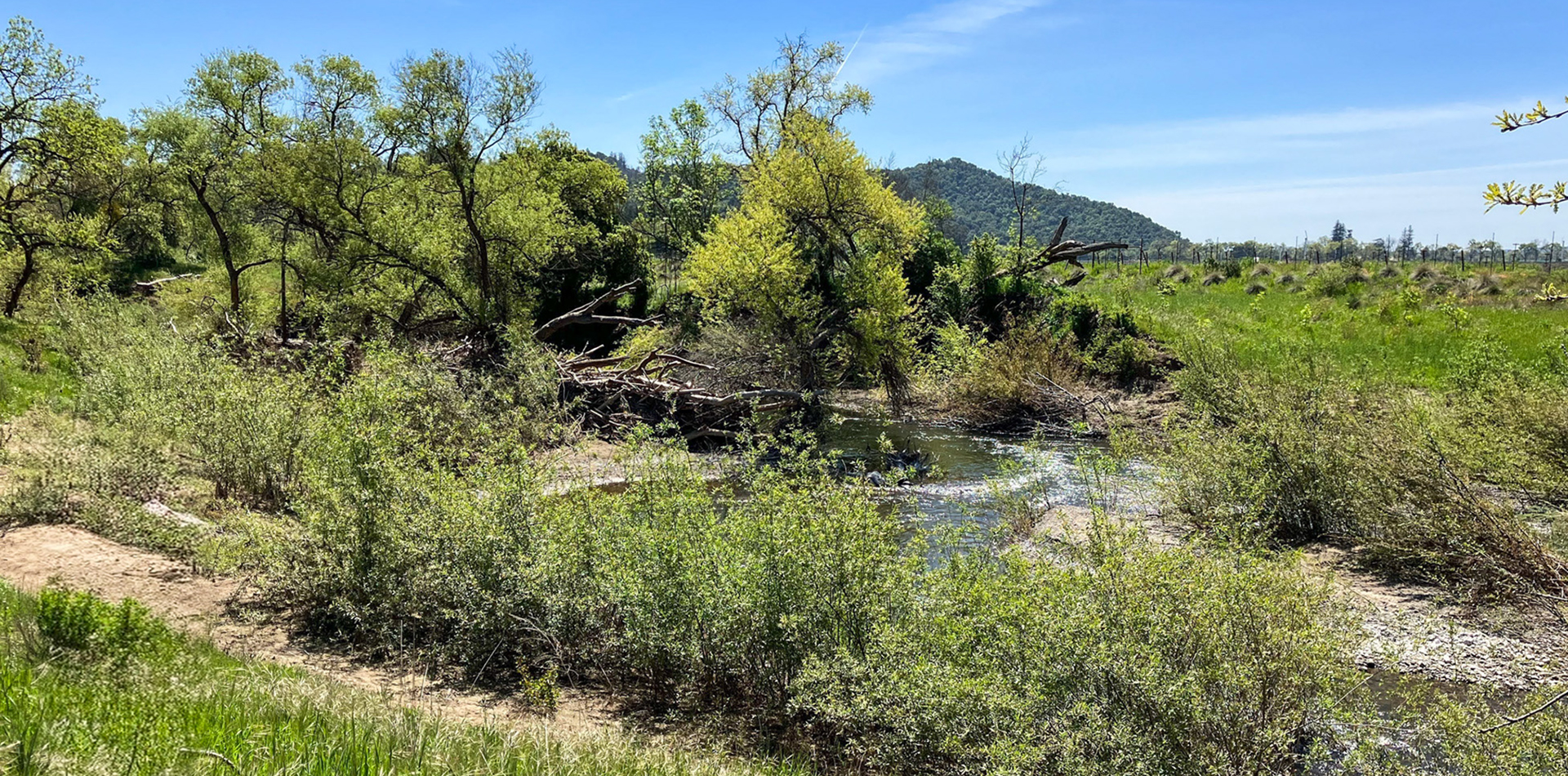
Recent monitoring by RCD shows substantial recovery—just 5 to 10 years after construction. Surveys indicate that much of the streambed has aggraded 1 to 2 feet, helping reverse the trend of incision. Napa RCD also found that the restoration nodes and related enhancements provide complex instream conditions that benefit young salmonids, while restored physical processes have supported natural vegetation recruitment. Beaver dams have also been observed within restored areas.
According to the monitoring report, “Overall, the Project is providing important foraging and rearing areas for both native aquatic and terrestrial wildlife through the creation and enhancement of instream, floodplain, and riparian habitat areas.”
Delivering these results across 14 miles of the Napa River makes this one of ESA’s most extensive and successful river restoration projects.
Author

Watersheds & Rivers Team Manager
Date
August 24, 2026