

On November 21, 2025, a new package of four proposed rules by the U.S. Fish and Wildlife Service (USFWS) and National Marine Fisheries Service (NMFS) (collectively, the Services) was published, with proposed changes to the regulations that implement the Federal Endangered Species Act (FESA). The changes largely revert back to FESA regulations issued during the first Trump administration that were rescinded during the Biden administration, with some additions.
These additions are due to more recent legal and policy updates such as the overturning of the Chevron deference under Loper Bright Enterprises v. Raimondo, the executive orders issued earlier this year under the current Trump administration (primarily EOs 13154 and 14219), and court challenges to the reversals made during Biden’s presidency. Further reasoning provided by the Services throughout these proposed rules are to provide the “best reading of the ESA” after Loper Bright, as well as more transparency for agencies and applicants with regulations that are clearer to implement.
The four proposed rules including Federal Register (FR) number, relevant section of FESA, and primary topics are listed below:
- FR 2025-20549, FESA Section 4 – Species Listings and Designating Critical Habitat
- FR 2025-20550, FESA Section 4 – Designating Critical Habitat
- FR 2025-20551, FESA Section 7 – Interagency Cooperation
- FR 2025-20552, FESA Section 4(d) – Removing “Blanket Rule” Protections for Threatened Species
For these four proposed roles, two are put forth by USFWS and two by the Services. Collectively, these documents propose changes to:
- The regulations that specify listing/delisting species and how critical habitat designations are made.
- How federal interagency consultations under Section 7 of FESA are conducted.
- Species protections for species listed as threatened.
- How and when areas may be excluded from critical habitat designations.
Key Takeaways and Real-World Implications
Time will tell what the consequences of these proposed changes will be if or when they are finalized, though we expect opponents to challenge the rules in court. Advocacy organizations for biodiversity or long-term species recovery argue the changes amount to a substantial weakening of one of the United States’ strongest laws for preventing species extinctions. Biologists like myself in environmental consulting will have to navigate these evolving regulatory policies with a different set of rules (such as the forthcoming update to the 1998 Consultation Handbook mentioned in FR 2025-20551) to advise our clients. This important resource that provides the framework for FESA consultation is being updated because the governing Section 7 regulations have been revised and continue to be revised (as we see by these four proposed rules and the proposed rule issued by the Services earlier this spring on rescinding “harm”) since the Handbook was written.
Landowners, developers, and project applicants may see a potential loosening of FESA protections result in more simplified project planning and environmental permitting/review processes. These proposed rules have not been finalized, and comments will continue to be accepted during the public review period which ends December 22, 2025.
| What is important to note is that these proposed changes would not impact existing classifications of species listing status or designation of critical habitat but would only impact future classifications. |
Projects currently being evaluated by USFWS/NMFS under Section 7 or 10 will have to meet the current rules regarding species and designated critical habitat. The requirements for future FESA Section 7 or 10 consultations will be codified in the updated Consultation Handbook.
Below is a brief of each of the proposed rules by FR document number, including a discussion of potential implications.
FR 2025-20549 (FESA Section 4) – Species Listings and Designating Critical Habitat, Issued by The Services
What would it do?
- Revises the regulations that govern how species are added to or removed from FESA lists (e.g., listing, reclassifying, delisting). Specifically requires that listing classification determinations must consider possible economic impacts (and other impacts which are not defined), as factors for whether a species should be listed. Additionally, revisions were proposed to the three criteria for when a species is delisted. The current criteria includes delisting a species if it is determined extinct, recovered, or there was an error in the original listing classification. The new criteria proposed delisting a species if it is extinct, does not meet the definition of an endangered or threatened species, or if the listed entity does not meet the definition of a species.
- The Services frame this change as “clarifying and interpreting” statutory criteria and procedures—i.e., tightening the rulebook for how they make (and explain) these determinations. Specific to the criteria are considerations to clarify terms like “foreseeable future.”
- Revises how critical habitat designations are made under ESA Section 4, specifically for clarifying “non-prudent” circumstances for determining critical habitat and considering when critical habitat is designated for areas unoccupied by the listed species. The proposal restores the following two-step approach from the first Trump administration where the Services would first designate occupied areas as critical habitat, and second, only consider unoccupied areas if a designation limited to occupied areas would be inadequate for conservation, and would require a stepwise analysis of “reasonable certainty” that an unoccupied area will contribute to conservation and contains essential features. Previously, this level of analysis wasn’t required for classifying unoccupied areas as critical habitat.
What are the implications?
- With consideration of economic impacts and other impacts as a result of species listings, there’s more opportunity to weigh significantly on the side of not moving forward with species listing as an impediment because it can create a clearer justification for declining listings. Opposition documented to this proposed rule in 2019 stated that economic considerations have no relevance to determinations regarding the status of a species, and that listing determinations should instead be made on the best scientifically available information (FR-2019-17518). Considering economic impacts and other factors such as public health and safety, community interest, and environmental impacts such as potential for wildfire may preclude critical habitat from being designated.
- More limited “unoccupied” critical habitat designations (harder to expand beyond where a species currently is). As well, there may be more justification that didn’t exist previously, where it is decided the Services may determine designating critical habitat is “not prudent.” Reasons include (1) the causes for threats to habitat that may lead to threatened or endangered status would not be able to be addressed by management actions (i.e., mitigation or conservation), or (2) the Secretary determines the designation of critical habitat is not prudent based on the best scientific data available, at their discretion.
- Overall, there may be fewer listed species and less critical habitat, with more legal justification to avoid moving forward with these protections to rare resources.
FR 2025-20550 (FESA Section 4) – Designating Critical Habitat, Issued by USFWS
What would it do?
- Revises how USFWS applies ESA Section 4(b)(2) when deciding whether to exclude areas from a critical habitat designation after considering economic impacts, national security impacts, and other relevant impacts. Describes how USFWS would take these impacts under consideration under an “exclusion analysis,” including providing a weighing of the collective impact of these attributes against the benefit of conservation.
- The stated goal is more transparency and certainty about when and how the Service weighs the benefits of designation vs. exclusion (the “exclusion analysis”).
- Describes the parameters by which the Secretary of the Interior will conduct a discretionary exclusion analysis.
- This proposed rule differs from FR 2025-20549 which also includes changes to critical habitat designations, because it only applies to USFWS and it is specific to defining the parameters of an exclusion analysis after considering economic and other impacts.
What are the implications?
- More structured—and potentially more frequent—exclusions of areas from critical habitat. The proposal lays out a clearer framework for considering economic, national security, and other relevant impacts and then weighing benefits of inclusion vs. exclusion in an “exclusion analysis.”
- Greater weight for non-biological impacts (such as economic cost, national security, community interests, etc.) in the final mapped boundaries of critical habitat. While biology (species natural history, primary constituent elements of habitat as they relate to the survival needs for a particular species, etc.) drives identifying candidate critical habitat, this rule would make it more predictable how USFWS elevates impacts (economic/security/other) when deciding what to exclude.
- Divergence between agencies; if finalized, NMFS would continue using the 2016 policy while USFWS applies the new USFWS-only regulatory framework, so outcomes for marine vs. terrestrial/freshwater species could differ.
FR 2025-20551 (FESA Section 7) – Interagency Cooperation, Issued by The Services
What would it do?
- Revises aspects of FESA Section 7 consultation rules. Specifically, the proposal would adjust definitions of “environmental baseline” with more detail on how to establish the baseline; amend the 2024 rule that reasonable and prudent measures do not include notions of “offsetting,” establish additional parameters around considering when a consequence is/is not caused by the proposed action, and clarify the use of the “best scientific and commercial information available” when conducting analysis.
- The proposal emphasizes aligning consultation procedures with the Services’ understanding of the statute while keeping the consultation framework in place.
What are the implications?
- Less ability to require “offsetting/compensatory” measures through incidental take statement reasonable and prudent measures. In removing the 2024 “offset” concept it tightens the definition/scope of reasonable and prudent measures to minimize the impacts (amount or extent) of incidental take, plus reemphasizes that measures can only involve minor changes and can’t alter basic project design/location/scope/duration/timing.
- Consultation analyses may become more conservative around what gets counted as baseline vs. action effects. It further elaborates the environmental baseline as the “current condition…without the consequences…caused by the proposed action,” and reverts back toward the 2019 approach emphasizing agency discretion in what belongs in baseline.
- Higher evidentiary bar for “reasonably certain to occur.” The proposal adds/updates provisions stating that a “reasonably certain to occur” conclusion must be based on clear and substantial information using best available data.
FR 2025-20552 (FESA Section 4[d]) – Removing “Blanket Rule” Protections for Threatened Species, Issued By The USFWS
What would it do?
- Proposes to remove the standard of applying a broad “blanket” set of protections to newly listed threatened species under FWS’s ESA 4(d) approach, which are currently the same set of automatic protections that are applied to the endangered listing as described in Section 9 of FESA. Threatened species currently receive the same default set of protections.
- FWS indicates it intends to move toward species-specific 4(d) rules (tailored protections) rather than automatic endangered-level protections for new threatened listings; existing blanket protections would continue until replaced by species-specific rules.
- Additionally, this proposed rule includes developing a “necessary and advisable determination” including an analysis of conservation and economic impacts, for species-specific protections that are identified.
What are the implications?
- Newly listed threatened species would no longer automatically get near-endangered-level protections via a blanket rule. The proposal removes the “blanket rule” option for new threatened listings and shifts to species-specific 4(d) rules to set protections.
- Potential protection gap/timing risk for species: species-specific rules take time, so protections for new threatened species may be narrower at the outset with more discretion on what may apply at a species-specific level, compared with an automatic blanket approach. These species-specific protections would then go through a public comment process, which could mean an undetermined amount of time to establish the protections for a threatened species.
- The addition of conducting an analysis of both conservation and economic impacts may potentially reduce protections to a threatened species with a potential for economic impacts to outweigh conservation benefits of species-specific protections identified.
- Short-term continuity for already-covered threatened species. FWS says threatened species currently under blanket protections would keep them until species-specific rules are completed.
Let’s Get in Touch
Barbra Calantas, Biological Resources and Land Management Practice Leader, is part of our remarkably strong bench of permitting experts, including former federal agency staff, who collaborate with ESA’s federal policy team. If you have questions about the impacts about these changes to your current or future project, please reach out – ESA can help. To learn more about our upcoming webinars (including our federal policy webinar on December 11, 2025) or future permitting symposia near you, join our mailing list and follow us on LinkedIn.
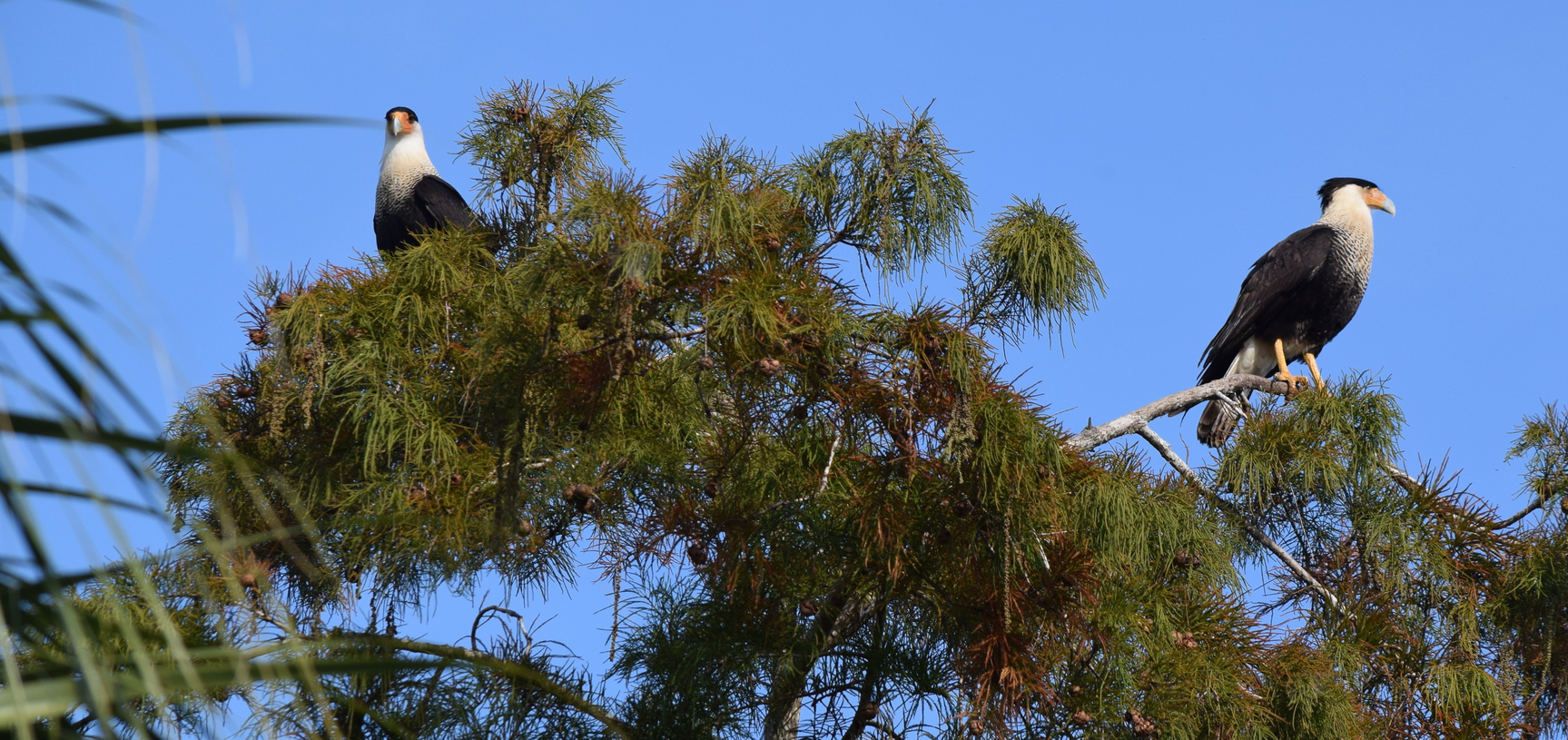
Above, Crested Caracaras, which are federally listed as a threatened species, are spotted in Brevard County, Florida. Photo by Bill Uttenweiler/iNaturalist
Author

Biological Resources and Land Management Practice Leader
Date
December 9, 2025


