Why does this project matter?
The Capitol Annex building was constructed between 1949 and 1951 in accordance with the 1949 Uniform Building Code (UBC). Considerable changes have been made to the building since the 1949 UBC edition and new regulations and standards related to building facilities and performance have been adopted. Identified deficiencies within the current Annex building standards and operations include: life safety and building code deficiencies, non-compliance with the Americans with Disabilities Act standards, non-compliance with energy efficiency standards, overcrowding, aging and failing infrastructure, and insufficient public and working space.
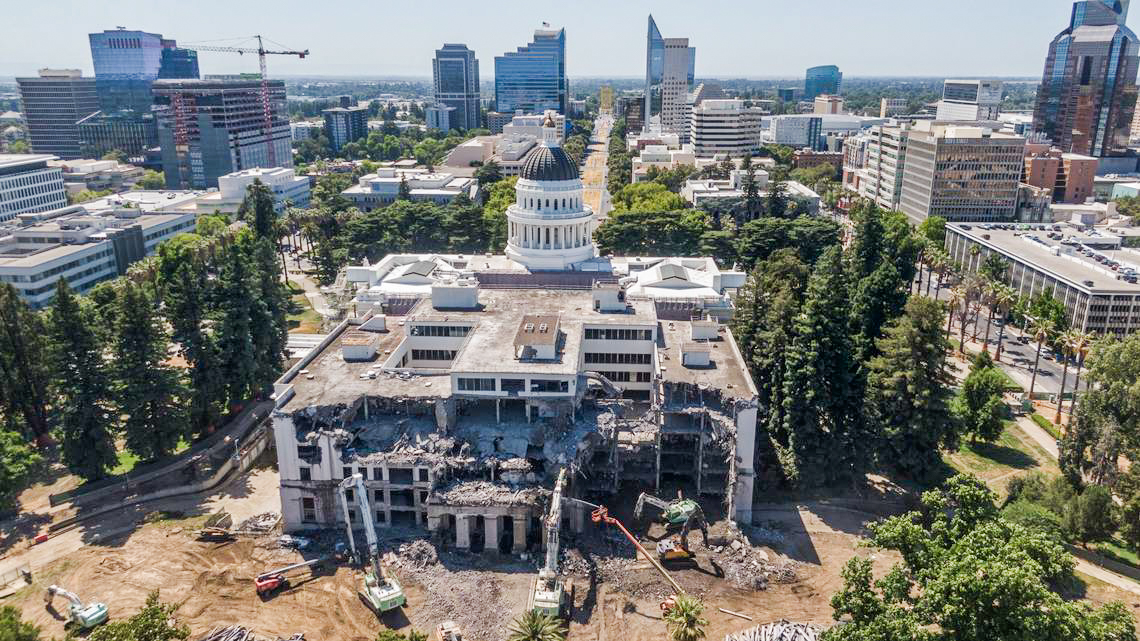 The Capitol Annex, during demolition.
What is ESA doing to help?
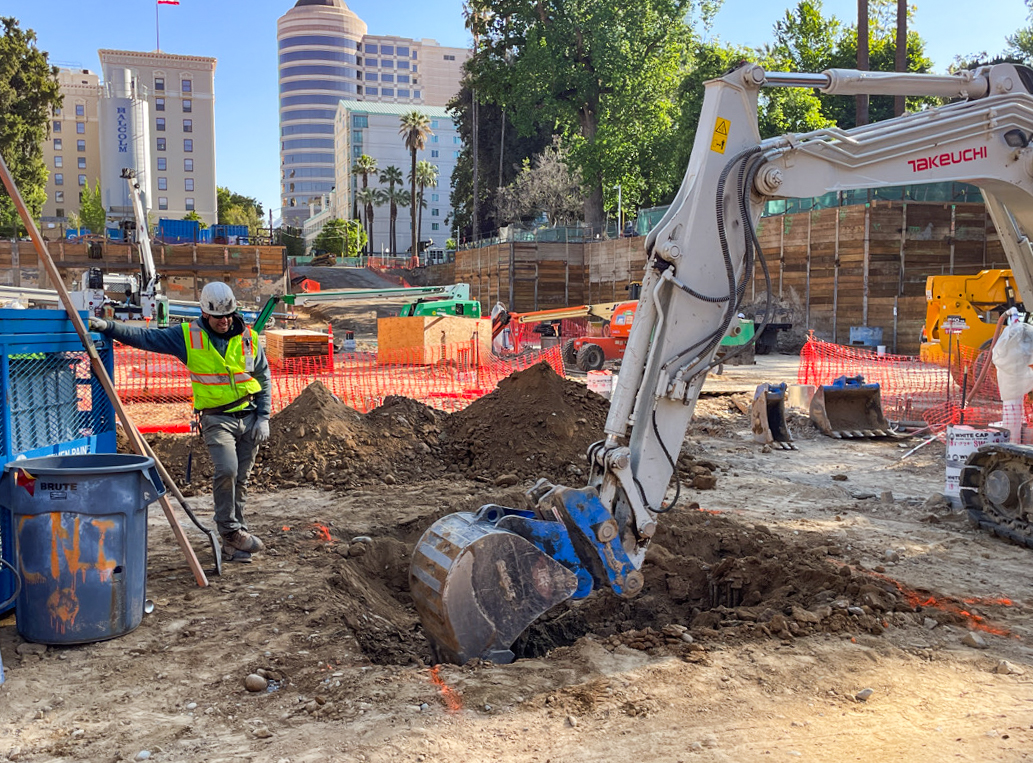
ESA acted as the California Department of General Services’ cultural resources consultant for the implementation phase of the project. From February 2022 to present, ESA has been conducting an archaeological monitoring program, in addition to archaeological testing, for demolition of the former Annex and construction of the new Annex building. ESA has identified, recorded, and evaluated the significance of over 160 isolated archaeological resources to date. Project deliverables consist of weekly and monthly progress reports, monitoring logs, resource evaluations, and an archaeological monitoring report, which will be submitted at the completion of the work.
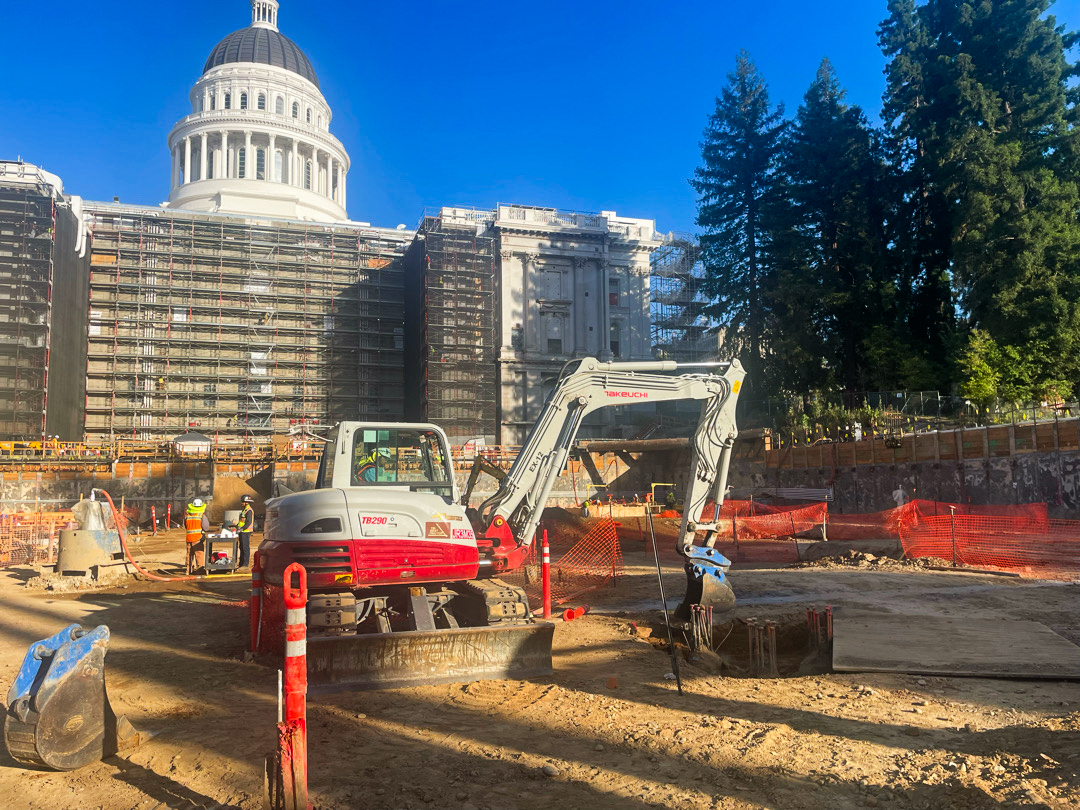 Construction crews work on installing the foundation at the new Capitol Annex.