
| In Brief: A September 14 memorandum from U.S. Fish and Wildlife Service Director Brian Nesvik could narrow how the agency interprets “take” under the federal Endangered Species Act. The memo directs staff to focus on whether an action was intentionally and purposefully directed at a protected animal, rather than whether a lawful activity foreseeably caused injury or death. If applied broadly, this approach could affect when projects seek incidental take authorization under Sections 7 and 10. |
On September 14, 2026—the same day the U.S. Fish and Wildlife Service (USFWS) and National Marine Fisheries Service (NMFS) final rule rescinding the regulatory definition of “harm” became effective—USFWS Director Brian Nesvik issued an internal memorandum providing direction to USFWS staff on the scope of the federal Endangered Species Act’s (FESA) prohibition against “take.” The memorandum has since been reported by several national media outlets, including The Hill, The New York Times, and the Associated Press. The final “harm” rule removed the longstanding regulatory definition that included certain habitat modification or degradation that actually kills or injures listed wildlife. The memorandum addresses a broader question: What conduct constitutes “take” in the first place?
Section 9 of FESA prohibits the “take” of endangered wildlife, while Section 3 defines “take” to include actions such as harassing, harming, pursuing, hunting, shooting, wounding, killing, trapping, capturing, or collecting listed wildlife. The memorandum directs USFWS staff to interpret those terms by relying heavily on former Supreme Court Justice Antonin Scalia’s dissent in the 1995 Babbitt v. Sweet Home decision. Under that interpretation, “take” requires an affirmative act that is intentionally and purposefully directed at a particular animal.
The distinction is significant. According to the memorandum, it is not enough that an activity foreseeably results in injury or mortality to a listed animal. Rather, the person must act on the animal for the purpose of affecting it. The memorandum illustrates the distinction with examples drawn from Justice Scalia’s dissent: A vessel that inadvertently strikes a whale would not “take” the whale because the vessel was not directed against it. Similarly, cutting down a tree containing roosting bats would not constitute take of those bats unless the tree was felled for the purpose of killing or capturing them.
The memorandum also emphasizes that the prohibited act must operate directly upon an animal rather than through intervening steps. Consistent with the recently finalized “harm” rule, habitat modification, degradation, or elimination would therefore generally fall outside the Section 9 take prohibition unless the action is purposefully directed at particular animals.
A Familiar Approach: The MBTA Analogy
The reasoning has a notable parallel in the federal government’s interpretation of another wildlife law: the Migratory Bird Treaty Act (MBTA). In 2017, the Department of the Interior issued Solicitor’s Opinion M-37050, concluding that the MBTA does not prohibit incidental take. That opinion distinguished between activities directed at migratory birds and otherwise lawful activities that incidentally result in bird mortality. Under M-37050, “incidental take” refers to bird mortality resulting from an activity that is not directed at taking birds. The opinion concluded that the MBTA’s prohibitions apply to affirmative actions directed at migratory birds rather than accidental or incidental consequences of otherwise lawful activities.
M-37050 was withdrawn in 2021, but was restored in 2025 as authoritative Department of the Interior policy, subject to limitations associated with prior federal litigation. The FESA memorandum applies a similar concept: It distinguishes between an action directed at wildlife and wildlife mortality resulting incidentally from an activity undertaken for another purpose.
That distinction could have substantial implications for project planning. For example, vegetation clearing undertaken to construct a development could foreseeably result in mortality of listed wildlife occupying the site. Under the interpretation described in the memorandum, the relevant question would not simply be whether mortality is foreseeable. Instead, the analysis would focus on whether the activity was intentionally and purposefully directed at the protected animal.
The Important Difference: FESA Expressly Addresses Incidental Take
There is, however, an important statutory distinction between the MBTA and FESA. Unlike the MBTA, FESA expressly establishes mechanisms for authorizing incidental take. Thus, there is potential tension between the memorandum’s interpretation of “take” and the way Congress wrote FESA’s incidental take provisions.
Congress amended FESA in 1982 to establish the Section 10 incidental take permit process for non-federal activities. Section 10 authorizes USFWS to permit take that is “incidental to, and not the purpose of, the carrying out of an otherwise lawful activity,” provided specified requirements are met, including development of a conservation plan. This provision is the statutory foundation for habitat conservation plans and incidental take permits.
Section 7 similarly contains an express incidental-take mechanism for projects with a federal nexus. Following consultation, a Biological Opinion may include an Incidental Take Statement identifying the anticipated incidental take and establishing reasonable and prudent measures and associated terms and conditions to minimize its effects.
This creates an important question raised by the USFWS’s new interpretation: If “take” generally requires an intentional and purposeful action directed at an animal, when would a project still need authorization for unintentionally killing or injuring a listed species?
What This Could Mean for Project Permitting
The September memorandum potentially represents a broader shift than the recently finalized “harm” rule alone. The “harm” rule focused primarily on whether habitat modification or degradation that results in injury or mortality constitutes prohibited take. The memorandum potentially extends the analysis further by addressing incidental injury or mortality itself.
For projects without a federal nexus, the practical consideration may no longer be limited to whether habitat modification constitutes take. Even where a project is expected to kill or injure listed wildlife, USFWS’s interpretation could affect whether an incidental take permit and habitat conservation plan are considered necessary if the project activity is not intentionally directed at those animals.

For projects with a federal nexus, Section 7 consultation requirements remain independently applicable, including evaluation of jeopardy and destruction or adverse modification of designated critical habitat. However, the new interpretation could affect how incidental take is evaluated and addressed within the consultation process.
The key takeaway is that the memorandum shifts the focus from whether a project could foreseeably harm or kill a listed animal to whether the action was specifically intended to affect that animal.
If implemented as described, this interpretation could substantially narrow the circumstances in which incidental mortality associated with otherwise lawful activities is considered prohibited take under Section 9—and, consequently, when incidental take authorization under Sections 7 and 10 may be needed. Note that this memorandum applies to USFWS implementation and does not itself direct how NMFS will apply the recission of “harm” to marine species under its jurisdiction.
Because FESA expressly provides a process for authorizing incidental take, an important question will be how USFWS applies this new interpretation to projects that may unintentionally kill or injure listed wildlife—and when USFWS will continue to consider incidental take authorization necessary.
Frequently Asked Questions
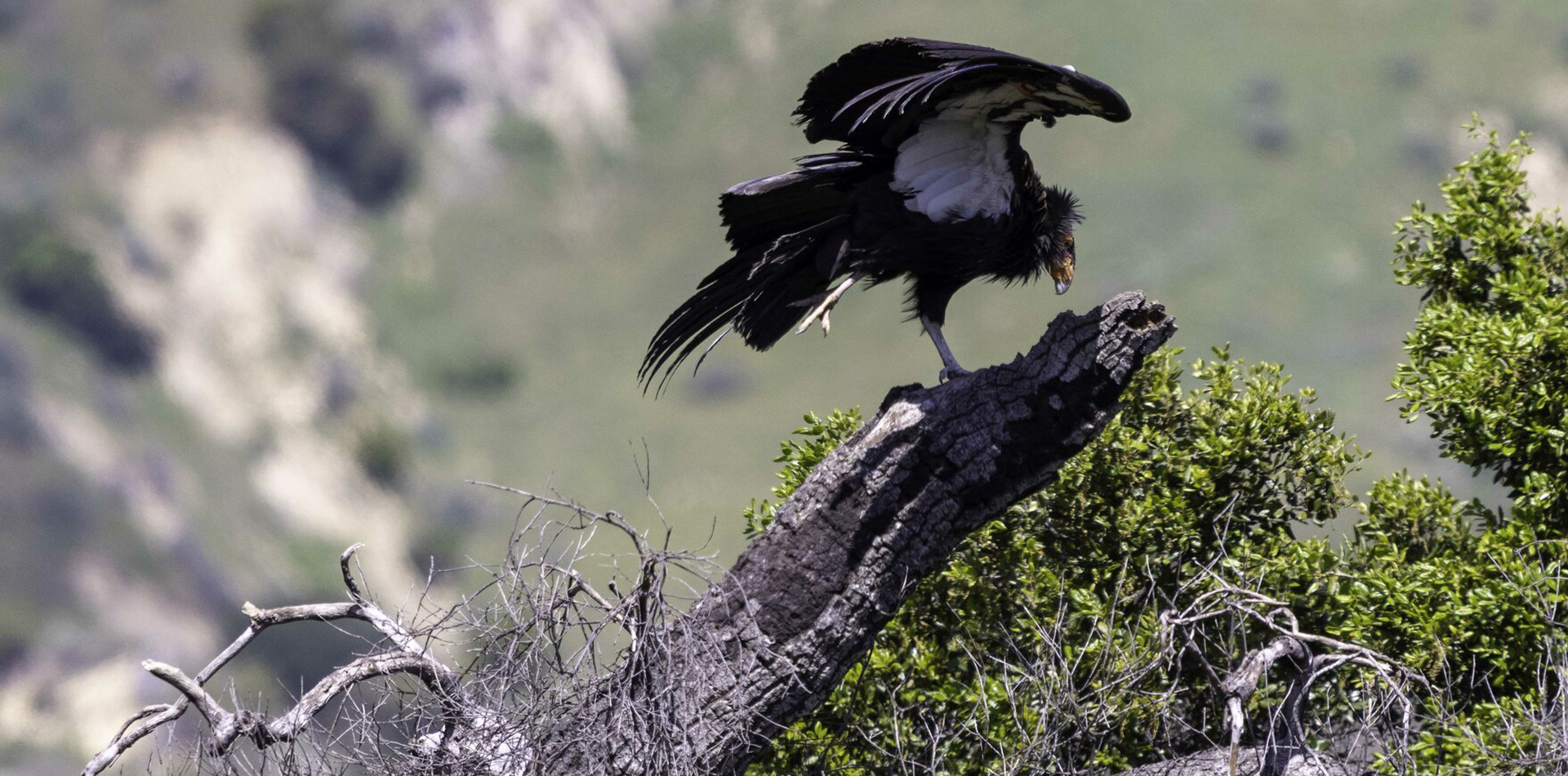
Above, the California condor, (Gymnogyps californianus), is a federally endangered species, with a wild population of just over 390 condors living throughout California, Arizona/Utah, Pacific Northwest, and Baja California. Photo © Zack Abbey/iNaturalist.
Author

Biological Resources and Land Management Practice Leader
Date
September 24, 2026