Why does this project matter?
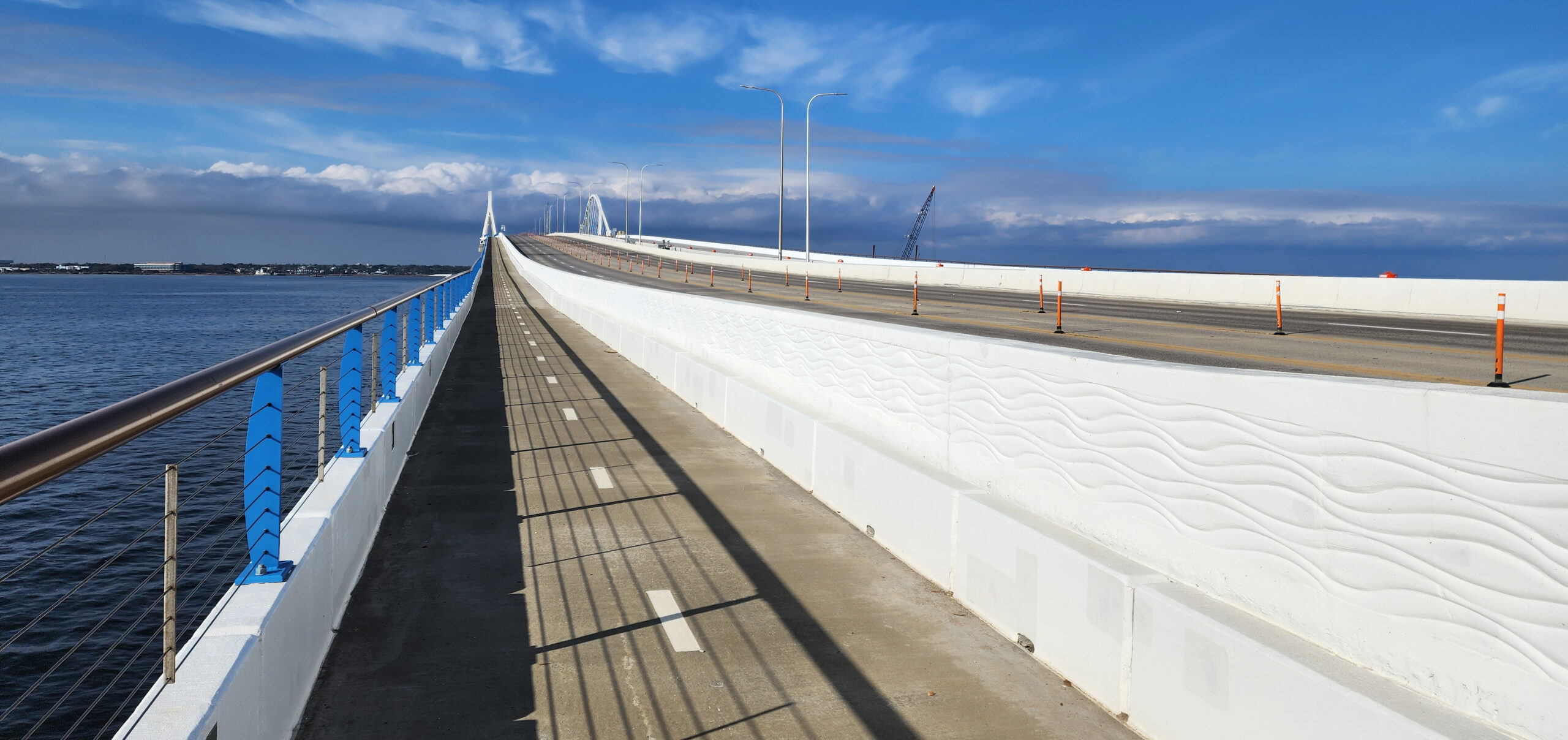
This original bridge was constructed before 1960, making it a priority for replacement. This long-awaited design-build bridge replacement suffered scheduling setbacks after high winds and seas from Hurricane Sally in 2020 caused construction barges to escape their moorings and cause portions of the bridge to collapse. The new bridge provides safer connectivity between downtown Pensacola and Gulf Breeze on the barrier island, and includes pedestrian-friendly features and overlooks.
What is ESA doing to help?
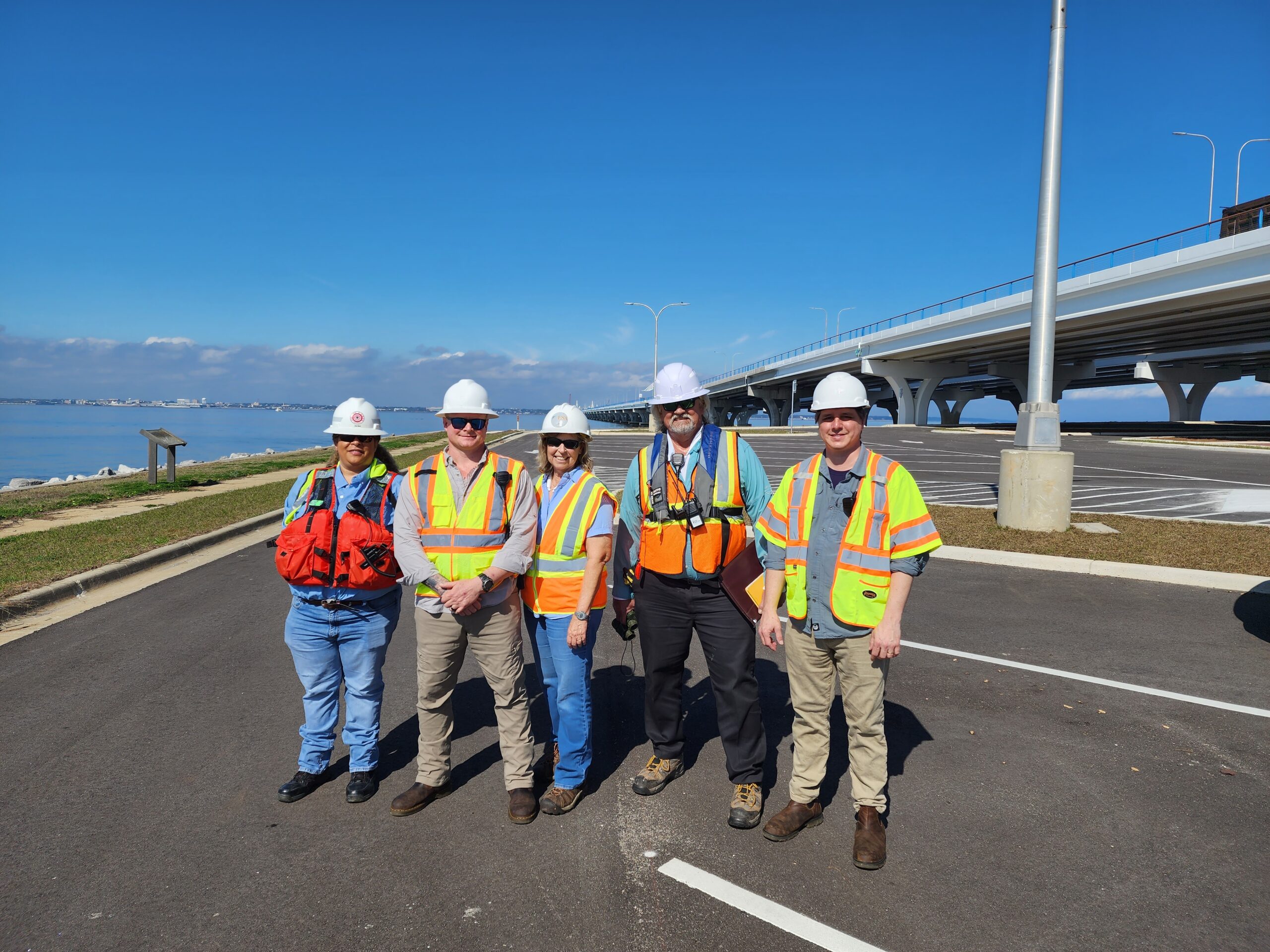
ESA provided environmental consulting and permitting support to the design-build team from start to finish (2016-2023). The final effort for this project involved marine species protection during the underwater blast that was required to remove a very large section concrete decking that fell to the bottom of Pensacola Bay during Hurricane Sally. This involved development of a Marine Species Protection Plan, coordination with the National Marine Fisheries Service for approval of the plan, and coordination with the blaster, contractor, Construction Engineering and Inspection team, and FDOT for blast-day events. On the blast day, ESA coordinated and conducted the marine species watch plan, which was completed without incident. The bridge opened to traffic the following day.