Why does this project matter?
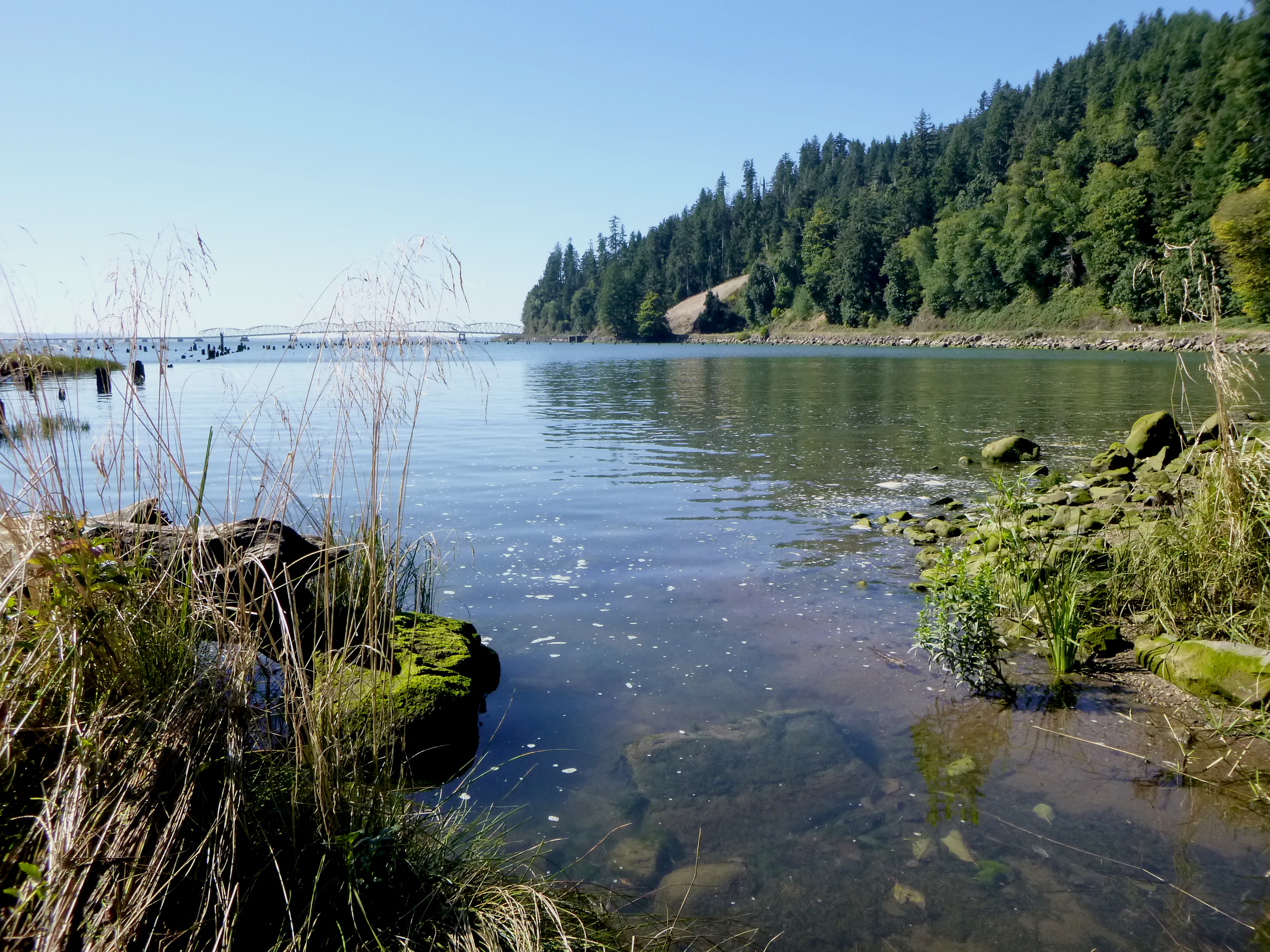
The Megler Creek project replaced an undersized 48-inch diameter culvert that ran beneath SR 401 with a 25-foot-wide concrete box culvert giving access to high-quality rearing habitat to over 2 miles of river. Additionally, the project provides a unique opportunity to increase the extent of tidal wetland habitat upstream of the crossing in an otherwise heavily armored reach of the Columbia River.
What is ESA doing to help?
ESA worked with CREST and the NPS to address fish passage on Megler Creek, which flowed through an undersized, perched culvert below State Route 401 before joining the estuary. The culvert was a WSDOT-designated fish passage barrier that also had degraded hydrologic, geomorphic, and biologic stream functions.
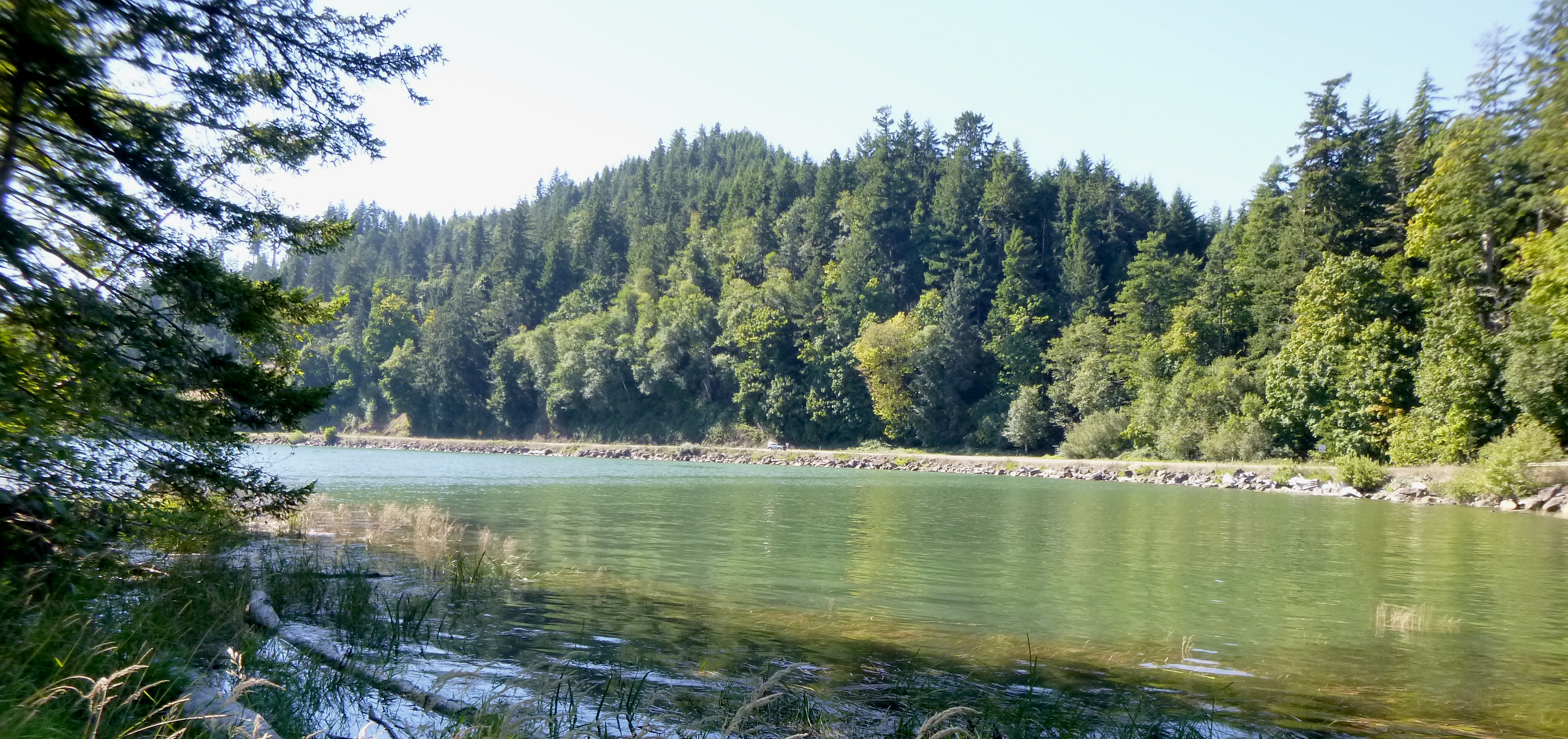
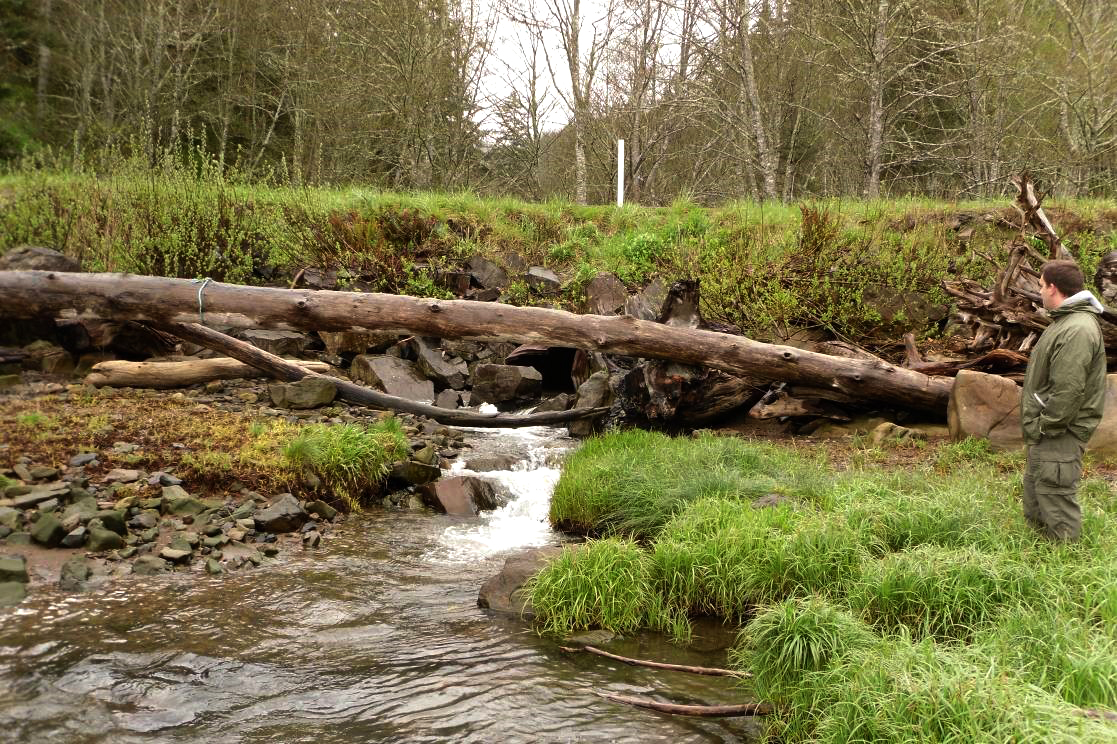
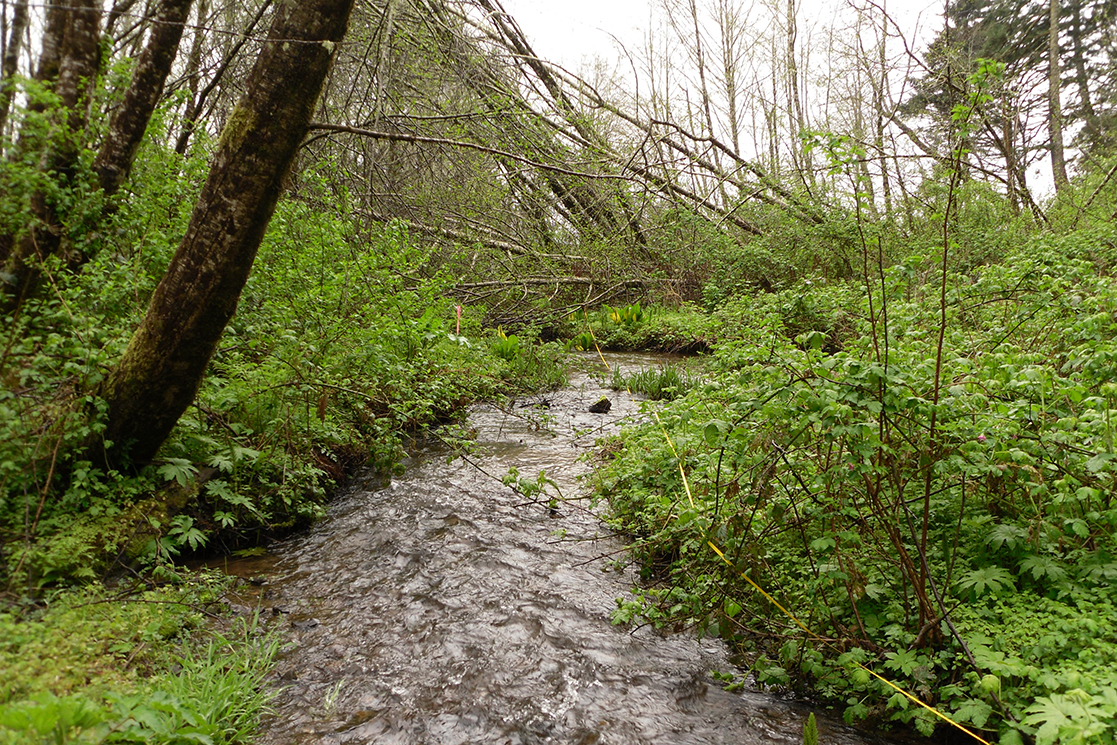
Megler Creek, pre-restoration, and post-restoration following creek enhancement.
The ESA team assessed the site for fish passage by doing a geomorphic and bank-full width analysis, stream habitat, and culvert assessments. They then helped with obtaining permits while designing the construction drawings. The fish passage design included a cost-effective wide-span culvert to maximize excavation and restoration relative to historical conditions. Design components included in-stream habitat structures, dual-function step-pool habitat and grade control structures, shrub-scrub and riparian revegetation, and stream realignment to facilitate diversion during construction. Grading plans were developed in concert with planting designs to minimize the risk of invasive reestablishment and promote appropriate native species.