
The energy industry has seen significant change within just the past year as national energy demand has increased, due in part to data centers, crypto mining, and electric vehicles consuming more energy. This surge comes as the federal government has blocked or slowed renewable energy generation construction and prioritized fossil fuels, which account for 87 percent of carbon dioxide emissions globally. While the federal government is focused on increasing fossil fuel sources, such as the Department of Energy’s $625 million effort to expand coal production, photovoltaic (PV) solar technology has become more efficient, and over the past 15 years its production costs have decreased by 88 percent—making it an ideal alternative energy source for many types of industries.
In the agricultural sector, solar can offer benefits that fossil fuels cannot. For instance, solar energy generation can provide economic benefits to landowners, such as farmers and ranchers, while also minimizing ecosystem impacts and potentially even improving biodiversity on PV solar farms.
Ecovoltaics and agrivoltaics are two emerging methods—each of which use a dual-use approach—that are being studied and applied in order to realize these benefits.
Ecovoltaics
Solar farm development frequently involves removing vegetation on-site and grading the land such that there is no trace of the native plants, which destroys root systems and seed banks in the process. This tactic not only diminishes soil quality, but it can also cause the colonization of nonnative plant species that can overrun the habitat and make it very difficult to restore to pre-disturbance biodiversity. Ecovoltaics, however, proposes a different approach. Unlike these common installation methods, ecovoltaics cultivate biodiversity by using PV solar panels as partial shade to promote native plant growth.
One study, which took place in Minnesota and looked into the effectiveness of ecovoltaics, explored the effects that three solar energy farms had on biodiversity and found that establishing a native prairie ecosystem beneath the PV panels led to improved soil health, attracted more pollinators, had a greater abundance of flowering plant species, and resulted in a greater diversity in insect groups. A similar study was also performed at 13 PV solar sites across multiple Midwest states with varying amounts of managed habitat on-site. Using passive acoustic monitoring techniques at these sites, researchers concluded that ecovoltaic sites supported more birds compared to neighboring control sites where no solar generation was present.
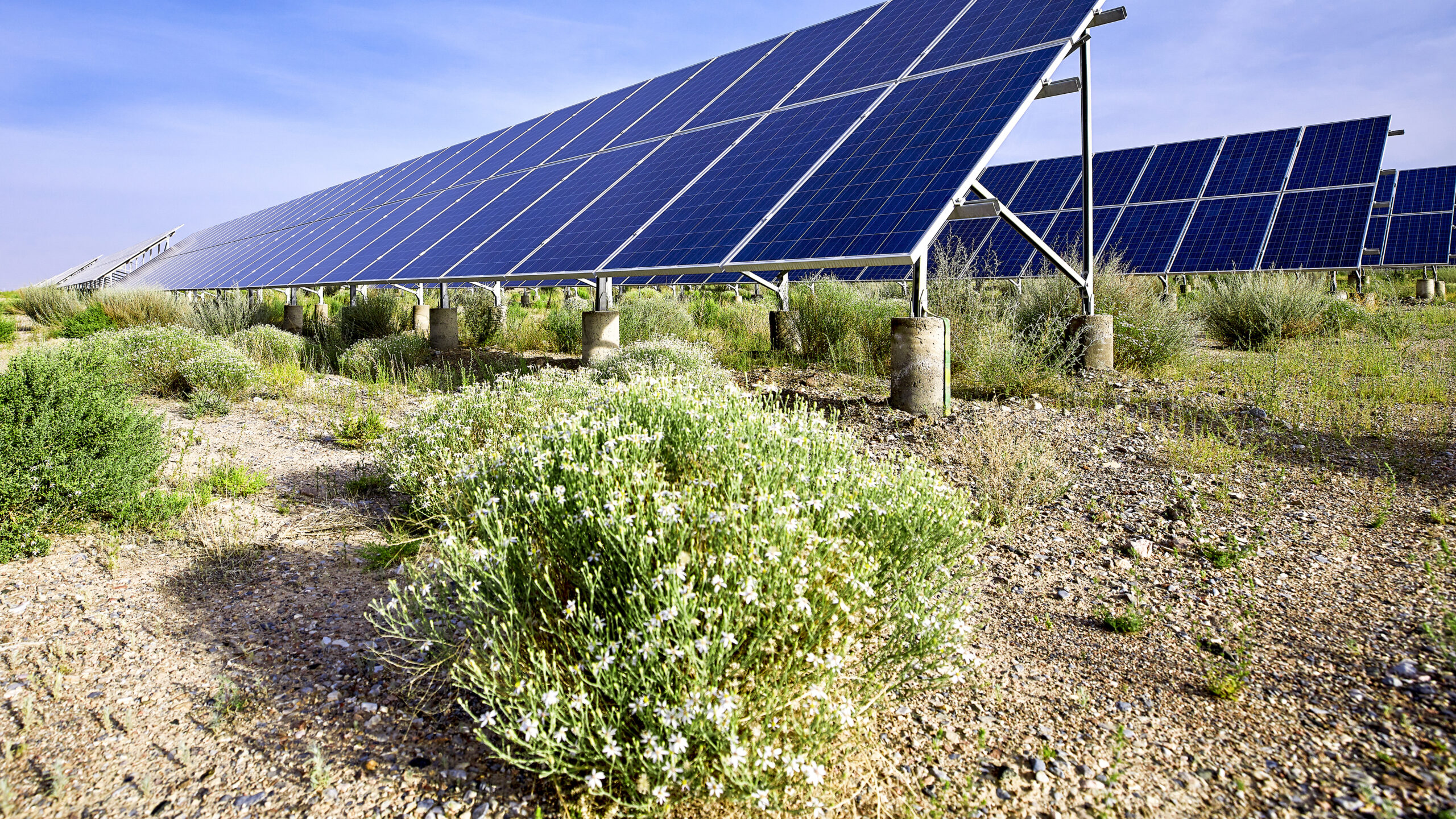
The Gemini Solar Project in Las Vegas, Nevada, is located in a very different ecosystem from the prairie, but studies in this location have shown similar results to those seen in the Minnesota study. Because of the presence of rare plant species, construction activities were mitigated in order to minimize disturbance to the land. Early on, researchers hypothesized that the PV solar facility would reduce the survival of the rare plant species. However, the researchers found that the native plants on-site grew larger and were more abundant than those located off-site. Construction of the Gemini Solar Project had commenced with the native ecosystem in mind—and the ecosystem benefited.
These studies reveal that ecovoltaics can effectively improve habitat biodiversity and support native prairie species—resulting in an outcome that is likely to resonate with communities considering solar production installations.
Agrivoltaics
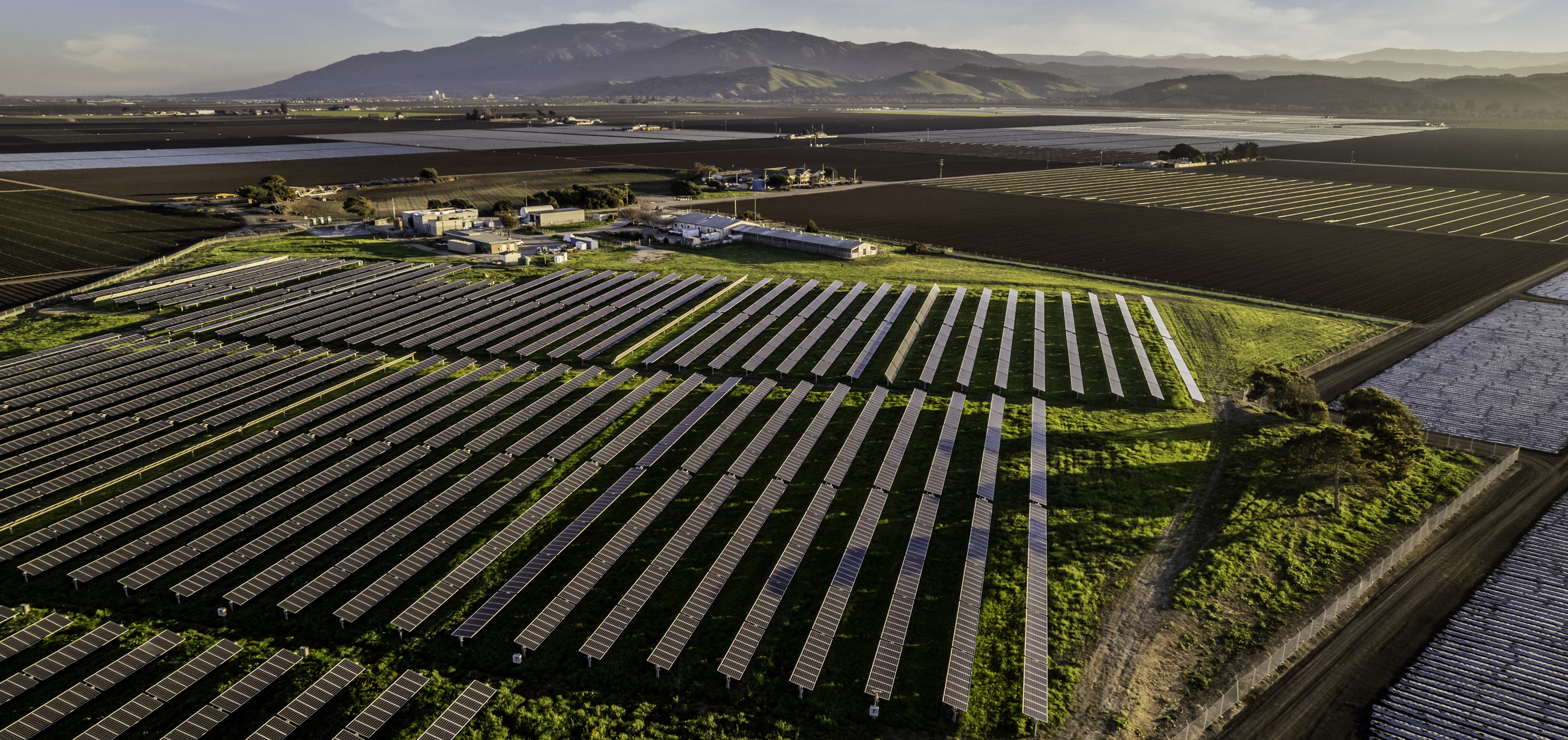
Most PV systems are installed on land that is primarily dedicated to solar energy production. Agrivoltaics, on the other hand, integrates both solar and agricultural production on the same site, a method known as co-location. Co-location can be beneficial because it eliminates the partition of farming and renewable energy and, with careful design and implementation, it can provide mutual benefits for energy and food production.
For states that have little land to dedicate to both renewable energy production and agriculture, co-location can be very helpful. Additionally, agrivoltaics can provide a steady stream of income during volatile periods in the agricultural market, especially in states that are reducing water availability for agricultural use, in compliance with water conservation policies. While the adoption of agrivoltaics in the United States is still in its early stages, other countries have already experienced its potential—Japan, for example, has engineered rice fields that thrive with solar panels present.
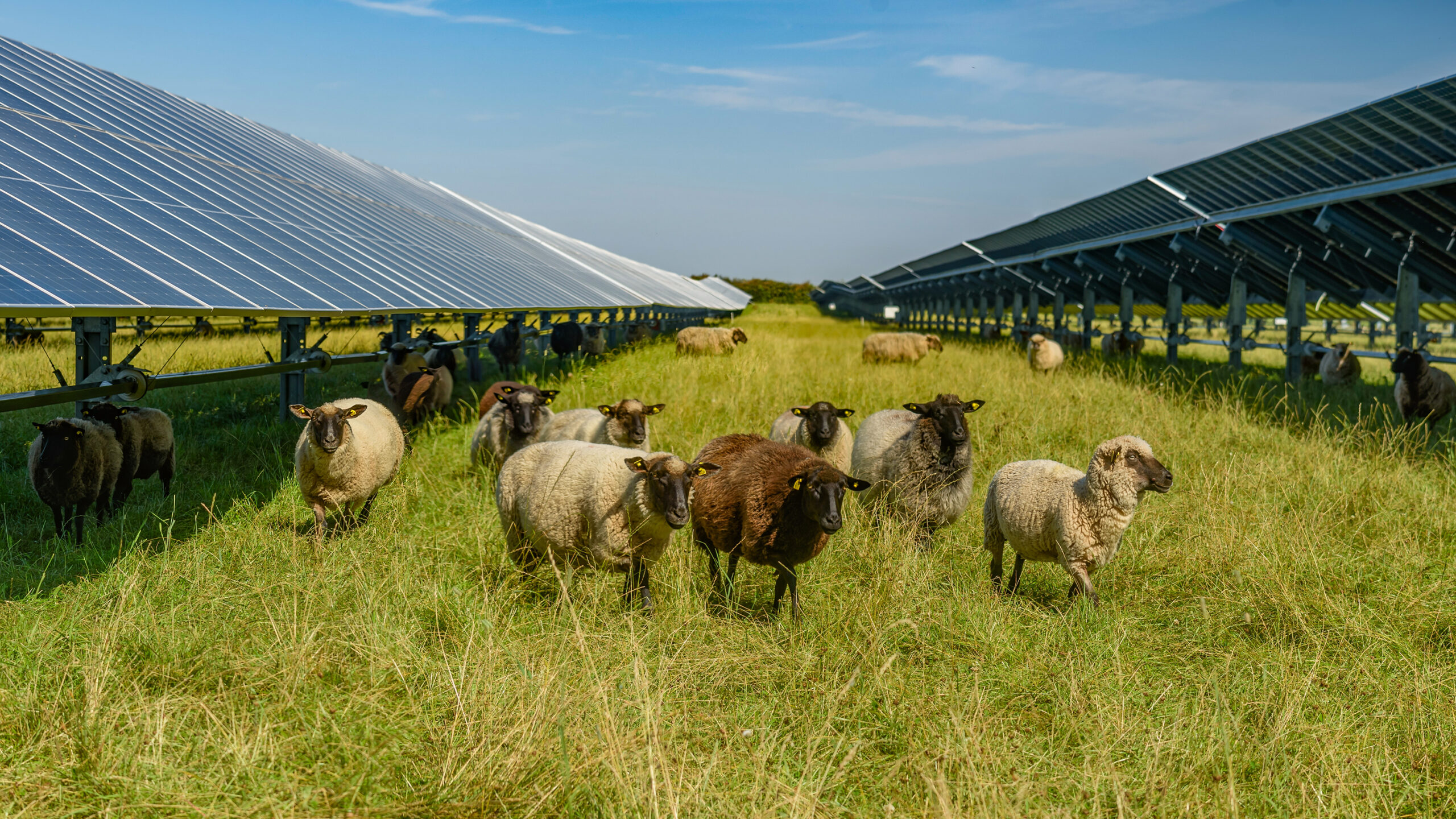
One form of agrivoltaics is the integration of livestock and pastures under PV solar panels. “Solar grazing” seeks to combine the land used for solar farms with grazing livestock.
One such project, which Environmental Science Associates (ESA) is supporting, is the Cornucopia Hybrid Solar Project in Fresno County, California. The project is part of the County’s efforts to enhance renewable energy supply while promoting agricultural uses and bolstering groundwater conservation. The relationship would be a symbiotic one, as the project’s solar panels would produce 300 megawatts of electricity but would also allow for sheep to graze within the site to manage vegetation. The project will deliver renewable energy to the regional electrical grid, while reducing fire risks from untended vegetation and reducing the need for pesticides or other forms of vegetation maintenance. ESA is assisting the County on this exciting multiuse initiative and has prepared the Draft Environmental Impact Report, which involved significant technical report review, impacts analysis, and listed alternatives, as well as guidance on local land conservation legislation.
While the co-location of PV solar panels and native ecosystems, farmland, or grazing land is relatively new, it shows a lot of promise in the efficient use of space for renewable energy production.
Assessing the Multiuse Solar Landscape
ESA’s team of dedicated professionals bring a multidisciplinary approach to our work in the energy sector, and we work closely to incorporate environmental considerations with the demand for solar energy generation. Our energy specialists have supported the permitting of more than 80 utility-scale solar projects, including work identifying agricultural productivity and solar project site suitability. We provide expert consulting services backed with current regulatory knowledge to plan, document, and monitor for ongoing environmental compliance. Reach out to Renewables Submarket Leader Liesbeth Magna for more information on how we can help you to get ecovoltaic or agrivoltaics projects up and running.