
On January 13, 2026, the U.S. Environmental Protection Agency (EPA) announced proposed revisions to the existing Clean Water Act (CWA) Section 401 Water Quality Certification regulations that could narrow the scope of state and tribal review. The proposed rule—which is assumed will become known as the 2026 CWA Section 401 Certification Rule—was published to the Federal Register on January 15, 2026, and is open to public comment until February 17, 2026.
Revisions to the 401 Certification Rule
In 2020, the “401 Certification Rule,” Code of Federal Regulations (CFR) Section 121, established procedural changes to the process of obtaining a water quality certification from a “certifying authority,” such as a State or Tribe. Notably, the 2020 401 Certification Rule requires pre-filing meeting requests, specific application content, and timelines to act on an application. The 2020 401 Certification Rule has since undergone changes to its implementation guidance and even to the rule itself (refer to the graphic below).
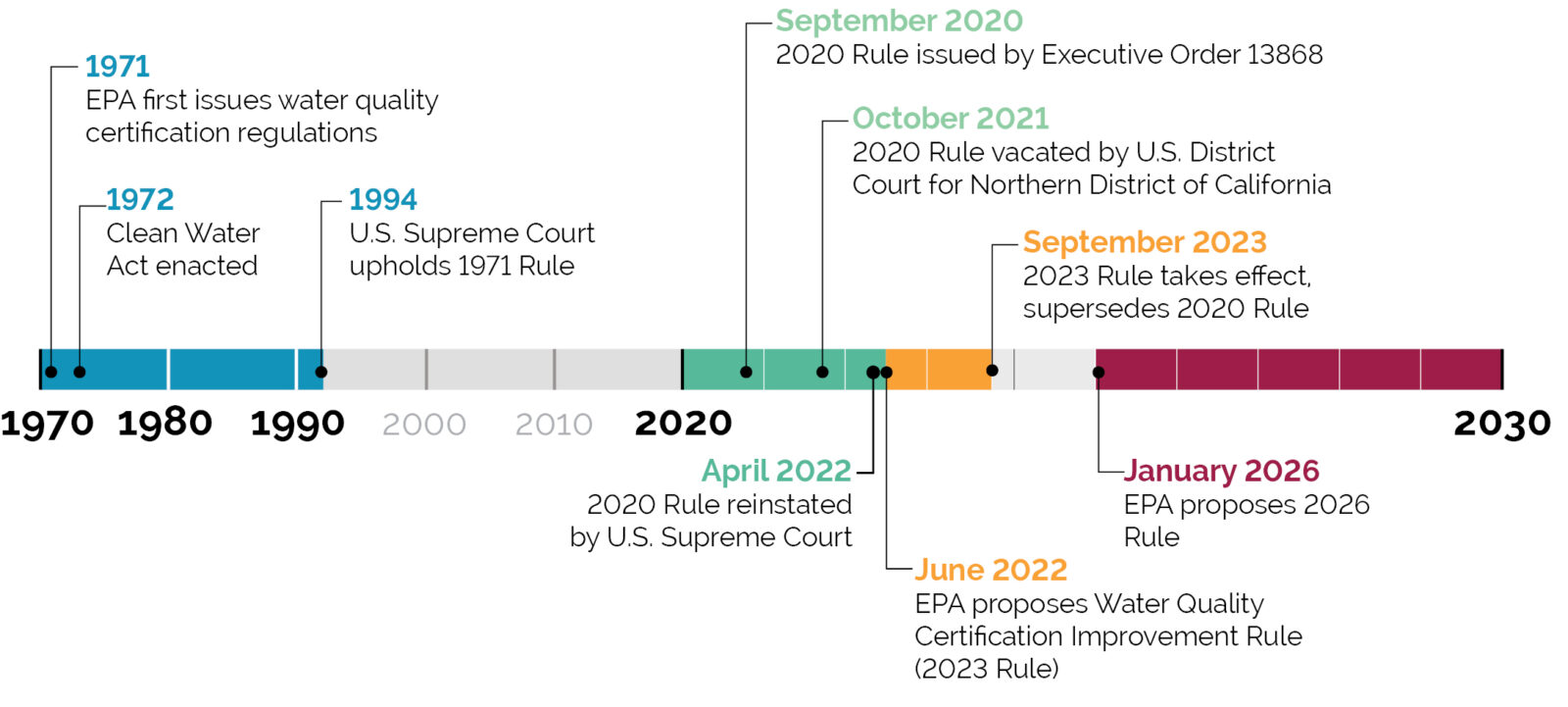
In November 2023, the EPA published the CWA Section 401 Water Quality Certification Improvement Rule (2023 CWA Section 401 Certification Rule), which included an emphasis on water quality-related impacts, specified changes to the certifying authorities’ purview, established the right for Tribes to act as a certifying authority to issue certifications without the EPA, and refined procedural changes to the 2020 401 Certification Rule revisions, including but not limited to the requirement for pre-filing meeting requests, components of a request, and timelines that certifying authorities could act on a request.
What’s New in 2026?
The proposed 2026 CWA Section 401 Certification Rule includes some notable changes to the existing 2023 CWA Section 401 Certification Rule:
| Topic | Existing 2023 Rule | Proposed 2026 Rule |
| Scope of Certification | Evaluate whether an “activity” will meet applicable water quality standard | Evaluate whether a point source discharge will meet applicable water quality standard |
| Request for Certification (i.e., Application) | Must include a defined list of minimum information. Any additional information defined by certifying authority must be provided in advance of the application and related to water quality. | Must include a defined list of information. Certifying authority may not define additional components for inclusion in the application. |
| Extending the Reasonable Period of Time (RPOT) | Allowed RPOT to automatically extend due to an unforeseeable, controllable event or public notice procedures. | Removes automatic extensions to the RPOT. Prohibits requesting withdraw of the application. |
| Contents of Certification Decision | Encouraged the contents of certification decisions for all certifying authorities in regulatory text. | Defines the contents of certification decisions for all certifying authorities in regulatory text. |
| Modification | Modification of issued certification allowed with agreement from the federal agency. | Modification of issued certification allowed with agreement from the federal agency and applicant. Applicant’s agreement with exact language of modification required. |
| Section 401(a)(2) Process | No timeline on federal agency to host a public hearing and make a determination of a State’s objection. | Federal agency has 90 days to host a public hearing and make a determination of a State’s objection. |
| Treatment as a State (TAS) | Includes process for Tribes to obtain TAS for Section 401 or only for Section 401(a)(2) process. | Does not include process for Tribes to obtain TAS for Section 401 or only for Section 401(a)(2) process. Tribes may continue to obtain TAS for Section 401 through Section 303(c)(water quality standards) |
What Could This Mean for Permitting?
Although the full effect of these proposed changes on the current permitting landscape is not yet apparent, the 2026 CWA Section 401 Certification Rule, in its current form, would broadly limit State and tribal authority under Section 401 of the CWA. The changes to “Scope of Certification, Request for Certification, and TAS” are significant. States that lack another mechanism to permit dredge or fill discharges to state waters, would be more limited with respect to evaluating a project’s overall impacts and requesting additional information. And Tribes will have to rely once again on the EPA to act on certification requests.
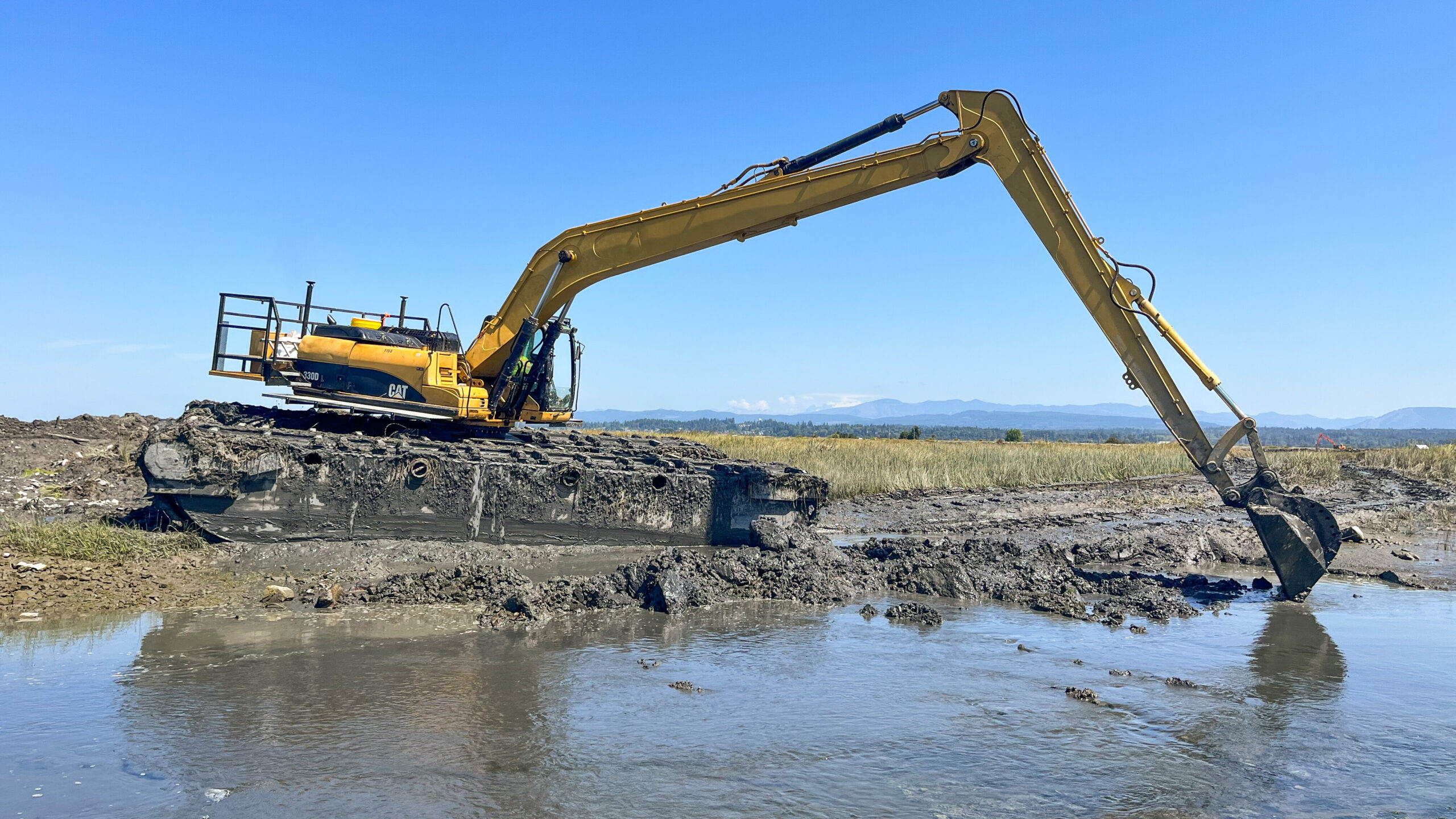
would be more limited with the proposed rule.
Once codified in the Federal Register, the full effect of the 2026 CWA Section 401 Certification Rule will become clearer as implementation guidance rolls out. However, states like California and Florida that have a separate permitting authority (via the Porter-Cologne Act in California and the Warren S. Henderson Wetlands Protection Act in Florida, respectively) for projects that require certification under Section 401 of the CWA will have to grapple with the revisions. These changes could affect both the scope of review and the ability to request additional information for requests for certification, which were previously treated as a single application, for both wetlands protection and Section 401 of the CWA requirements.
What Could This Mean For Projects?
On a project level, the 2026 CWA Section 401 Certification Rule could lead to quicker turnaround times to obtain a Section 401 certification broadly. Different segments of the country are likely to see mixed results. When the 401 Certification Rule was first established, the initial messaging from regulators in parts of California was that obtaining a Section 401 certification would be slowed down as applications would be denied on a more frequent basis. The reality is that some applications were slowed down, but many were also sped up. The proposed language to the Scope of Certification and Request for Certification may make the ability to deny applications more onerous for the States and Tribes.
ESA is actively monitoring the dynamic policy landscape and is here to advise and support our clients as we adapt to changing processes and priorities. Do you have questions about your project and want to speak with an ESA permitting expert? Reach out to Daniel Swenson and be sure to subscribe to our newsletter for timely regulatory updates.
Authors

Senior Regulatory Permitting Specialist

Principal Regulatory Permitting Specialist

Surface Water Quality Protection Programs Technical Expert
Date
January 30, 2026