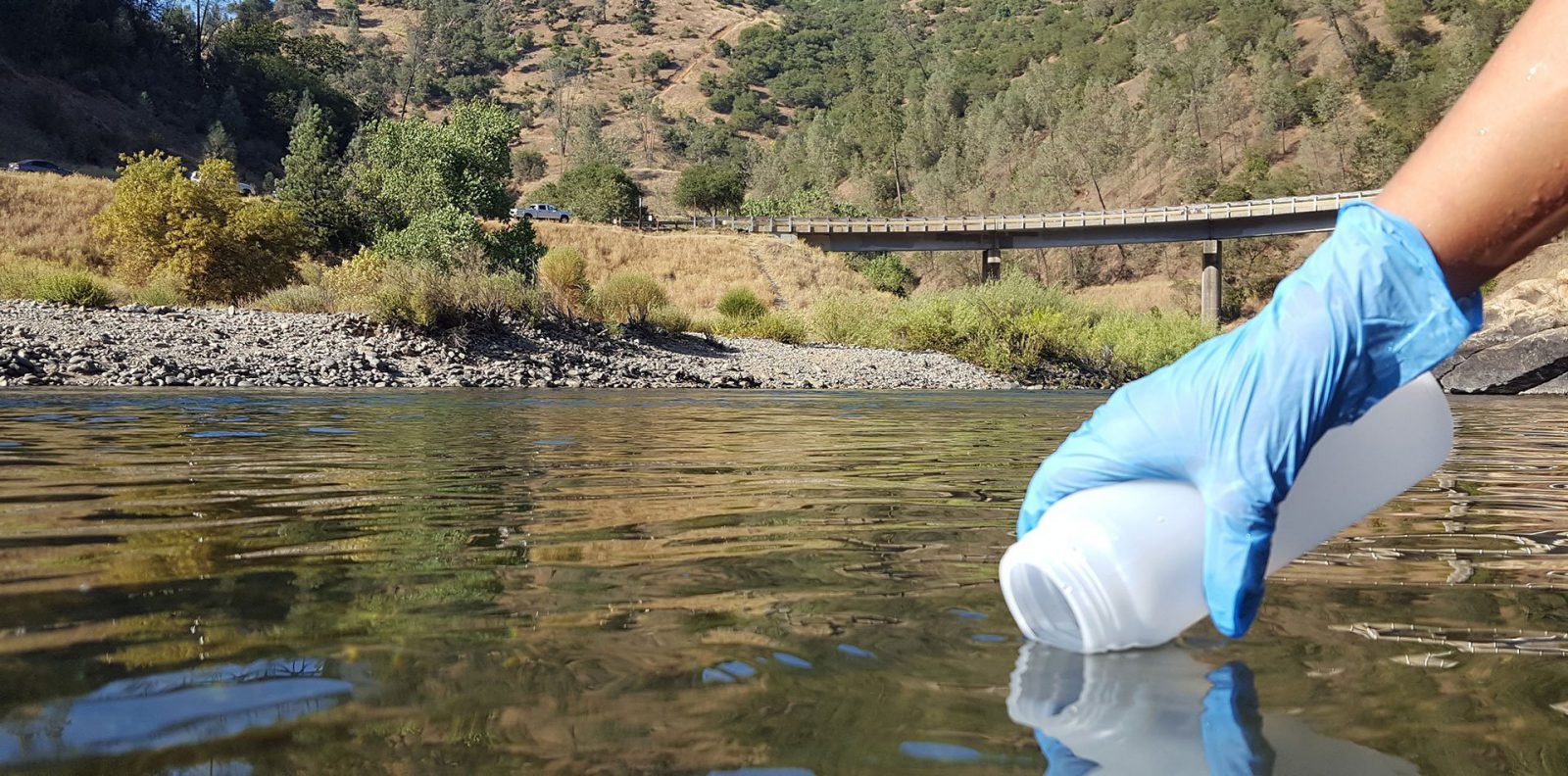


In the complex world of environmental compliance, project success hinges on diligent monitoring, accurate data, and seamless communication across many years and phases of work. To simplify this for clients, ESA’s Technology Services Team developed Beacon®—an end-to-end environmental compliance platform that supports projects from early planning and permitting through environmental review, construction, and long-term operations reporting. The team continues to expand functionality and capabilities, and has developed a sophisticated new Monitoring Portal—the next evolution of the open-source software.
From Planning to the Field—and Back Again
Large-scale infrastructure projects might generate thousands of environmental commitments. These commitments must be addressed before, during, and after construction, often extending into the operations phase for years. Each commitment can include multiple steps, timing windows, monitoring requirements, and reporting milestones. Project teams have traditionally maintained these records in spreadsheets, which slows and complicates the process when entering data from the field and fragments the compliance monitoring process—making it less cohesive.
To solve this, Beacon’s Monitoring Portal closes the loop between observation and compliance by connecting project commitments to near-real-time field data within a single system of record.
During construction on large, multi-year projects, such as California’s Delta Conveyance Project (see sidebar), teams are deployed daily to work areas to ensure crews protect sensitive habitats, cultural resources, and nearby communities. Field teams capture observations, photos, and GPS-based data directly from their mobile devices. Information is synced in near-real-time via Beacon’s centralized dashboard, where project managers and compliance leads can immediately see what is happening on the ground.
“These new capabilities provide teams with a new depth of insight into the what, where, when, and how compliance tasks are implemented, and position compliance leads to better anticipate and plan, instead of just respond,” explains Laura Nickelhoff, Beacon Platform Manager.
Rather than relying solely on daily report packages, Beacon organizes data into a dynamic dashboard that summarizes data from the field in a single, interactive view. Compliance concerns are categorized by type (e.g., erosion control or housekeeping issues) and tracked until resolution, with supporting documentation.
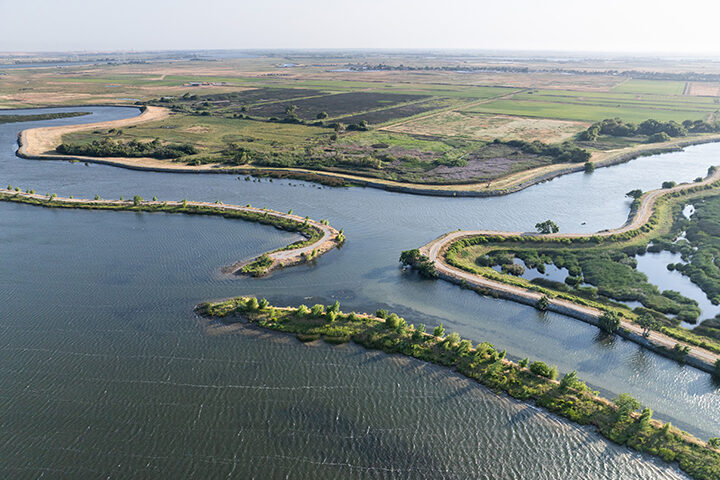
The Delta Conveyance Project is a major infrastructure initiative that will install a new tunnel system to deliver water from the Sacramento–San Joaquin Delta across the state and enhance the reliability of California’s water supply. The project is soon entering a new phase of geotechnical investigations, and the Beacon Monitoring Portal will provide the entire project team with near-real-time access to field monitoring data.
The Beacon platform will make it easy to identify all required minimization and avoidance measures, facilitate rapid communication about any unexpected changes or observations on the ground, and streamline reporting workflows.
The best part? All collected monitoring data can be exported into reports that meet regulatory agencies’ requirements to verify permitting compliance. Not only does this reduce the burden on staff to manually develop reports, but it also assures project owners that monitoring is complete and issues are addressed continuously.

“The Monitoring Portal—alongside other Beacon capabilities—gives the project team confidence that they are highly proactive, accountable, and responsive in their approach to environmental compliance.”
Laura Nickelhoff, Beacon Platform Manager
Turning Monitoring Data into Operational Insight
Beyond daily compliance, the Monitoring Portal generates long-term value through historical data. For example, teams can review past records of bird surveys and nesting observations across the project’s history. This multi-year record enables teams to adjust work windows and avoid known sensitive areas, keeping them aware of biological protections that must remain in place and reducing disruption to the project timeline.
Recurring compliance concerns can also be analyzed over time. If certain issues persist across segments of a project, teams can adjust mitigation approaches accordingly. This transparency strengthens alignment between consultants, subconsultants, project owners, and regulatory agencies.
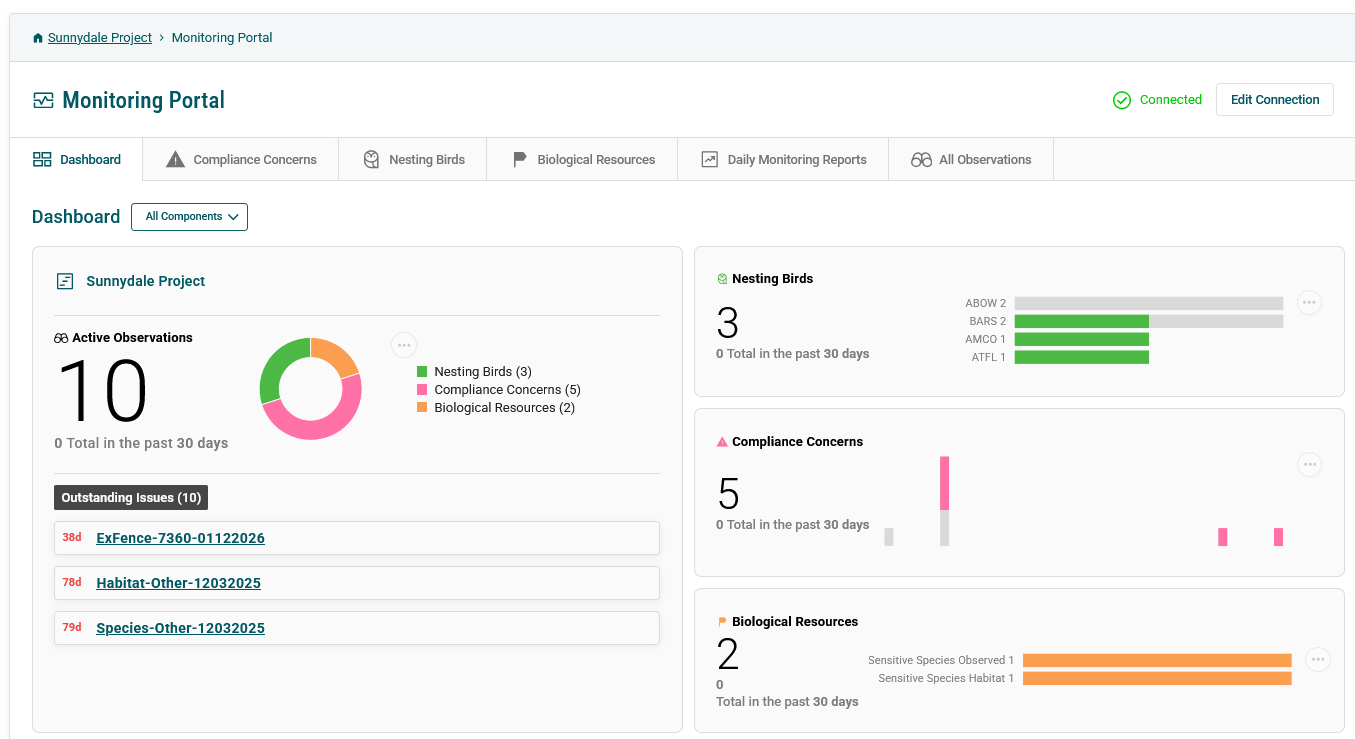
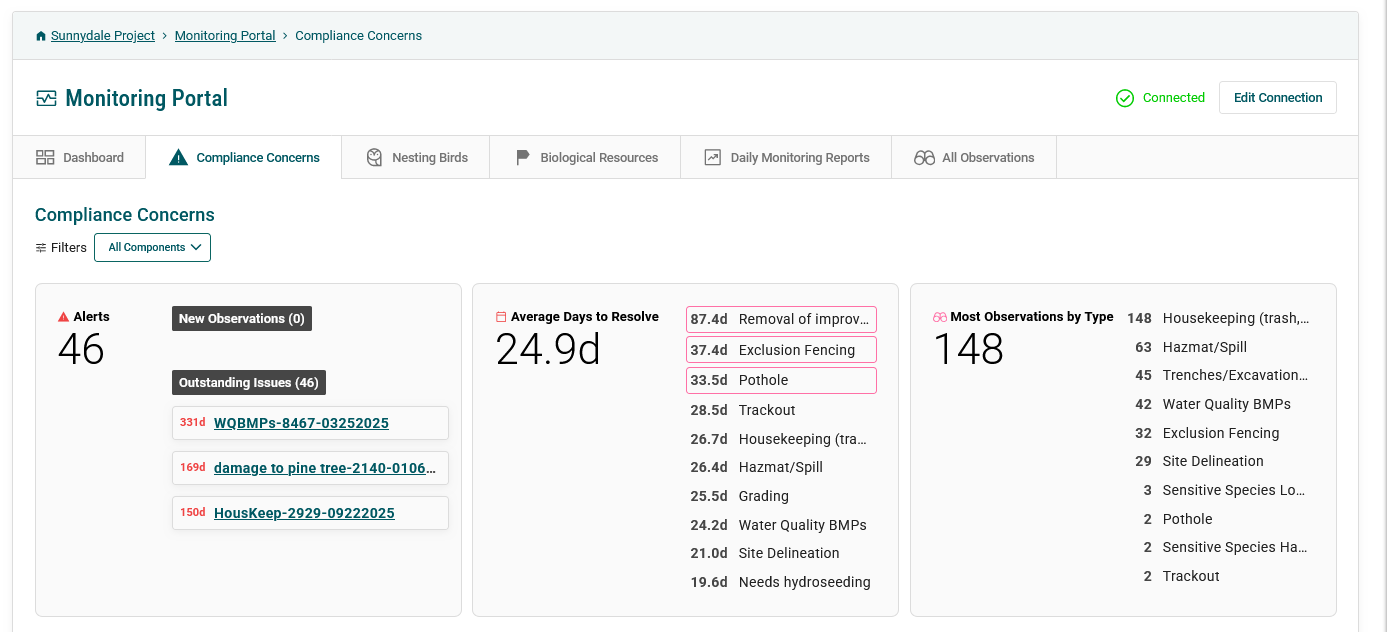
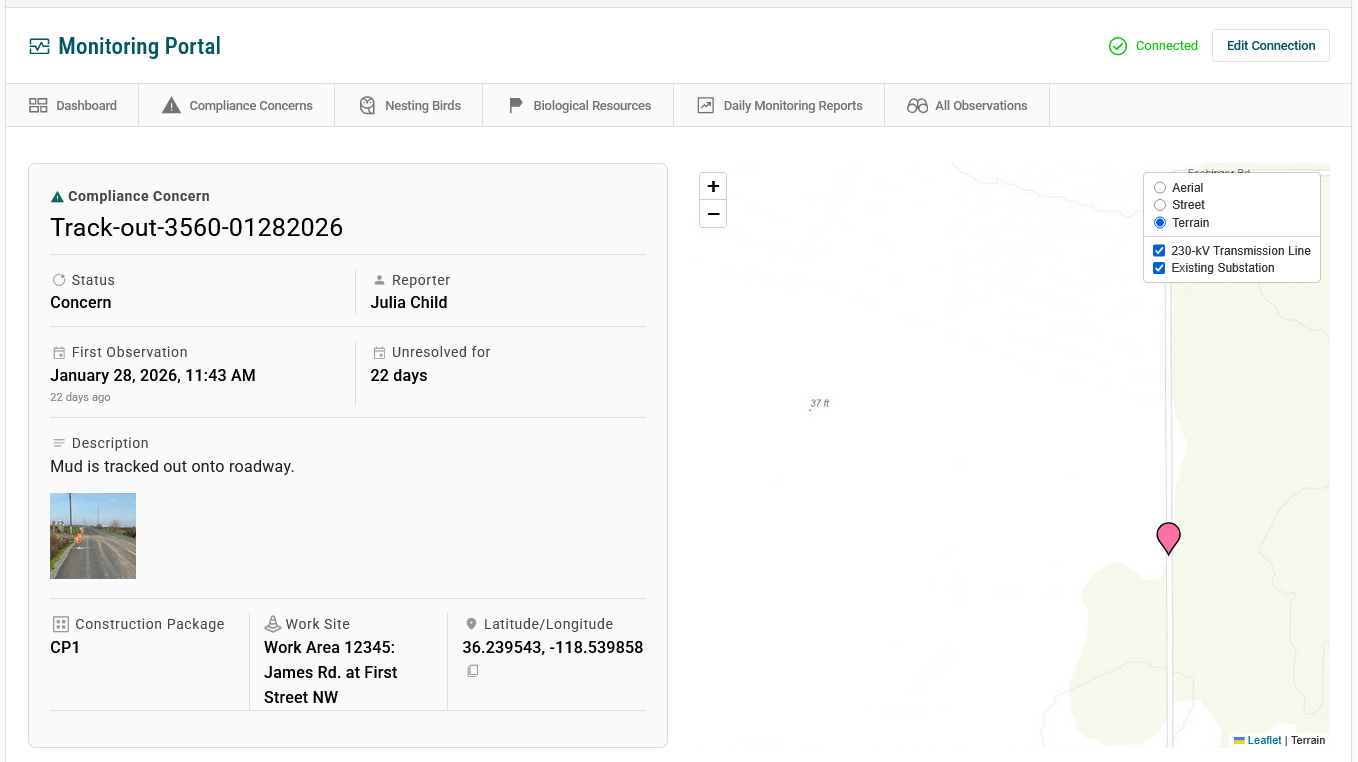
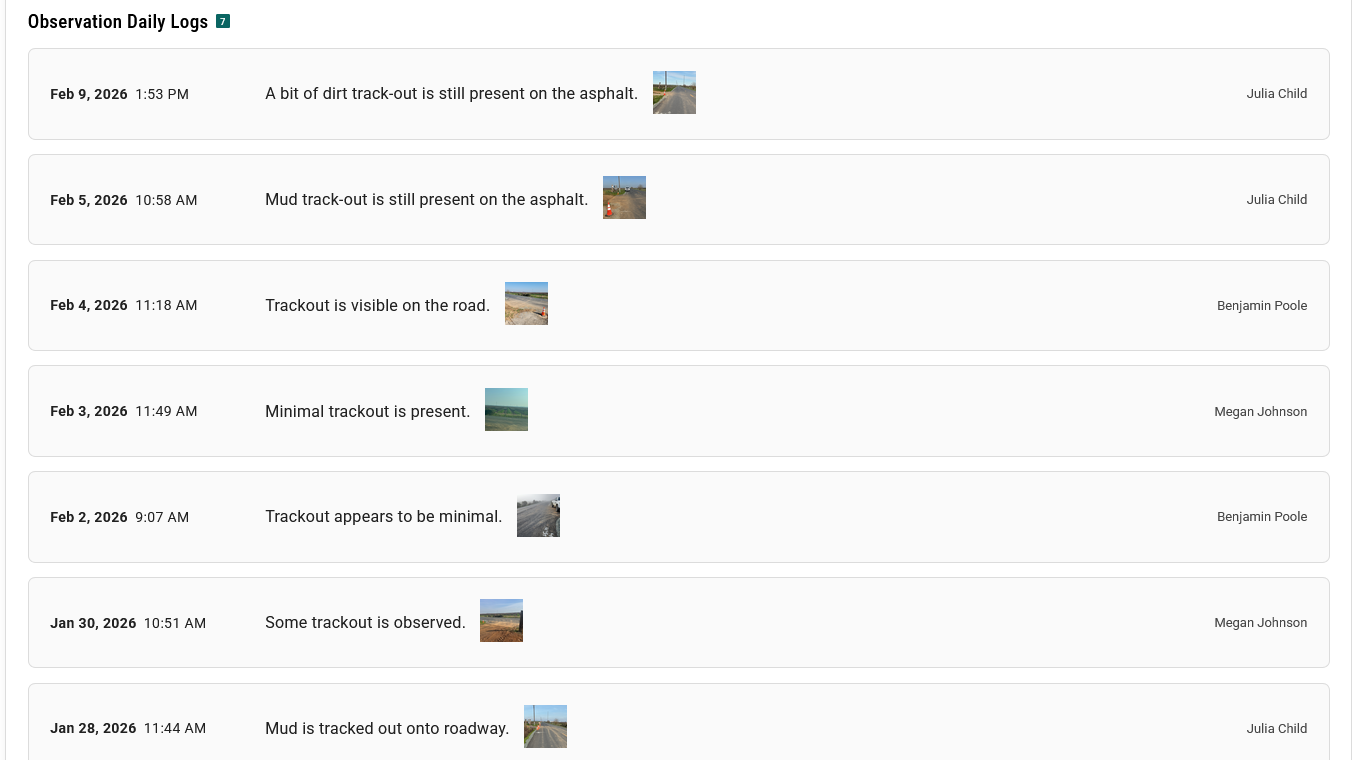
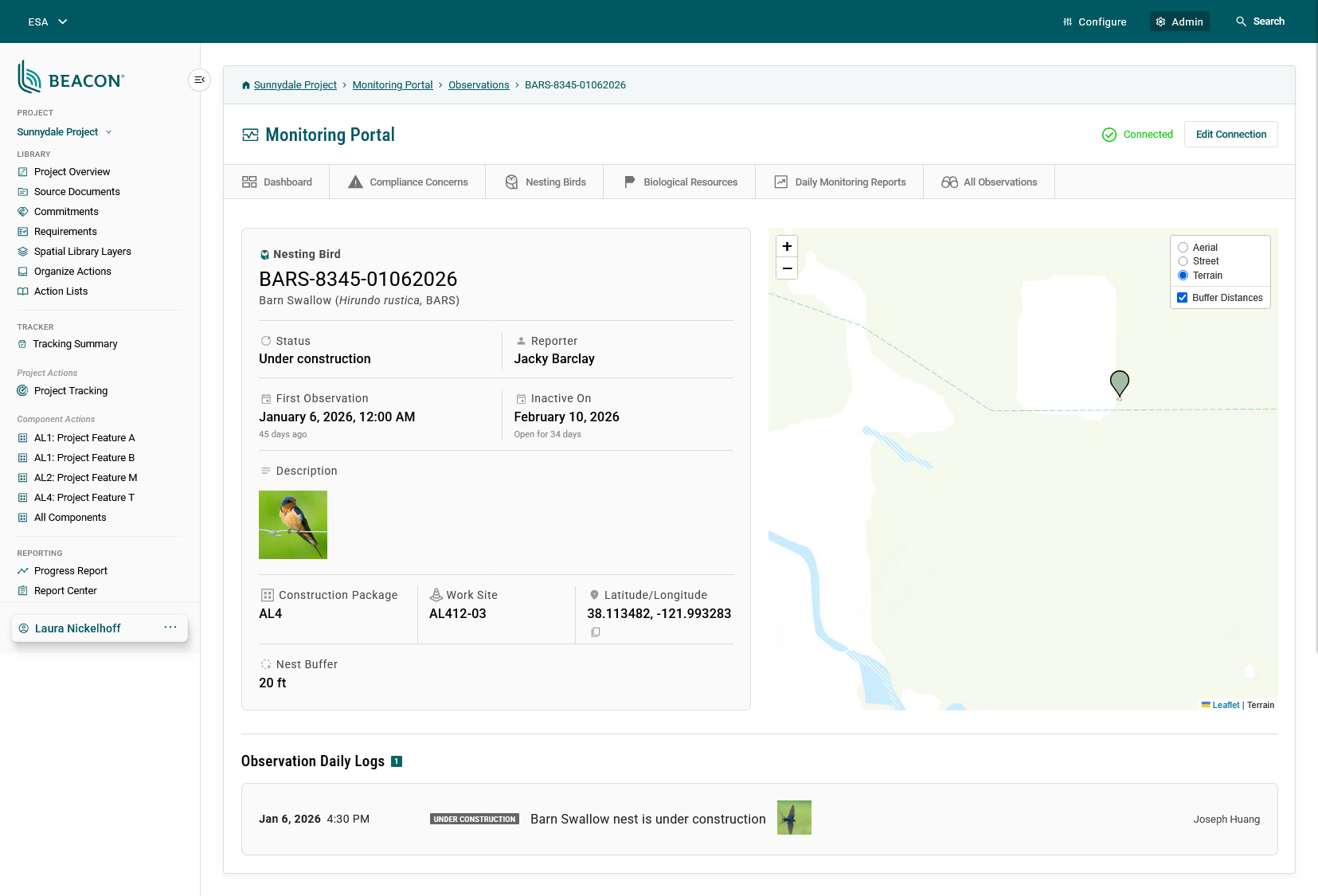
The Monitoring Platform dashboard (see screenshots above) allows users to view, track, and address compliance concerns and ongoing mitigation efforts throughout a project’s duration.
Looking Ahead
Translating environmental approvals into actionable compliance plans has traditionally required detailed manual review and data input at the outset of a project. Beacon’s just launched AI-assisted commitment parsing capability streamlines this process by extracting key information—including titles, identifiers, and timing requirements—directly from environmental documents. The system structures these commitments into searchable records that project teams verify, track, and manage throughout the project life cycle.
“The AI-assisted Commitment Parsing capability turns static documents into robust and actionable information,” said Mike Leech, Technology Services Practice Leader.

“The AI-enhanced workflow enables compliance professionals to verify and refine extracted data, while ensuring accuracy and accelerating their project setup.”
Mike Leech, Technology Services Practice Leader
Future enhancements will expand the system’s ability to automatically identify species references and seasonal restrictions, as well as identify overlapping or conflicting requirements across project documents—all of which will help teams understand when and how commitments apply. By converting complex regulatory language into structured, deadline-driven records, Beacon helps project leads translate approvals into a clear, actionable compliance roadmap.
Environmental compliance requires maintaining clarity across years of decisions, data, and accountability to avoid delays and keep projects on schedule and budget. Through Beacon, ESA is redefining how that work gets done, from planning to permitting, from construction to operations, and everywhere in between.
To learn more about how ESA’s Beacon platform supports environmental compliance at scale, contact Beacon Platform Manager Laura Nickelhoff.